

Why Older Adults Need Busy Public Spaces to Truly Relax
Eindhoven, Wednesday, 14 October 2026.
TU Eindhoven research shows older adults relax best in green spaces with surrounding activity, challenging isolated urban designs to improve mental health for aging populations.
Challenging Conventional Wisdom in Urban Planning
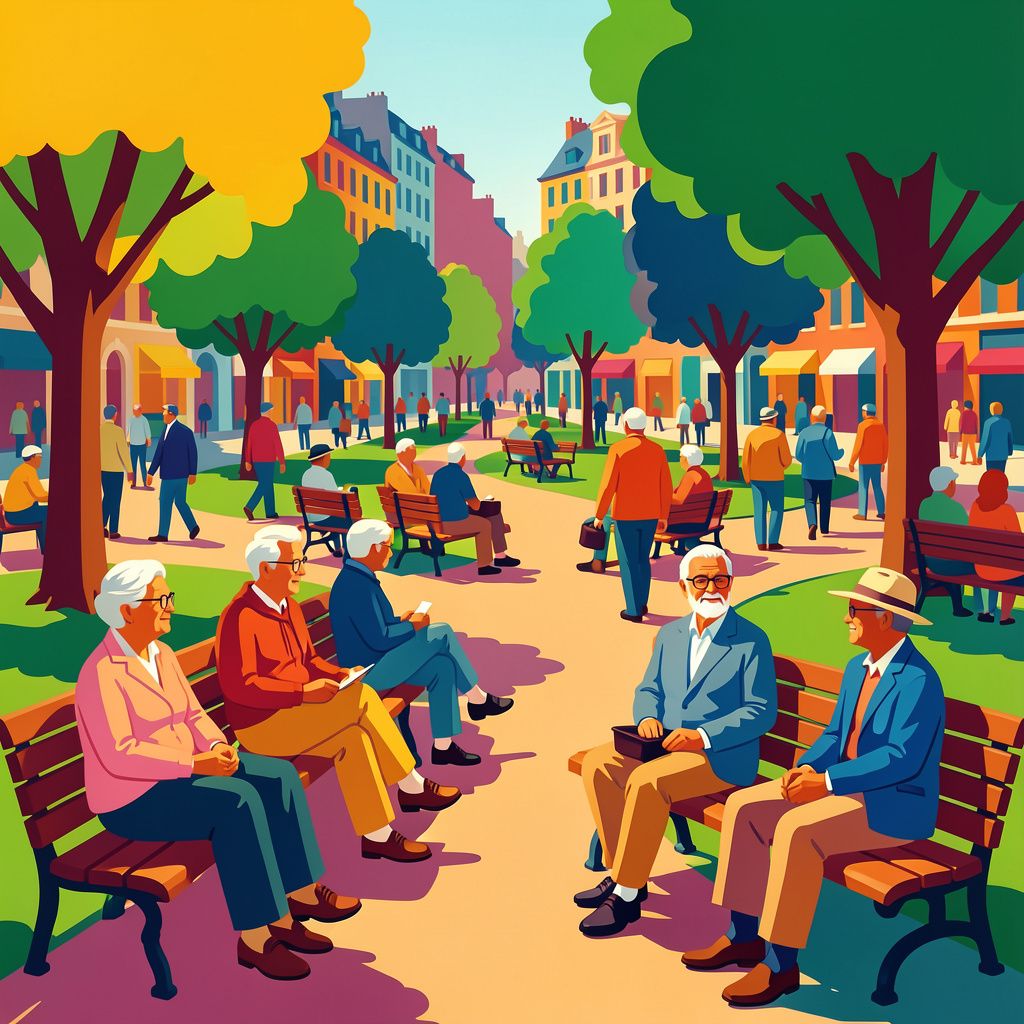
Conventional urban planning has long operated under the assumption that older demographics require quiet, isolated environments to achieve relaxation and mental restoration [1][2][4]. However, recent research conducted by spatial researcher and PhD candidate Anne Grave from the Smart Architectural Technologies group at Eindhoven University of Technology (TU Eindhoven) reveals a different reality [1][2][3]. Her dissertation, defended on Tuesday, 6 October 2026, demonstrates that adults aged 70 and older experience greater mental relaxation when peaceful green environments are situated near areas of subtle public activity, such as passing pedestrians or outdoor cafés [1][2][3][5]. Grave argues that traditional theoretical models of environmental psychology are outdated, particularly as older adults across the Netherlands continue to live independently for significantly longer periods than previous generations [1][2].
Evidence-Based Insights from the Field
To move beyond controlled laboratory settings, Grave gathered field data directly from Dutch residents in their living environments [1][2]. Her methodology included 40 in-depth interviews using virtual neighborhood walks on iPads, allowing participants to highlight their preferred relaxation spots, followed by a broader online survey involving 301 older adults across the Netherlands who evaluated diverse urban settings [1][2][5]. The findings highlighted that static or empty spaces fail to engage older residents, with Grave comparing vacant public areas to rooms with blank white walls [1][2]. Instead, visual movement and passive observation serve as key mechanisms for attention restoration and stress reduction, offering a meaningful reprieve from household responsibilities and psychological pressures at home [1][2][5].
Translating Research into Real-World Urban Design
Rather than seeking direct conversation or active social involvement, older residents primarily seek a surrounding sense of safety and subtle social connectedness, knowing assistance is nearby if needed [1][2][5]. These insights carry direct implications for real estate developers, landscape architects, and municipal decision-makers placing public infrastructure [1][2][4][5]. For example, street benches should be strategically installed in locations offering clear sightlines of active thoroughfares or outdoor seating rather than tucked into quiet, isolated corners [1][2][5]. To test these spatial theories in practical settings, Grave collaborated with Dutch healthcare provider Oktober and housing corporation Wooninc. [1][2]. Highlighting these actionable design frameworks today, 14 October 2026, Grave and Prof. Masi Mohammadi are presenting their findings during the ‘Curiosity Bites’ lunch lecture series at the TU/e Campus in Eindhoven as part of the university’s 70th-anniversary events [1][6].