

Wageningen University Opens Three Permanent Outdoor Classrooms Next Week
Wageningen, Tuesday, 31 March 2026.
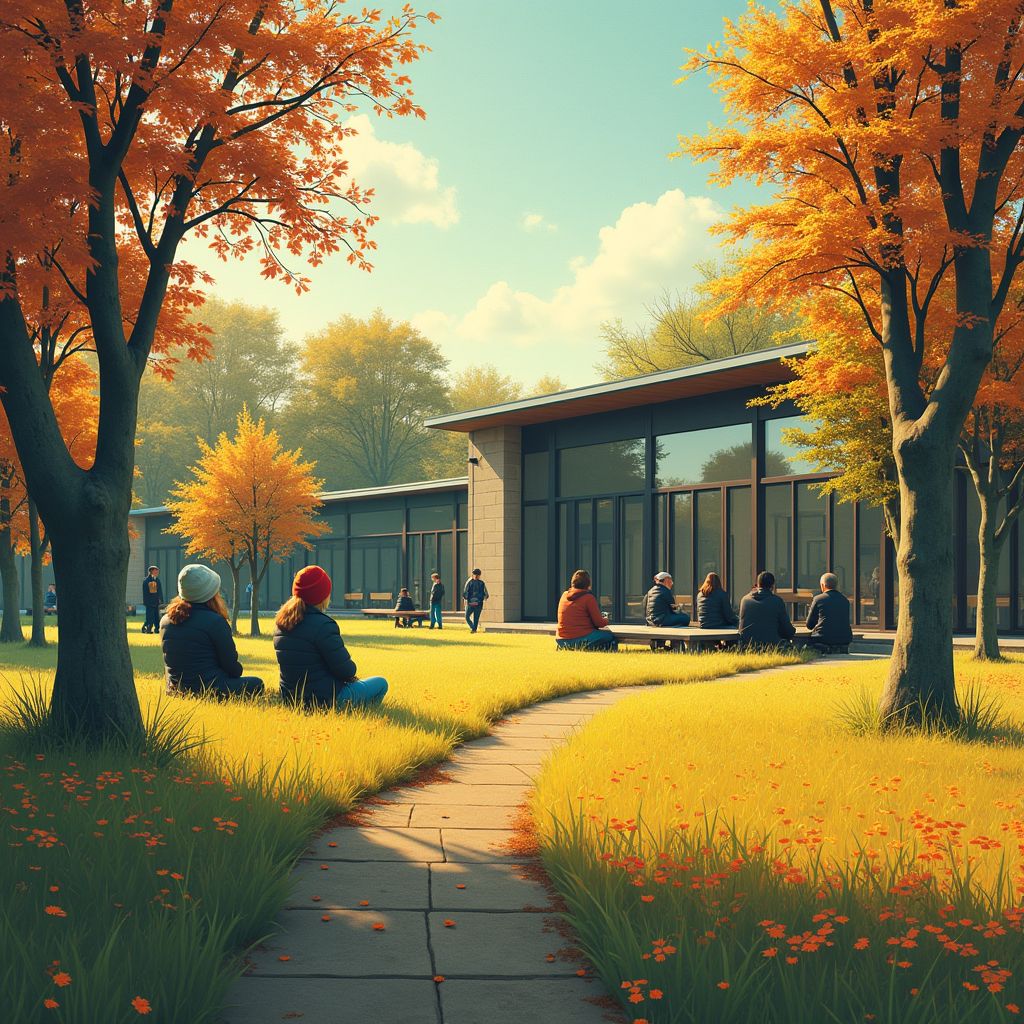
Wageningen University becomes the Netherlands’ first university to establish extensive outdoor learning infrastructure when it officially opens three permanent outdoor classrooms on April 7th. The initiative demonstrates how nature-based education reduces student stress and stimulates curiosity while connecting agricultural and life sciences students directly with their study environment. Following the launch during National Outdoor Learning Day, faculty can reserve these locations year-round through the university’s standard scheduling system, marking a significant shift toward experiential learning in Dutch higher education.
Marathon Day Showcases Pedagogical Innovation
The April 7th outdoor education marathon will begin at 12:30 with Dean of Education Dick de Ridder formally opening the three outdoor classrooms [1]. The event, organized in collaboration with NatuurCollege foundation as part of National Outdoor Learning Day, features a comprehensive program running from 9:00 AM to 8:30 PM [2]. Sessions include biotechnology dilemma games, outdoor mathematics lessons, bird behavior observation, and evening campfire storytelling about rewilding and wolves [2]. Louise van der Stok from Educational and Learning Sciences, one of the initiative’s founders within WUR, emphasizes that despite the Netherlands’ sometimes changeable weather, outdoor education offers significant advantages by stimulating curiosity, reducing stress, and fostering more open and reflective conversations between students and teachers [1].
Strategic Infrastructure Development
The outdoor classroom project represents the culmination of extensive collaboration between Wageningen University & Research, the Facilitair Bedrijf, and campus ecologists who identified and developed suitable outdoor learning locations while prioritizing safety considerations [1]. The initiative emerged from the WUR Living Lab Nature-Inclusive Education and received support from eNaBlS, NatuurCollege foundation, and ReGeNL [1]. Faculty members prepared for this transition through the “Onboarding in Nature-Inclusive Education” course, established by the WUR Teaching and Learning Centre in partnership with NatuurCollege foundation [1]. This comprehensive approach positions Wageningen University & Research as one of the first universities in the Netherlands to facilitate such extensive infrastructure for outdoor learning [1].
Long-term Educational Integration
Following the April 7th launch, the three outdoor locations will become available for regular reservation by lecturers through WUR’s TimeEdit scheduling system, integrating seamlessly into the university’s standard operational procedures [1][2]. The implementation reflects a broader trend within WUR courses toward outdoor and relational learning approaches, supported by new outdoor learning spaces and specialized teacher training programs [1]. Students and faculty can access additional campus learning locations through the BuitenOnderwijs Campus Map, expanding educational possibilities beyond the three primary sites [2]. This systematic integration ensures that nature-based learning becomes a permanent feature of Wageningen’s educational landscape rather than a temporary experiment.
Broader Educational Movement
The Wageningen initiative occurs within a wider context of agricultural and environmental education innovation in the Netherlands. The recent BEN Congress 2026 in Nijkerk, held on March 20th with the theme “Boerenwijsheid, waar kennis wortelt” (Farmers’ Wisdom, Where Knowledge Takes Root), highlighted growing interest in farm-based education and knowledge exchange [3]. The congress featured workshops on artificial intelligence applications in farming, food education, and cooking with farm-produced ingredients, while also marking the 10-year anniversary of Boerderij Educatie Nederland and Mieke Theunissen’s departure after a decade of service [3]. These developments demonstrate increasing recognition of experiential, nature-connected learning approaches across Dutch agricultural education sectors.