

Wageningen University Names Maria Barbosa as New Biotechnology Chair
Wageningen, Tuesday, 10 November 2026.
Appointed to lead in February 2027, microalgae pioneer Maria Barbosa aims to deploy artificial intelligence and digital engineering to transform raw algae into vital food proteins and industrial commodities.
Strategic Transition at Wageningen University
Wageningen University & Research (WUR), located in Wageningen, Netherlands [GPT], has formally designated Maria Barbosa to take over as the chair of the Bioprocess Engineering chair group starting in February 2027 [1]. She is scheduled to succeed René Wijffels, who will be retiring from the academic post in January 2027 [1]. This leadership transition positions bioprocess engineering at the crossroads of agritech, food technology, and healthtech [1]. Under Barbosa’s upcoming stewardship, the academic and research unit plans to sharpen its focus on developing scalable bioprocesses while integrating biology, engineering, and computer science to bridge fundamental scientific research with industrial applications [1].
Mechanisms and Innovations in Microalgal Biomanufacturing
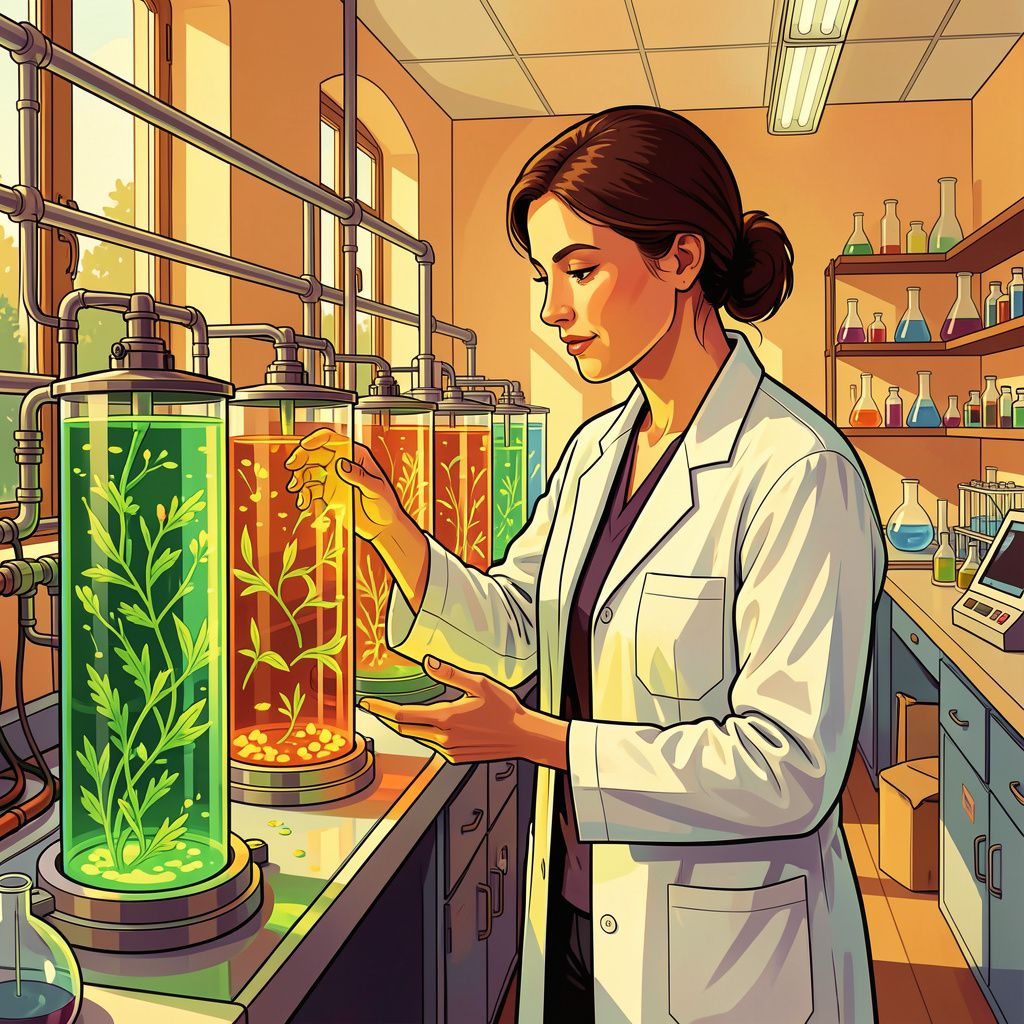
At its technical core, the innovation operates around the precision cultivation and processing of microalgal biotechnology [1]. Microorganisms such as microalgae are grown in controlled systems—such as photobioreactors—where they capture light, carbon dioxide, and nutrients to synthesize complex compounds [1][2]. The primary operational hurdle in bioprocess engineering is not merely growing the biological culture, but designing scalable conditions where microalgae efficiently express and produce specific targeted molecules [1]. Through the integration of digitalization and artificial intelligence into these engineering pipelines, processes can be modeled and monitored dynamically to optimize yield, accelerate throughput, and maintain process reliability at pilot and industrial scales [1].
Economic and Industrial Benefits Across Agritech and Food
The scalable biological solutions emerging from this research offer substantial economic and sustainability dividends across food systems, industrial manufacturing, and medicine [1]. Applying microalgae allows biomanufacturers to harvest proteins directly for food and generate specialty lipids for industrial oils and cosmetic ingredients [1]. By localizing and scaling the cultivation of these feedstocks, the technology directly targets supply-chain vulnerabilities, potentially curbing heavy reliance on imported agricultural and industrial raw materials [1]. Furthermore, Barbosa plans to leverage bioprocess platforms to bolster biopharmaceutical biotechnology, targeting health applications alongside global food security [1].
Academic Trajectory and Infrastructure Evolution
The foundation for this technological agenda rests on decades of research infrastructure built in Wageningen [1]. After completing a master’s degree in Food Engineering at the Catholic University of Porto and receiving her PhD in bioprocess engineering from Wageningen University & Research in 2003, Barbosa held research roles at INRA in France, ETH in Switzerland, IBET in Portugal, EMBO in Germany, and Bergen University in Norway [1]. She returned to Wageningen in 2008 to establish a dedicated microalgal biotechnology group and played an instrumental role in launching the AlgaePARC research facility and pilot plant, which expanded into AlgaePARC 2.0 in 2024 [1]. She later joined the Bioprocess Engineering chair group in 2015 and was appointed Professor of Microalgal Biotechnology in 2019 [1].
Broader Collaborations and Strategic Outlook
Looking toward 2027 and beyond, the chair group aims to attract new cohorts to Wageningen’s Biotechnology bachelor’s program while firmly situating the university within the Dutch 4TU alliance for life sciences engineering [1]. The practical utility of these bioprocess systems has also driven applied engineering initiatives, such as student and institutional projects developing photobioreactor deployments in South Africa and evaluating metropolitan integration in cities such as Amsterdam [2]. By unifying algorithmic optimization, hardware infrastructure, and cellular biology, Wageningen’s incoming chair seeks to turn microscopic cellular factories into scalable solutions for modern industrial and food challenges [1].