

European Union Rebuffs Calls for Additional Global Climate Funding
Brussels, Thursday, 19 November 2026.
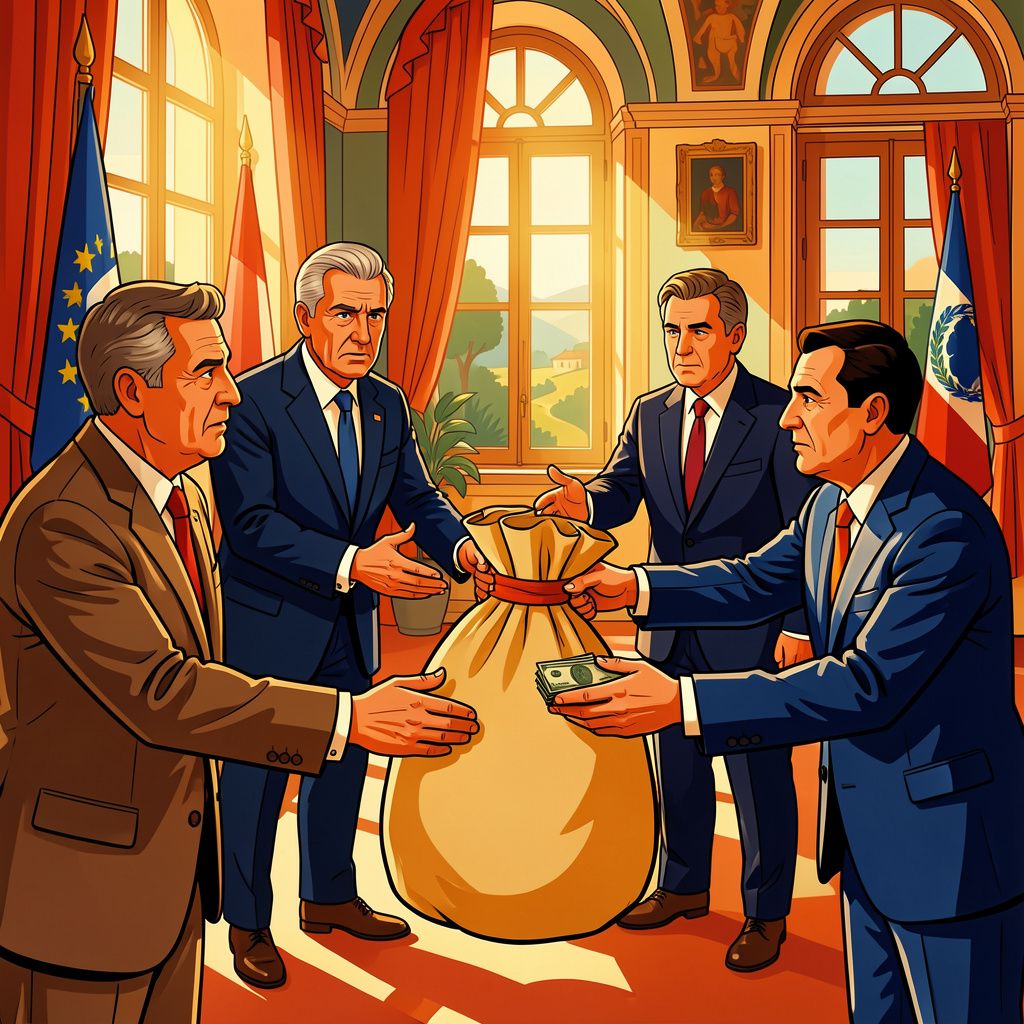
At the Antalya climate summit, the European Union refused to provide extra financial aid, demanding major global economies first deliver measurable emissions cuts rather than relying on increased European subsidies.
A Hardline Pivot in Antalya’s Stalled Negotiations
As negotiations at the COP 31 climate summit in Antalya, Turkey, enter their decisive closing stages on Thursday, 19 November 2026, the European Union has made an unmistakable strategic pivot [1][2][3][4]. The summit, which opened on 9 November 2026 and is formally scheduled to conclude on Friday afternoon, 20 November 2026, brings together representatives from more than 190 nations facing deadlocked talks over cover decisions and finance mechanisms [1][3][4]. European Commissioner for Climate Action, Net Zero and Clean Growth Wopke Hoekstra signaled that the bloc will not contribute any extra public funding beyond existing commitments, demanding that other major economic powers fulfill their agreed obligations first [1][2][6]. Marking a sharp departure from traditional diplomatic postures, Hoekstra maintained that the era of unending multilateral deliberations must give way to concrete execution, noting that talks must stop and real implementation must begin [1][2][8].
Balancing Bilateral Commitments and Financial Realities
The European stance comes amid severe diplomatic friction, where global climate diplomacy is strained by the war in Ukraine, Middle Eastern tensions, a more assertive China, and the absence of the United States federal government under President Donald Trump [2][3]. The European Union remains the primary international contributor to climate funding, having mobilized €32.3 billion in public finance alongside €9.3 billion in private capital during 2025 across its 27 member states, reaching an aggregate contribution exceeding €32 billion to €32.5 billion [2][3][4]. Despite developing economies and humanitarian groups seeking expanded funding facilities, Hoekstra underscored that the EU has already delivered extensive capital and that discussions must strictly concentrate on accessing previously allocated resources [1][2]. Supported by Dutch Climate Minister Stientje van Veldhoven, who stressed that prior commitments must be met before contemplating expansions, the EU is firmly holding its line on international expenditure [1].
Pushing the 35x35 Electrification Green Innovation Initiative
Rather than dispersing unrestricted capital subsidies, the European Union has thrown its diplomatic weight behind the ‘35x35’ electrification initiative, a voluntary clean-technology proposal spearheaded by host nation Turkey, co-chairing COP 31 alongside Australia [1][2][5]. The initiative aims to scale the global share of electricity in final energy consumption from today’s 24 percent to 35 percent by 2035 [2][5]. This structural shift requires an absolute expansion in electricity’s overall energy share of 11 percentage points, representing a targeted proportional increase of 45.833 percent over current levels [2]. Hoekstra identified widespread electrification alongside accelerated deployment of solar, wind, and nuclear energy as essential mechanisms not only to abate greenhouse gases, but also to insulate European industry from external vulnerability, given that the bloc imports more than 80 percent of its gas and more than 95 percent of its oil [2].
Industrial Friction and the Road Ahead for Global Policy
This uncompromising industrial focus has drawn sharp criticism from non-governmental organizations and international partners, who warn that stalling finance talks threatens broader climate goals [1][3]. Representatives such as Barbara Rosen Jacobson of Prosper Global and Maarten de Zeeuw of Greenpeace argued that the EU risks isolating itself during an escalating crisis, while Member of the European Parliament Mohammed Chahim pointed out the friction created by domestic European policy postponements between 2024 and 2026 regarding methane rules, deforestation laws, and combustion-engine standards [1][2]. Despite pushback on the 35x35 framework from nations like India and Saudi Arabia, and with the official Friday deadline likely to spill over into the weekend, Brussels remains adamant that its long-term pathway—targeting a 90 percent emissions cut by 2040 and climate neutrality by 2050—demands structural technological adoption rather than unreciprocated financial pledges [1][2][3][4].
Bronnen
- www.nu.nl
- www.headliner.nl
- www.raadvankerken.nl
- www.duurzaam-ondernemen.nl
- fd.nl
- audiovisual.ec.europa.eu
- www.instagram.com
- x.com