

Netherlands Wind Energy Plans Face Growing Local Opposition
Nieuwkoop, Monday, 13 April 2026.
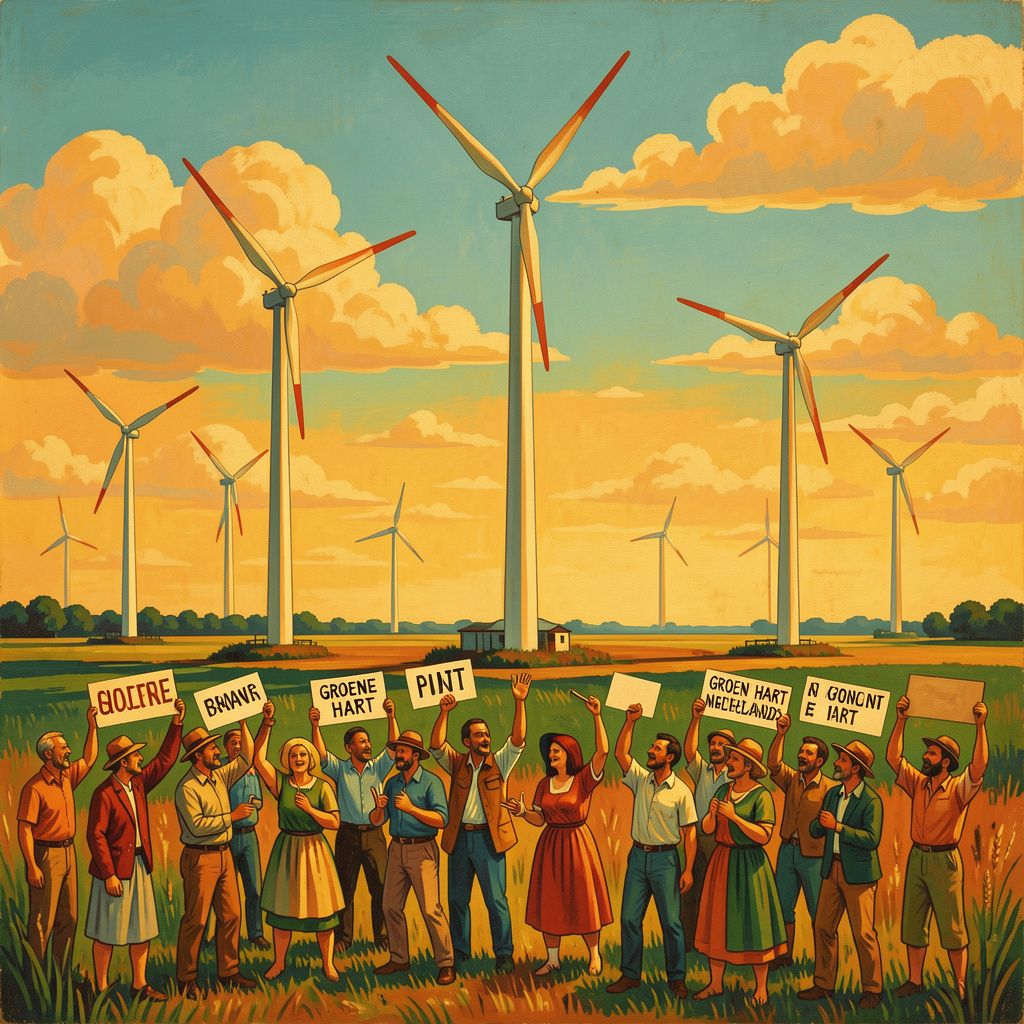
Half of Dutch electricity already comes from clean, domestic sources, yet fierce opposition to wind turbines in the protected Groene Hart region continues to escalate. Paul van Egmond argues critics focus on unproven health concerns while ignoring scientifically documented damage from fossil fuels. A twelve-hour public hearing on April 9, 2026, saw dozens of speakers reject provincial plans for 27 wind turbines across three locations. Local officials called the distribution of renewable energy targets unfair and unreasonable, with final decisions expected June 3, 2026.
Provincial Plans Meet Fierce Resistance
The province of Zuid-Holland is considering three specific locations for wind turbines in and around the Groene Hart: Vierambachtspolder in Kaag en Braassem and two locations along the N11 near Alphen aan den Rijn [2]. These locations would accommodate 27 wind turbines standing 240 meters in height [2]. The selection represents a significant reduction from the initial eleven locations considered by the province, which faced substantial societal and political opposition and generated hundreds of written responses [2]. Over one hundred speakers, including residents, council members, and aldermen from Alphen aan den Rijn, Leiden, Delft, and Krimpenerwaard, registered for the April 9 hearing [2].
Local Officials Challenge Distribution of Energy Targets
Municipal leaders expressed strong objections to the concentrated placement of renewable energy infrastructure. Gert van den Ham, an alderman from Alphen, stated during the hearing: “We moeten constateren dat het grootste deel van de doelstelling voor duurzame energie behaald moet worden in drie van de dertien gemeenten in onze regio. We hebben al aangegeven dat dit onevenredig, onmenselijk en onredelijk is” [2]. Aad Blom, a VVD council member from Kaag en Braassem, warned of deteriorating administrative relationships, saying: “Hoeveel mag er kapot, om uw doelstelling te halen. Lokaal is deze koers afgewezen, toch ligt dit plan nu voor. Als de provincie doorgaat, zet het de bestuurlijke verhoudingen ernstig onder druk” [2]. Local opposition groups cite concerns about effects on meadow birds, noise pollution, and lack of public support [2].
Energy Security Arguments Counter Local Concerns
Provincial officials defend the wind energy plans as essential for energy independence. Arno Bonte, Zuid-Holland’s deputy for energy matters, emphasized the strategic importance: “We zullen onszelf minder afhankelijk moeten maken van energie uit het buitenland, zeker niet uit instabiele regimes waar het de laatste tijd nu nog instabieler is” [2]. Bonte argued that selected locations such as those along the N11 represent logical choices for wind turbines to minimize inconvenience while ensuring local energy supply [2]. Paul van Egmond, writing in the AD newspaper on April 12, 2026, challenged opponents’ priorities, noting that half of the electricity they use is already CO2-neutral and domestically produced [1]. He questioned critics’ selective approach: “U schermt met woongenot en het voorzorgsbeginsel, maar u wilt gasvelden in Groningen openhouden” [1].
Procedural Concerns and Timeline for Final Decision
The decision-making process faces mounting procedural challenges. Stichting Behoud Open Landschap is preparing a complaint to the European Commission regarding the followed procedure, stating they are “niet tegen windenergie zijn, maar voor een zorgvuldig proces” [4]. The organization highlighted concerns about incomplete environmental impact assessments, with the planMER for wind energy in Lansingerland assessed as incomplete by the Commissie m.e.r. [4]. Legal risks from decisions based on incomplete information and inadequate substantiation of health aspects were noted during the April 10 hearing, along with decreasing public trust in the process [4]. The Provinciale Staten will continue discussing environmental policy over the next two months, with a debate scheduled for May 13, 2026, and final decision-making on the Herziening 2025 set for June 3, 2026 [2][4].
Bronnen
- www.ad.nl
- nos.nl
- www.instagram.com
- hiergeenwindturbines.nl
- www.tweedekamer.nl
- www.facebook.com
- www.facebook.com
- nl.linkedin.com