

Dutch University Dismantles Academic Hierarchy by Extending Full Professorship to All Faculty
Eindhoven, Monday, 2 November 2026.
Eindhoven University of Technology launched a reform granting all permanent faculty the title of professor and doctoral rights, removing traditional academic ranks to foster workplace equity.
A Structural Overhaul of Academic Hierarchy
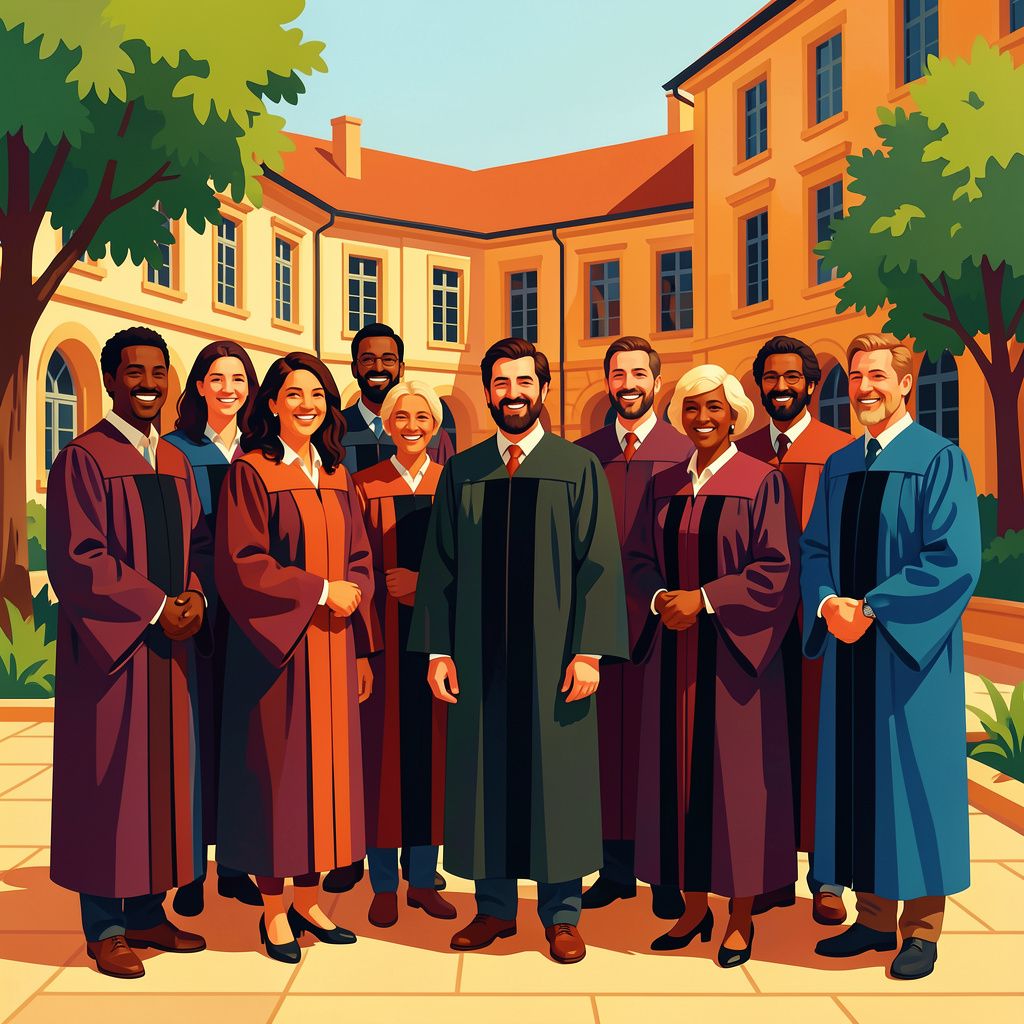
On November 1, 2026, Eindhoven University of Technology (TU/e), located in Eindhoven in the southern Dutch province of Noord-Brabant, formally implemented its landmark ‘Everyone Professor’ program [1][4]. The structural reform dismantles longstanding conventions in Dutch higher education by extending the right to confer doctorates (ius promovendi), the right to wear academic ceremonial gowns, and the formal title of professor to all permanent academic staff [1]. This transition incorporates both assistant professors (universitair docenten or UDs) and associate professors (universitair hoofddocenten or UHDs) into privileges traditionally reserved strictly for full professors [1]. The move follows formal institutional approval gained in late September 2026, when the University Council issued a positive recommendation for the measure [1].
Redefining the Ius Promovendi and Professional Recognition
Under the new framework, the title of professor is designed to serve as a comprehensive umbrella term across the university’s permanent faculty [1]. According to TU/e human resources policy advisor Julma Braat, the objective is to establish ‘professor’ as a catch-all designation for permanent academic staff members [1]. To exercise the conferred ius promovendi, qualifying faculty members must satisfy clear operational conditions: they are required to have guided at least one doctoral candidate through to completion and must obtain a designated supervision qualification [1]. Proponents argue that the framework directly addresses historical inequities in PhD guidance, where early-career and mid-career researchers managed substantial portions of candidate supervision without receiving formal credit as primary supervisors [1].
Origins and National Momentum
The concept originated eight years prior when Kees Storm, dean of Applied Physics and Science Education at TU/e, proposed the ‘Everyone Professor’ model during his 2018 inaugural lecture [1]. Storm emphasized that assistant professors frequently shoulder the everyday responsibilities of doctoral mentoring without commensurate ceremonial or institutional acknowledgment, adding that ceremonial gowns signal subject-matter expertise rather than mere bureaucratic rank [1]. The initiative subsequently gained national traction through advocacy by The Young Academy of the Royal Netherlands Academy of Arts and Sciences (KNAW) under its then-chair Marie-José van Tol [1]. Support from TU/e rector Silvia Lenaerts was also instrumental, drawing parallels to neighboring Flanders where comparable academic conferral structures are already standard practice [1].
Operational Impact Across Research Departments
Faculty across departments have highlighted the operational benefits of shedding redundant academic stratification [1]. Max Birk, an assistant professor in the Department of Industrial Engineering & Innovation Sciences, observed that the initiative aligns Eindhoven with international models seen in Germany and Canada, reducing arbitrary professional barriers [1]. The operational shift touches researchers across disciplines, such as mechanical engineering assistant professor Diletta Giuntini, who arrived at TU/e in 2020, as well as faculty in specialized units like Control Systems Technology (CST)—a group established in 1999 that encompasses 51 to 200 staff members, including assistant professor Patricia Pauli [1][4]. As permanent faculty step into these expanded responsibilities, the reform sets a precedent for how higher education institutions incentivize talent retention and modernize governance [1].