

European Investment Bank Backs Smarter Heating Networks With Twenty Million Euro Financing
Rotterdam, Friday, 20 November 2026.
Rotterdam scaleup Gradyent secured €20 million from the European Investment Bank to deploy virtual network models across Europe, optimizing legacy infrastructure without costly hardware replacements.
Scaling Digital Twin Capabilities Across European Grids
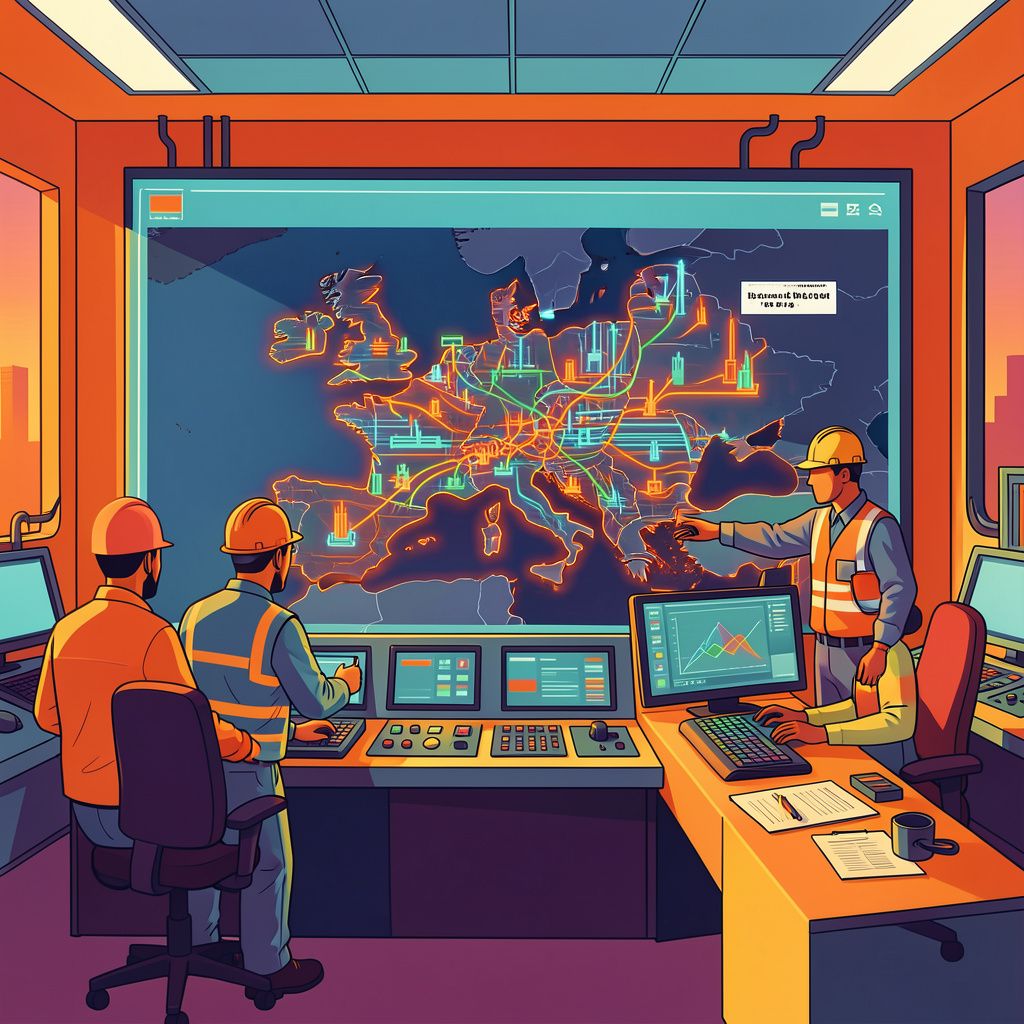
The European Investment Bank finalized a €20 million venture debt facility with Rotterdam-based energy software company Gradyent on November 19, 2026 [1][2][5]. Supported by the European Commission’s InvestEU initiative, the quasi-equity structure allows the climate tech firm to expand the development and deployment of its real-time digital twin platform across European district heating, cooling, and industrial thermal infrastructure [1][2][4]. By creating dynamic virtual models of thermal networks through combined physics and hydraulic simulations, the technology enables municipal and private grid operators to continuously calibrate flow dynamics, trim fuel burn, and cut system-wide operating expenditures without demanding upfront capital overhauls of legacy underground piping [1][4][7].
Strategic Integration and Market Traction
The financing follows an oversubscribed €28 million growth funding round led by impact investment manager Blue Earth Capital AG, sitting alongside established backing from venture groups including Capricorn Partners, ENERGIIQ, Helen Ventures, and utility partner Eneco [1][3][7]. That combined venture base brings Gradyent’s total recent funding across these two transactions to €48 million [1][3]. Founded in 2019 by Hervé Huisman, Robert Vrancken, and Freek Smelt, Gradyent currently operates across dual hubs in Rotterdam and Berlin with a specialized workforce of more than 150 engineers, data scientists, and energy analysts [1][7]. Its real-time modeling architecture already powers over 50 municipal networks in major European urban centres such as Helsinki, Warsaw, Vienna, and Tallinn, partnering directly with utilities including Helen, Wien Energie, Ennatuurlijk, Uniper, and E.ON [1][7].
Commercial Acceleration and Decarbonization Targets
Commercial adoption has moved swiftly into broader integration: between November 1 and November 7, 2026, Dutch energy supplier Eneco expanded its commercial agreement with Gradyent in Utrecht, linking Gradyent’s Digital Twin engine with its Myriad Virtual Power Plant to synchronize production scheduling, physical distribution, and dynamic energy market trading [1]. Such operational coordination aligns directly with the European Union’s statutory decarbonization mandate to transition urban heating and cooling infrastructure to net-zero greenhouse gas emissions by 2050 [1][GPT]. European Commission representative in the Netherlands Cecilia Thorfinn noted that digital interventions are vital for bridging this transition by optimizing the uptake of industrial waste heat and renewable thermal sources while municipal systems systematically phase out fossil fuels [1].
Economic Efficiency in Grid Modernization
As European Investment Bank Vice-President Robert de Groot highlighted, advancing the energy transition requires substantial capital allocation toward renewable heat capacity, yet maximizing efficiency across existing transmission hardware offers immediate, low-cost emissions abatement [1][4]. Gradyent Chief Executive Officer Hervé Huisman affirmed that the quasi-equity financing establishes a long-term capital base to scale network efficiency and accelerate the safe onboarding of fluctuating green thermal sources across the continent [1][3]. By prioritizing algorithmic optimization over prohibitive ground excavation, the software-led rollout delivers a replicable framework for utilities seeking to lower heat losses, defend consumer operating costs, and meet stringent 2050 climate mandates [1][4].
Bronnen
- www.eu-startups.com
- x.com
- www.linkedin.com
- www.instagram.com
- news.europawire.eu
- techopia.co.uk
- www.linkedin.com
- www.eib.org