

Former SpaceX Engineers Launch 400 Companies Worth $12 Billion Beyond Space Industry
Global, Tuesday, 7 April 2026.
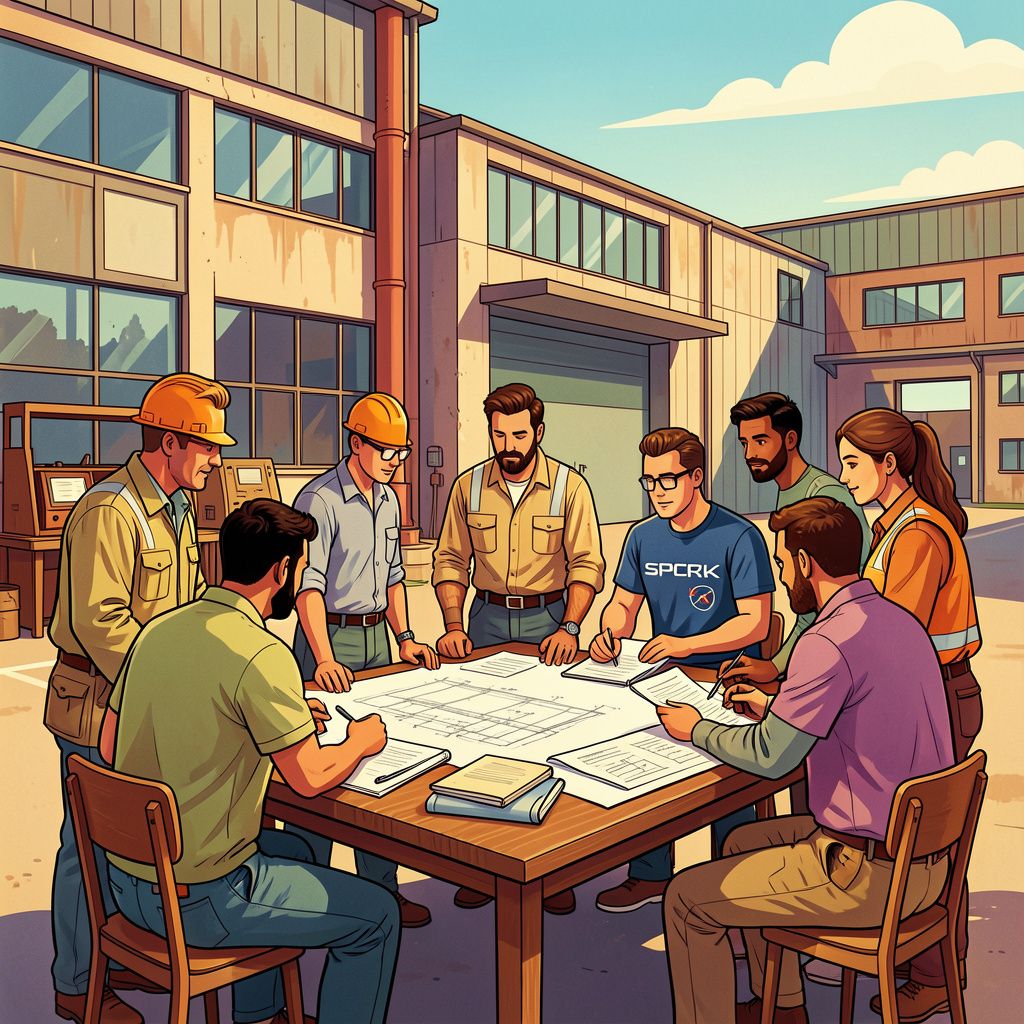
A comprehensive study reveals that over 400 former SpaceX employees have become entrepreneurs, collectively raising nearly $12 billion to tackle engineering challenges across industries. Surprisingly, only 17% of these alumni founders remain in the space sector, with most applying SpaceX’s first-principles problem-solving approach to revolutionize manufacturing, artificial intelligence, clean energy, and robotics. The research identifies SpaceX as a ‘founder factory,’ where employees absorbed systematic approaches to rapid prototyping and ambitious goal-setting before launching ventures that could reshape the industrial economy beyond aerospace.
The SpaceX Exodus: From Rockets to Diverse Industries
The migration of SpaceX talent represents one of the most significant entrepreneurial diaspora effects in modern technology. Fast Company’s comprehensive database tracking these founders reveals that Alumni Founders calculates SpaceX graduates have raised nearly $12 billion [1]. The scope extends far beyond senior engineers, with at least 94 former SpaceX interns having founded startups, including 33 who worked full-time at the company before launching their ventures [1]. This phenomenon demonstrates how SpaceX’s unique culture of tackling “impossible problems” has created a generation of entrepreneurs equipped to challenge conventional thinking across multiple sectors.
Beyond Space: Manufacturing and AI Take Center Stage
The diversification away from aerospace is striking, with only 17% of SpaceX alumni founders remaining in the space industry [1]. Instead, these entrepreneurs are applying SpaceX’s methodologies to manufacturing challenges, as exemplified by Sift, founded in 2022 by former SpaceX engineers Karthik Gollapudi and Austin Spiegel in El Segundo, California [3]. The company raised a $42 million Series B in 2025 at a $274 million post-money valuation, backed by StepStone and Google’s venture arm GV [3]. Sift’s technology manages data infrastructure for advanced manufacturing, with some vehicles they work with featuring more than 1.5 million sensors streaming data concurrently [3]. Other notable ventures include Bronco AI focusing on AI-enabled chip design and Navier AI developing workforce agents for engineering teams [1].
Recent Expansions Signal Growing Market Confidence
The momentum of SpaceX-founded companies continues to accelerate in 2026, with several key developments highlighting their market traction. In January 2026, Senra Systems, founded by Jordan Black and Benjamin Shanahan who worked at SpaceX from 2018 to 2023, announced an expansion with a 7,400 square meter factory opening in Cypress, California [1]. Meanwhile, the broader manufacturing automation sector received significant validation when news emerged on March 19, 2026, that Jeff Bezos is assembling a $100 billion fund to acquire and automate factories [3]. This development has accelerated timelines for companies like Sift, with CEO Karthik Gollapudi noting: “Our long-term vision of how we saw this playing out over five years is actually being played out this year” [3].
The First Principles Legacy and Future Outlook
The success of SpaceX alumni ventures stems from the company’s distinctive “first principles” approach, which involves reducing problems to their simplest elements [1]. This methodology has proven transferable across industries, as demonstrated by companies like Airhart Aeronautics, led by former SpaceX engineer Nikita Ermoshkin, which is developing user-friendly personal airplanes, and Astrolab, headed by former mechanism group leader Jaret Matthews, creating planetary rovers for the Moon and Mars [1]. The financial impact extends beyond individual companies, with NASA reporting that SpaceX’s approach has decreased the cost of sending a kilogram of payload to low-Earth orbit from approximately $55,000 during the Space Shuttle era to less than $3,000 today [1]. As SpaceX prepares for a potential public offering that could value the company at over $2 trillion [2], this event may enable even more employees to start companies, potentially amplifying the founder factory effect that has already generated hundreds of breakthrough ventures.