

Dutch Scientists Receive Major Funding to Stop Chemical Contamination in Food
Wageningen, Thursday, 22 October 2026.
Eight researchers secured €850,000 grants, highlighting groundbreaking studies into how soil fungi transport toxic PFAS chemicals directly into food crops to safeguard global agriculture.
Agritech and Healthtech Investments Drive Agricultural Innovation
The Dutch Research Council (NWO) has allocated Vidi grants of up to 850,000 euros each to 109 researchers across the Netherlands in 2026, targeting crucial advancements spanning agritech, healthtech, and environmental sciences [1][3]. Among the recipients, eight researchers from Wageningen University & Research (WUR), located in Wageningen, Netherlands, secured funding to launch independent research groups dedicated to critical agricultural and medical challenges [1][4][5]. The initiatives center primarily on agritech—improving crop resilience, circular nutrient management, and soil protection—alongside targeted healthtech innovations for cardiovascular and metabolic disorders [1][3].
Mitigating PFAS Bioaccumulation and Enhancing Soil Nutrients
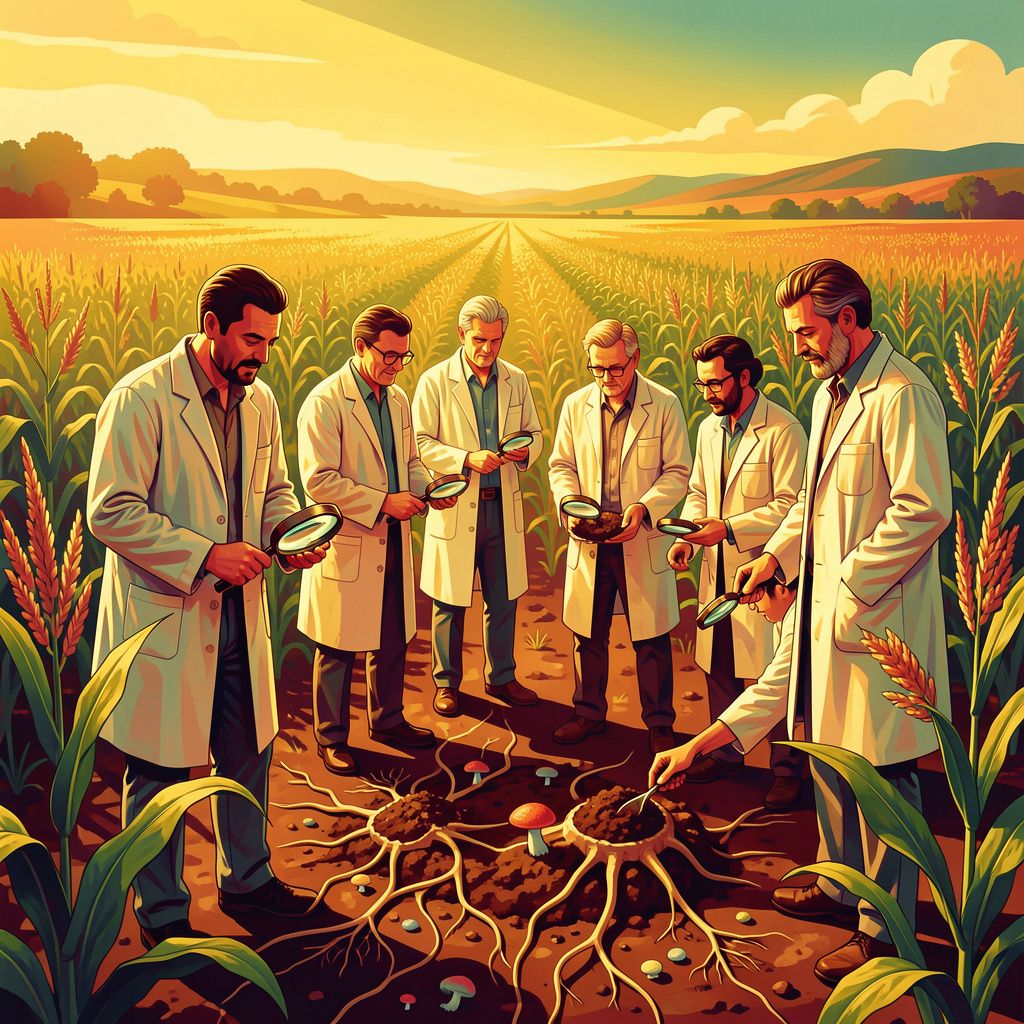
A pivotal agritech initiative led by Dr. Stephanie Watts-Fawkes at Wageningen University investigates the biological pathways through which per- and polyfluoroalkyl substances (PFAS) enter the human food supply [1][4]. Her research explores how specialized soil fungi function as transport conduits, actively carrying synthetic chemical contaminants from polluted soil directly into food crops [1][4]. By mapping these fungal transport routes, the project aims to establish practical mitigation strategies to block PFAS absorption, safeguarding crop safety and agricultural security [1][4].
Circular Agriculture and Water-Resilient Crop Management
Complementing soil safety research, Dr. Alix Vidal at WUR is advancing circular agritech solutions by studying how soil ecosystems help crops access vital nutrients during water scarcity [1][4]. Her project examines whether soil organisms, including roots, microbes, and earthworms, facilitate crop uptake of phosphate from struvite—a sustainable fertilizer derived from recycled wastewater—supporting European circular nutrient strategies [1][4]. Simultaneously, Dr. ir. Inge de Graaf is leading project SAFE-GROUND at WUR, which links global climate models with local adaptation measures to protect food production against declining groundwater levels caused by severe droughts and water extraction [1][4].
Healthtech Innovations targeting Cardiovascular and Metabolic Disease
In the domain of healthtech and medicine, researchers are addressing complex cellular mechanisms to improve patient outcomes [1][3]. At Wageningen University, Dr. Marc Tol is investigating how dietary fats operate as molecular switches inside fat tissue, directing protein pathways to explain why certain individuals with obesity avoid severe conditions like type 2 diabetes and heart disease [1][4]. Additionally, researcher Deli Zhang at WUR is analyzing internal communication points within heart cells to identify the root drivers of cardiac arrhythmias and heart failure, aiming to design targeted therapies that account for sex-based physiological differences [1][3][4].