

Dutch Farmers Challenge Taboo Around Pesticides and Parkinson's Disease
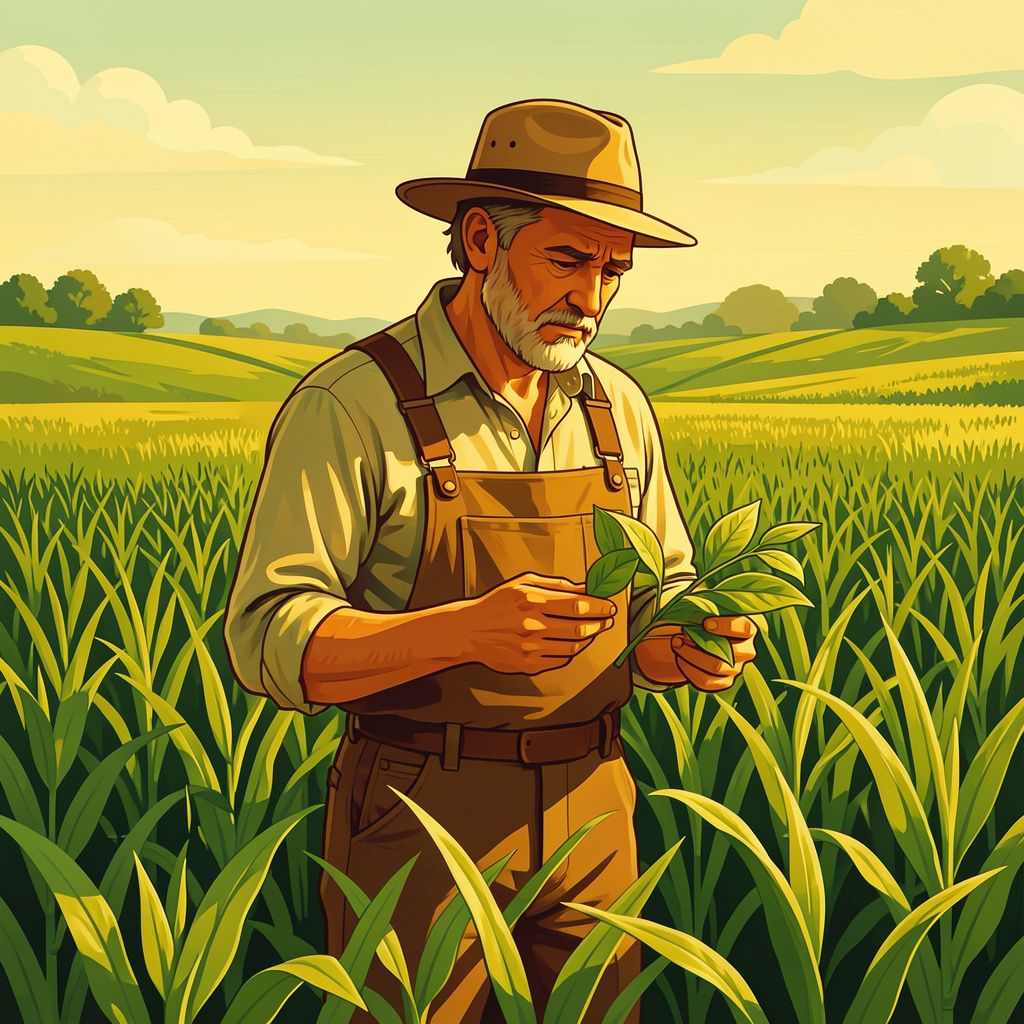
Amsterdam, Sunday, 25 October 2026.
Pesticide exposure raises Parkinson’s risk by 67%, prompting Dutch farmers to break industry silence, confront significant health hazards, and test biological alternatives despite substantial crop loss.
Scientific Findings Catalyze Agritech Scrutiny
The debate over agricultural practices in the Netherlands has intensified following the broadcast of the two-part documentary ‘De boer, de broer, de zus en de ziekte’ by presenter Yvon Jaspers on October 17, 2026 [1][6]. The program, accessible via NPO Start [2][3][6], centers on Jaspers’ search for answers after her younger brother Willem was diagnosed with Parkinson’s disease at age 40 [5][6][8]. Her personal inquiry intersects directly with medical and agritech research led by neurology professor Bas Bloem, whose work highlights the relationship between chemical crop protection agents and neurodegenerative disease [1][2][8]. Advocacy group PAN Nederland highlighted findings from a review of 23 scientific publications indicating that occupational exposure to synthetic pesticides correlates with an average 67% higher risk of developing Parkinson’s disease compared to unexposed populations [3].
Public Backlash and Industry Silence
Despite the severe public health implications, Jaspers encountered widespread reluctance within the agricultural sector while filming [1]. Agricultural trade organizations actively advised their members against participating in the documentary because the link between chemical spraying and neurological disease remains highly sensitive [1][8]. The controversy touches long-standing industry relationships: Jaspers has fronted television programs such as ‘Boer zoekt Vrouw’ and ‘Onze Boerderij’ for more than two decades, but was previously scrutinized in 2018 when newspaper Trouw revealed she was under contract with animal feed multinational ForFarmers for an image campaign while producing agricultural broadcasts [1]. Figures such as former Christian Democratic Appeal (CDA) lawmaker Rendert Algra—who developed Parkinson’s disease and connects the condition to operating a Roundup spraying machine on a farm during his youth—have openly reassessed their positions regarding chemical dependency [8].
Pioneering Sustainable Agritech and Biological Innovations
In response to environmental and occupational health risks, progressive growers are actively implementing alternative agritech solutions categorized within agroecological innovation [1]. Twenty farmers across the Netherlands are participating in the ‘7-vinkjes-project’, an initiative spearheaded by sustainability organization Urgenda based in the Netherlands [1]. Under this 10-year framework, participating growers receive an annual subsidy of €1,000 per hectare to transition toward low-impact farming practices [1]. In exchange, operators commit to cutting synthetic pesticide applications by at least 90%, eliminating artificial fertilizers entirely, capping livestock density at 1.5 cows per hectare, and integrating structural biodiversity through hedges and trees [1].
Operational Realities and Economic Risks in the Field
The shift toward biological crop management involves steep economic hurdles and technical trade-offs [1]. Marc van Oers, an arable farmer based in Wouw, North Brabant, notes that eliminating synthetic herbicides represents the simplest phase of the transition, whereas removing chemical defenses against fungi, viruses, and insects introduces high risk, as uncontained pathogens can wipe out entire crop yields [1]. To enhance soil biodiversity, Van Oers employs multi-crop intercropping by seeding diverse varieties together on single plots [1]. Simultaneously, arable farmer Menko Oosterhuis, based in Thesinge near Groningen, has introduced nitrogen-fixing crops such as peas to replenish the soil naturally and reduce chemical inputs [1]. Nevertheless, Oosterhuis has experienced two failed harvest cycles during pesticide-free experiments, illustrating the precarious economics growers navigate as they work to replace traditional agrochemicals with resilient biological methodologies [1].
Bronnen
- www.trouw.nl
- www.facebook.com
- www.instagram.com
- www.instagram.com
- www.facebook.com
- www.parkinson-vereniging.nl
- www.tiktok.com
- www.bnnvara.nl