

Netherlands Becomes First European Country to Approve Tesla's Self-Driving Technology
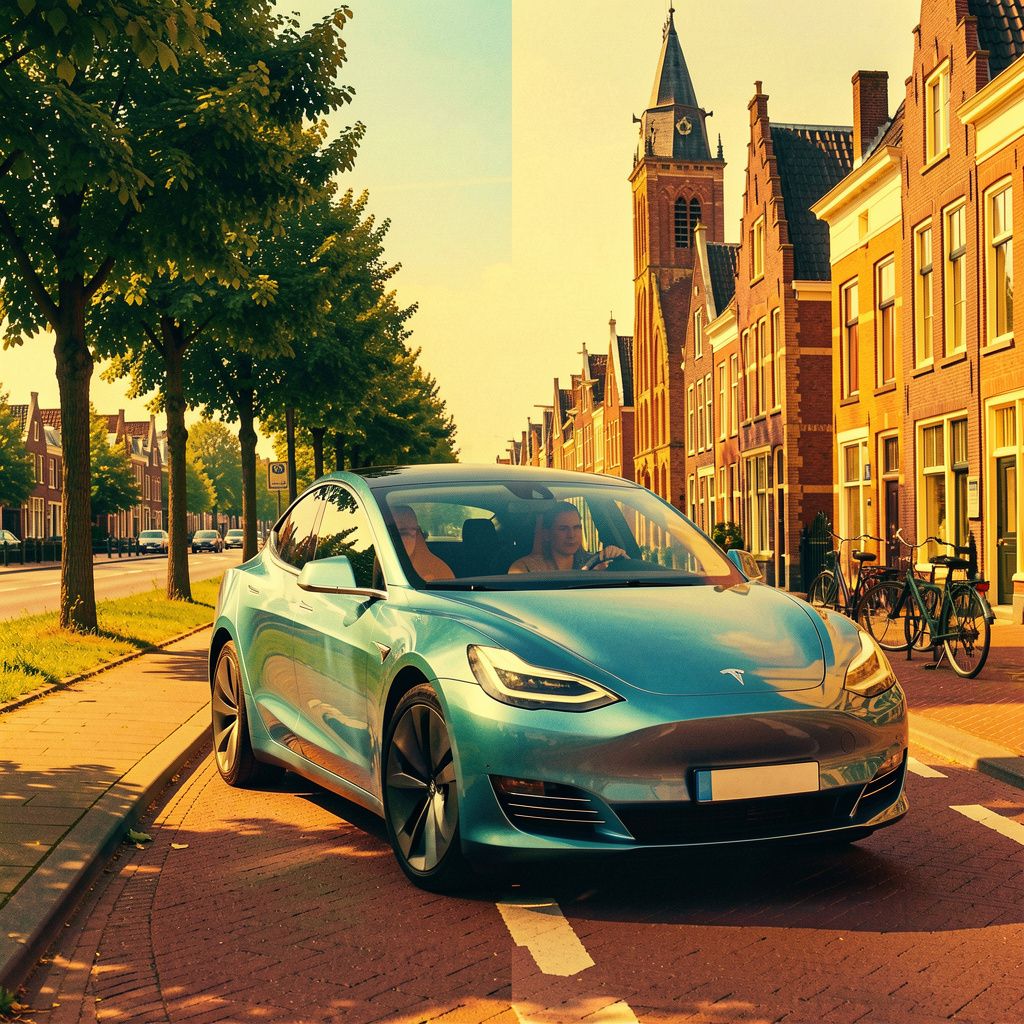
Amsterdam, Saturday, 11 April 2026.
Dutch regulators approved Tesla’s Full Self-Driving Supervised system on April 10, 2026, making the Netherlands the first EU nation to permit this advanced driver assistance technology on public roads. The system allows Tesla vehicles to handle steering, acceleration, and braking without hands on the wheel, though drivers must remain alert and ready to intervene.
How Tesla’s Full Self-Driving Supervised Works
Tesla’s Full Self-Driving Supervised system represents a significant technological advancement in autonomous vehicle capabilities. The system utilizes external cameras and artificial intelligence to navigate through various driving scenarios [1]. According to Tesla, the technology can reduce collision risk by seven times when activated [1]. The system handles navigation, steering, lane changes, and parking functions while requiring continuous human supervision [2][3]. Unlike fully autonomous vehicles, the FSD Supervised maintains driver responsibility and mandates that operators remain alert and ready to intervene when necessary [4].
Rigorous Testing and Safety Protocols
The Dutch vehicle authority RDW conducted extensive evaluation procedures before granting approval. Tesla underwent more than 18 months of comprehensive testing, including 4500 closed-course evaluations and 1.6 million kilometers of European road testing [2]. The company submitted thousands of pages addressing over 400 compliance requirements and dozens of safety regulation studies to satisfy Dutch authorities [2]. The RDW emphasized that proper utilization of this driver assistance system contributes positively to traffic safety [1]. The system incorporates sophisticated driver monitoring technology using sensors to detect attention levels and can temporarily disable itself if drivers consistently show inattentiveness [5].
European Market Expansion Strategy
Tesla’s Dutch approval serves as a strategic entry point for broader European Union market penetration. The company anticipates wider EU approval during summer 2026 [2], positioning this regulatory milestone as a catalyst for continental expansion. To extend the system throughout the EU, RDW must submit an application to the European Commission, followed by member state voting requiring majority approval [5]. Tesla CEO Elon Musk’s company describes this development as “a significant milestone toward a future of autonomous driving” in Europe [1]. The Netherlands approval could accelerate acceptance by other European regulatory authorities, given the precedent established [1].
Implementation Timeline and Market Impact
Tesla confirmed that FSD Supervised functionality will roll out to Dutch customers through wireless software updates over the coming days following April 10, 2026 approval [1][6]. Customers must pay for access to this premium service [1]. The system deployment follows Tesla’s established pattern of gradual geographic expansion, with FSD Supervised already operational in the United States, Canada, China, Australia, and South Korea [1]. However, the European version utilizes different software configurations compared to the US implementation, addressing region-specific regulatory requirements [5]. This regulatory achievement positions the Netherlands as a leader in autonomous vehicle policy development and demonstrates the country’s commitment to fostering automotive technology innovation [GPT].