

The Netherlands Bets 1.3 Billion Euros on Subsea Carbon Storage
The Hague, Saturday, 7 November 2026.
Despite committing 1.3 billion euros to expand North Sea carbon capture, low European pollution penalties leave commercial industrial participation uncertain as major energy partners step back.
State Capital Steps In to Anchor Subsea Carbon Hubs
Industrial carbon capture and storage (CCS) has moved to the center of the Dutch climate roadmap, yet the financial architecture supporting it has required substantial state intervention [1]. Following an initial announcement by the Dutch cabinet on September 2, 2026, the government formally earmarked an additional 1.3 billion euros in subsidies for the Aramis project [1][2]. The initiative is engineered to build underground trunk pipelines transporting captured carbon dioxide from heavy industrial clusters in the Netherlands, Belgium, and Germany directly into depleted gas fields located beneath the North Sea seabed [1][5]. With domestic industry generating approximately one third of national carbon emissions, the infrastructure is deemed critical to meeting national decarbonization obligations [1].
State Entities Fill the Private Equity Vacuum
The substantial public funding injection became necessary after commercial energy majors retreated from building out the transport network [1]. In 2025, Shell and TotalEnergies withdrew from constructing the transport infrastructure for the Aramis venture [1]. Consequently, Dutch state-owned enterprises Energiebeheer Nederland (EBN) and Gasunie were forced to step forward to fully finance the construction costs [1]. The €1.3 billion subsidy package is specifically designed to allow infrastructure work to commence with fewer commercial stakeholders committed upfront, bridging an operational gap ahead of a scheduled final investment decision in 2027 [1].
Porthos Sets the Operational Blueprint Amid Market Hesitation
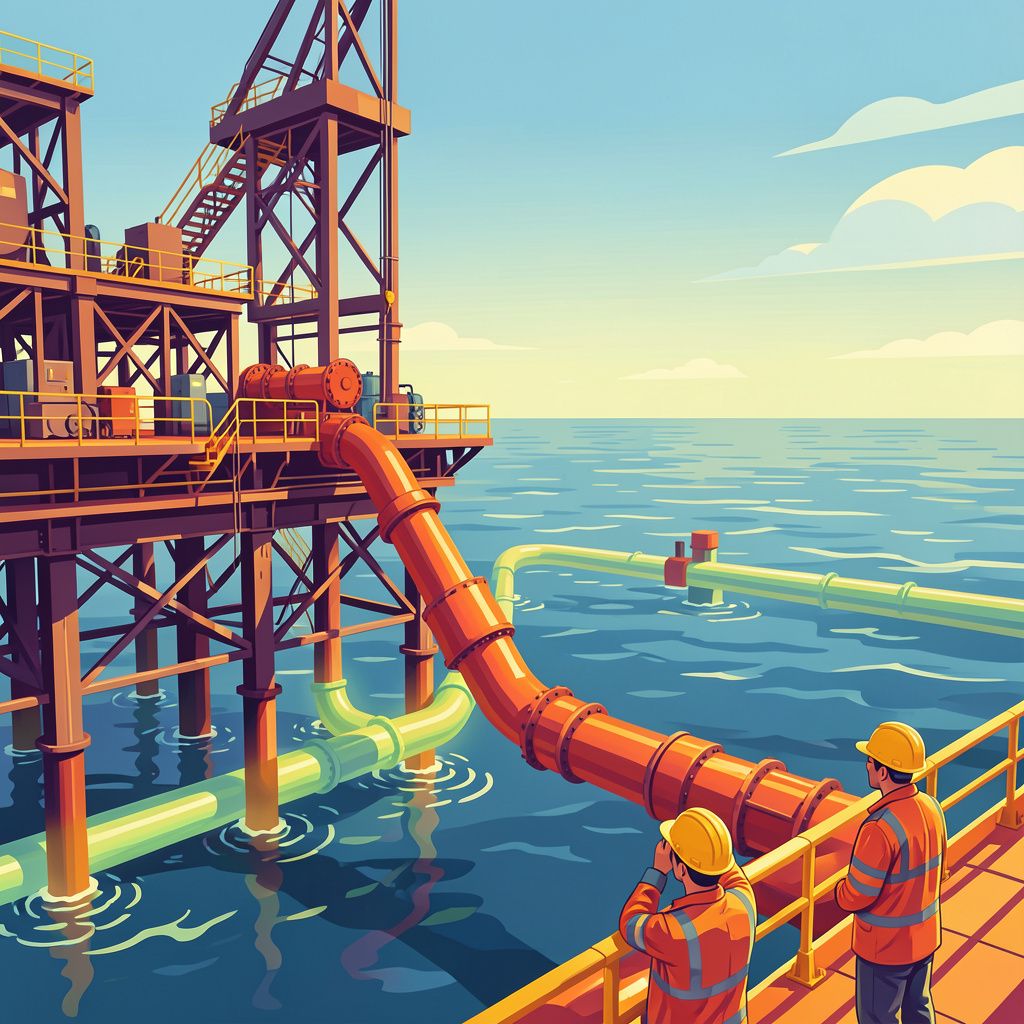
Aramis represents the larger successor to the pioneering Porthos project in the Port of Rotterdam [1][5]. Porthos was initially slated to inject its first CO2 beneath the seabed by the end of 2026, but technical delays pushed its targeted operational launch to 2027 [1]. The project has completed the installation and burial of a 20-kilometer offshore pipeline on the seabed, brought 1,600 offshore pipes into the port of Rotterdam, and acquired the former P18-A gas production platform situated 20 kilometers off the Rotterdam coast to serve as the subsea injection hub [1][6]. Porthos aims to sequester 2.5 megatons of carbon annually—approximately 10 percent of Rotterdam port emissions—drawn via a 30-kilometer pipeline from corporate heavyweights including Shell Pernis, ExxonMobil, Air Products, and Air Liquide into depleted reservoirs 3.5 kilometers beneath the seabed [1].
Economic Viability Strained by ETS Price Realities
While Porthos readies its operations, securing the wide-scale customer commitments required for Aramis remains challenging [1]. Heavy emitters—such as waste incinerators, Tata Steel, and chemical facilities—continue to evaluate the economic proposition, as European Emissions Trading System (ETS) allowance prices remain too low to make costly carbon capture installations commercially attractive compared to paying for emission rights [1]. Commercial viability constraints are evident across Northern Europe: on November 5, 2026, Equinor canceled development on its offshore CO2 Highway Europe pipeline project from Zeebrugge to Norway [2], while chemical producer BASF recently conditioned its final investment decision for the Kairos@C capture facility in Antwerp on subsidies and future ETS market reforms [2].
Competitive Regional Frameworks and Alternative Innovations
Despite cost obstacles, several commercial operators are moving ahead under tailored models [1]. In Zeeland, Yara officially commissioned a capture facility at its Sluiskil fertilizer plant on Monday, September 7, 2026, handling 800,000 tons of CO2 annually that is shipped directly to Norway for sub-seabed storage to preempt future ETS liabilities [1][2]. Competing projects are also emerging across the North Sea basin; the Abeona storage development at Den Helder targets depleted Helm and Helder oil reservoirs at a quoted cost of 118 EUR per ton excluding capture expenses [2]. Simultaneously, industrial innovators are testing alternative applications: Antwerp-based green innovation company D-CRBN utilizes an electrified plasma reactor to convert captured CO2 directly into industrial raw materials [2]. For the Dutch state, however, long-term decarbonization remains tied to Aramis, leaving public balance sheets to bear execution risks until regulatory pricing catches up with subsea storage economics [1].
Bronnen
- nos.nl
- www.industrielinqs.nl
- www.telegraaf.nl
- nl.linkedin.com
- www.gasunie.nl
- www.europoortkringen.nl
- nl.linkedin.com
- afvalonline.nl