

Why Dutch Consumers Cautiously Support Artificial Intelligence in Food Production
Wageningen, Tuesday, 6 October 2026.
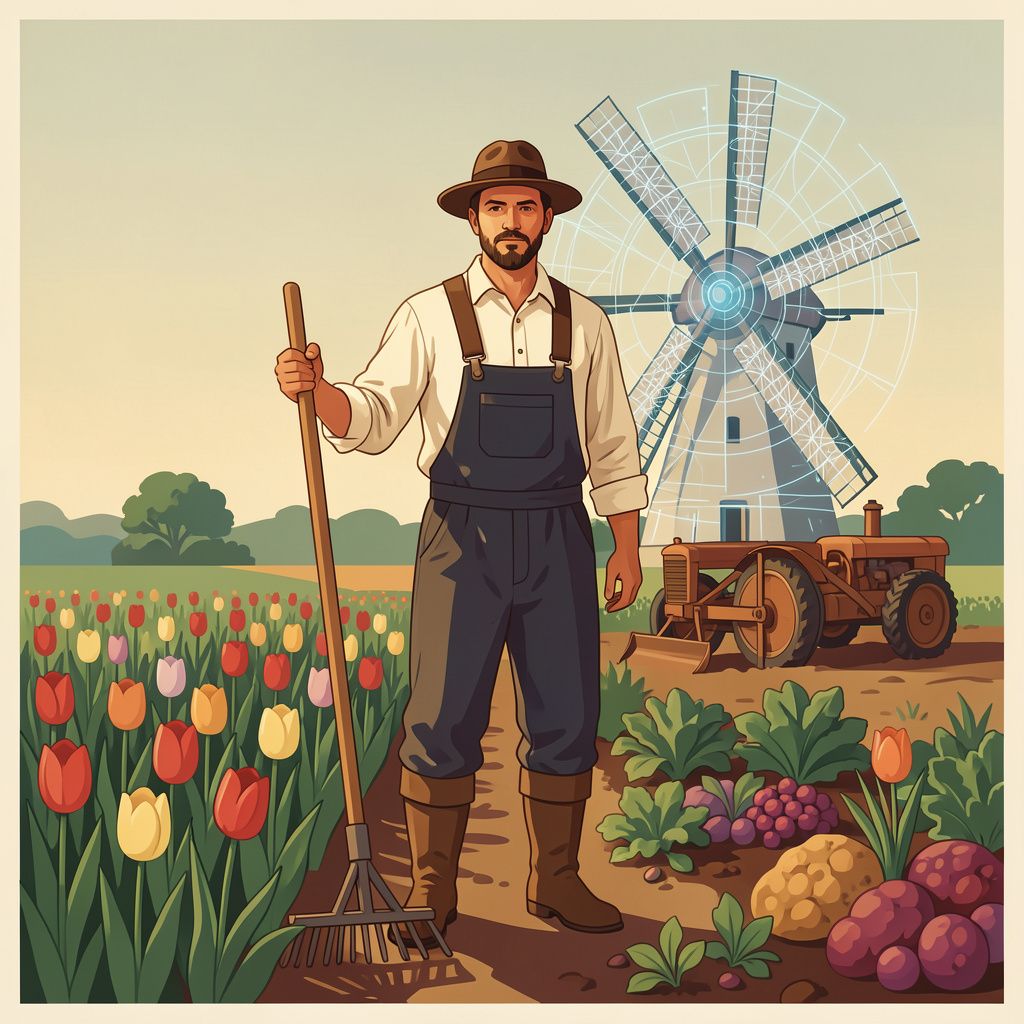
The 2026 Agrifoodmonitor reveals Dutch consumers cautiously support AI in farming to boost sustainability, provided human farmers—not algorithms—remain firmly in control of food production.
The Intersection of Agritech and Public Perception
The integration of artificial intelligence into the agricultural and food sectors represents a major milestone in agritech, an innovative field where technology is applied to improve farming and food production [1][2]. Released on October 6, 2026, the eleventh edition of the Agrifoodmonitor—conducted by Wageningen Social & Economic Research for TKI Agri & Food—examines how Dutch consumers view these technological shifts [1][2]. The study, led by project leader and researcher Mariët van Haaster-de Winter, surveyed 3,500 respondents in the Netherlands to gauge public sentiment regarding the rapid evolution of modern agricultural practices [1][2].
Benefits and Operational Mechanics of AI in Agrifood
As an agritech innovation, AI functions as a data-driven tool designed to optimize resource management and operational efficiency rather than operate entirely autonomously [1][2]. According to the research, consumers recognize that AI can play a pivotal role in resolving critical societal challenges, including strengthening food security, enhancing animal welfare, minimizing water consumption, and reducing food waste [1]. However, the technology relies heavily on maintaining a balance where human operators, such as dairy farmers and horticulturists, remain firmly at the steering wheel to ensure the food production process does not feel unnatural or detached from its origins [1][2].
Maintaining the Human Element in Smart Farming
While consumers view organizations adopting AI as modern and innovative, they do not offer blind trust [1]. Van Haaster-de Winter emphasizes that consumer perception often carries more weight than technical reality, making it essential for agritech companies to address public concerns about the final food product [1]. Societal appreciation for the Dutch agrifood sector remained stable overall in 2026, with arable farming, horticulture, and dairy farming scoring the highest in public appreciation, while the poultry and pig farming sectors scored the lowest [1]. Interestingly, public appreciation for both dairy and poultry farming reached its highest level since the monitor began in 2012 [1][2], marking a positive trend over a period of 14 years.
Bridging the Gap Through Transparency and Community
To bridge the gap between technological advancement and consumer trust, the report advises the agrifood sector to actively build relationships with the public [1][2]. Researchers recommend increasing transparency by opening up farms for public visits, hosting open days, and providing online insights into daily agricultural challenges [2]. This push for connection coincides with the ‘Week van Ons Eten’ (Week of Our Food), organized by Stichting Dutch Agri Food Week [2]. The national event commenced on Friday, October 2, 2026, in the municipality of Midden-Drenthe, Netherlands, featuring over 250 agricultural and food-related events designed to boost food awareness before concluding on October 10, 2026 [2].