

Fertilizer Use Drives Toxic Cadmium Levels in Rice Above Safety Standards
Wageningen, Monday, 6 April 2026.
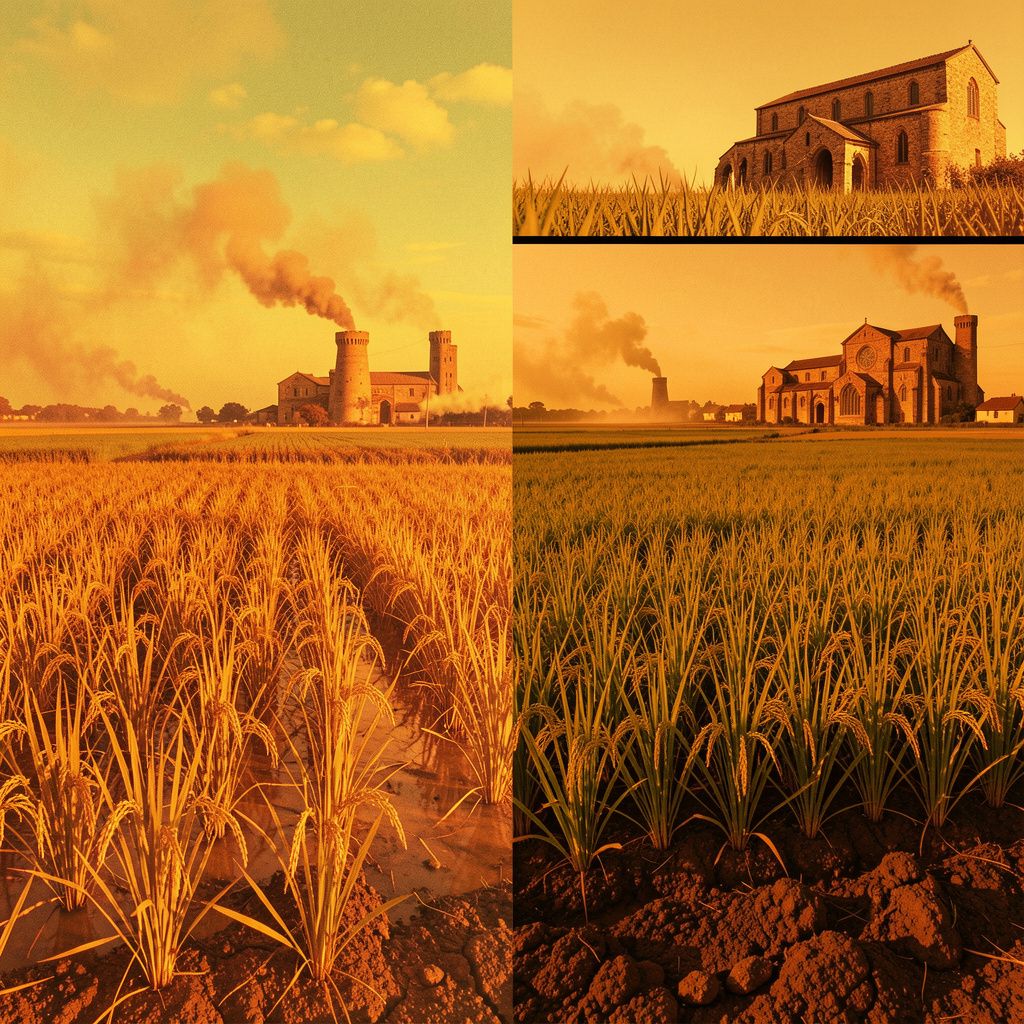
Wageningen University research reveals that large-scale fertilizer application creates a dangerous cycle where cadmium accumulates in soil and rice crops, potentially exceeding food safety limits. The study demonstrates that sustainable farming practices alone cannot solve this contamination crisis - only comprehensive action combining soil management with stricter industrial emission controls can protect food safety. Under current contamination levels, only 20% of fertilizer can be safely reused, while China currently uses 30%, highlighting the urgent need for integrated solutions across the entire food production system.
The Hidden Toxicity in Sustainable Farming
This research represents a breakthrough in agritech and food safety, revealing how seemingly beneficial agricultural practices can create unintended health risks. Published in Nature Food on March 31, 2026, the Wageningen University & Research study exposed a critical paradox in modern agriculture: fertilizer application designed to combat soil acidification and support circular farming can simultaneously drive toxic cadmium levels beyond safe consumption limits [1][2]. Dr. Donghao Xu, the study’s lead researcher, emphasized the complexity of this challenge, stating that “what is good for the soil can pose a long-term risk to food safety” and that “this tension cannot be resolved by looking at agricultural practices alone” [1]. The research team utilized sophisticated coupled models for soil processes and metal transport to simulate long-term effects of various nutrient management and liming strategies over multiple decades [1].
Quantifying the Contamination Crisis
The study’s most alarming findings center on current fertilizer usage patterns in China, where the research was conducted. Under existing cadmium deposition levels, only approximately 20 percent of fertilizer can be safely reused, yet China currently applies around 30 percent, creating a dangerous gap between safe practice and reality [2]. This 10 percentage point difference represents millions of hectares at risk of cadmium contamination. However, the research also identified significant potential for improvement: if cadmium deposition could be reduced through stricter industrial emission controls, safe fertilizer reuse could increase dramatically to 85 percent [2]. This represents more than a 325 percent increase in safe fertilizer application rates, demonstrating the critical importance of addressing industrial pollution alongside agricultural practices.
Beyond Agricultural Solutions: The Systems Approach
The Wageningen research definitively proves that agricultural interventions alone cannot solve cadmium contamination. Professor Wim de Vries, a co-author of the study, highlighted this systems thinking approach, noting that “circularity cannot be viewed separately from the broader environment” and that “if we want to close nutrient cycles, we must also ensure the quality of the material used for this purpose” [1][2]. The study demonstrated that raising soil pH through fertilizer application or liming alone is insufficient to prevent negative cadmium effects [1][2]. Instead, effective solutions require a dual approach: maintaining appropriate soil pH levels while simultaneously reducing cadmium deposition through stricter controls on industrial emissions [1][2]. This integrated strategy ensures that cadmium levels in rice remain within quality standards, protecting both agricultural sustainability and public health.
Global Implications for Food Safety Policy
While the research focused specifically on rice cultivation in China, the implications extend far beyond Asia’s agricultural systems [1][2]. The findings are directly relevant to Europe and the Netherlands, where similar questions about fertilizer use, soil quality, and contamination are increasingly urgent policy concerns [1][2]. The study underscores that policy decisions regarding agriculture, industry, and environment are directly interconnected, requiring coordinated responses rather than isolated interventions [1][2]. The research emphasizes that effective solutions for sustainable agriculture demand coherent policy frameworks that balance food production, environmental quality, and public health [1][2]. This systemic approach to agricultural contamination represents a new paradigm for food safety regulation, moving beyond single-sector solutions toward comprehensive environmental and health protection strategies.