

How Limburg Is Powering the Clean Transition Across 67 Industrial Sites
Maastricht, Sunday, 8 November 2026.
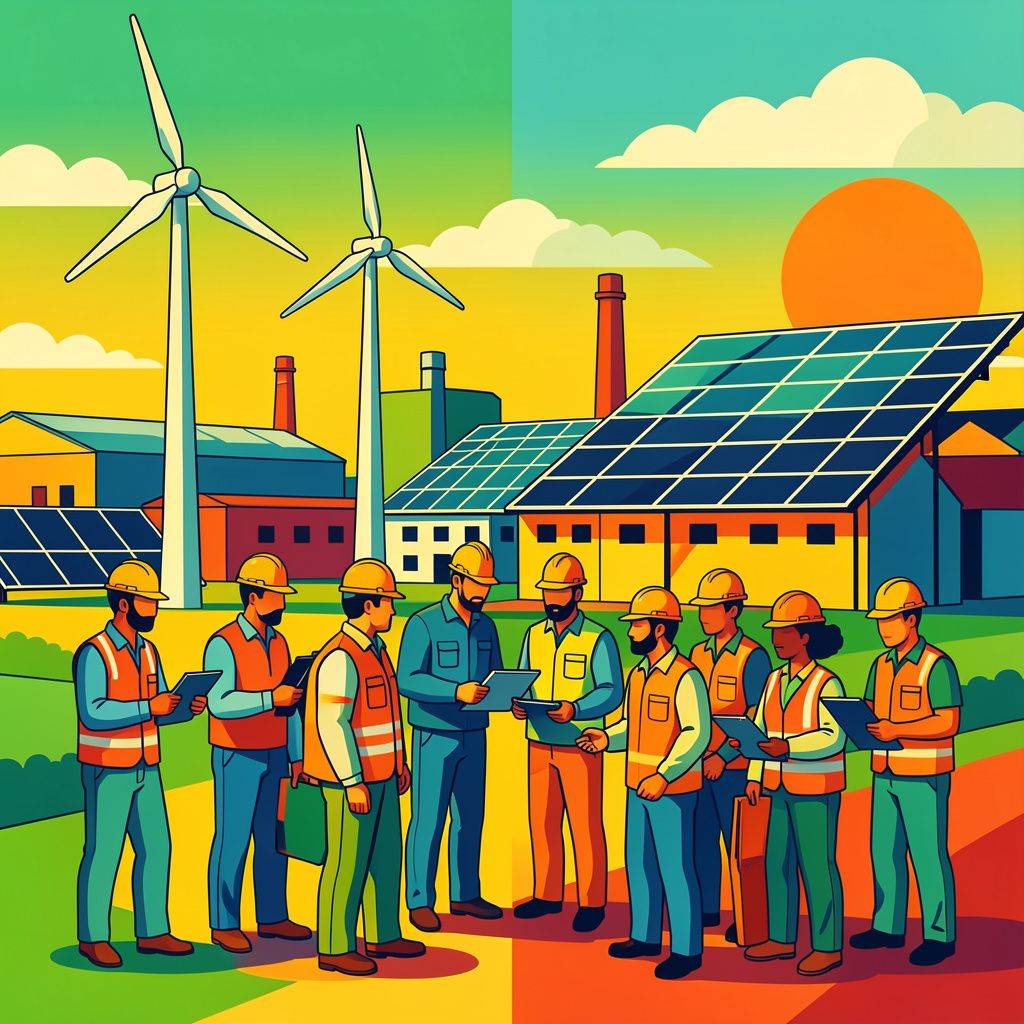
Limburg is pioneering industrial sustainability in the Netherlands, uniting 27 municipalities across 41 projects to tackle power grid limits and resource shortages through collective business management.
Overcoming Grid Bottlenecks Through Shared Infrastructure
Industrial zones across the Netherlands face immediate growth ceilings imposed by electrical grid congestion, making conventional piecemeal decarbonization unworkable [1][3]. Under the Programma Verduurzaming Bedrijventerreinen (PVB) Limburg—a joint initiative uniting the Limburgse Werkgevers Vereniging (LWV), Ontwikkelingsmaatschappij Midden-Limburg (OML), and regional development agency LIOF—stakeholders are establishing collective structures to maximize restricted network capacity [1][3][5]. Out of 31 municipalities originally engaged across the province, 27 are actively collaborating across 41 green transition projects distributed over 67 business parks [1]. Furthermore, 22 industrial estates have formally instituted or reinforced organized park management models, representing 32.836% of the participating business parks [1].
Circular Water Solutions and Ecological Upgrades
Beyond power distribution, manufacturing estates require resilient resource management to maintain operations amid changing climate realities [1][2][5]. On 29 October 2026, the PVB ‘Beleid ontmoet Praktijk’ tour brought municipal leaders and industry experts to operational testbeds in Nederweert and Roermond [2][3][5]. At business park Roerstreek in Roermond, project leader Joost Smetsers of Rehydro presented the ‘Waterbeschikbaarheid Roerstreek’ initiative, which purifies local surface water to provide business park tenants with an autonomous industrial supply [2][3]. Supported by Hans van Oosterwijk of De Waterbank and Vanessa Silvertand from OML, this circular design recycles stormwater and processes surface water to eliminate industrial reliance on strained drinking water reserves [2][3].
Municipal Alignment and Long-Term Energy Security
Deploying physical clean-tech infrastructure requires unified civic and commercial governance [1][3][4]. At the Ittervoort business park within the municipality of Leudal, local businesses have organized into a Bedrijveninvesteringszone (BIZ) that functions as a single commercial counterparty to local government [4]. Leudal alderman Michel Graef and economic policy advisor Randy Habets are deploying a structured three-year BIZ action plan in collaboration with OML, LWV, and PVB Limburg, mapping estate-wide electricity loads to balance surplus capacity against rising industrial demand [4]. This collaborative roadmap sets a definitive capital horizon: securing complete, self-reliant energy availability for all enterprises operating on the Ittervoort estate by 2040 [4].
Sustaining Collective Transitions Across Dutch Industry
The shift from isolated company-level retrofits to regional, park-wide transition models highlights that sustained public-private funding remains vital to convert exploratory studies into live hardware [1]. As emphasized by PVB Nederland at the ‘Samen Vooruit’ annual conference held in Venlo at Villa Flora on 8 October 2026, national organizers are preparing programmatic extensions to sustain multi-year project pipelines across the province [1][4]. By replacing disconnected operations with shared energy platforms, industrial water recycling circuits, and structured business zone investments, Limburg’s business parks offer an actionable template for commercial districts seeking to decarbonize within hard physical infrastructure limits [1][2][3][4].
Bronnen
- liof.nl
- pvbnederland.nl
- lwv.nl
- www.oml.nl
- nl.linkedin.com
- www.shiftlimburg.nl
- www.facebook.com
- www.shiftlimburg.nl