

Dutch Parliament Weighs €2 Billion Subsidy for Tata Steel's Green Transformation
The Hague, Tuesday, 7 April 2026.
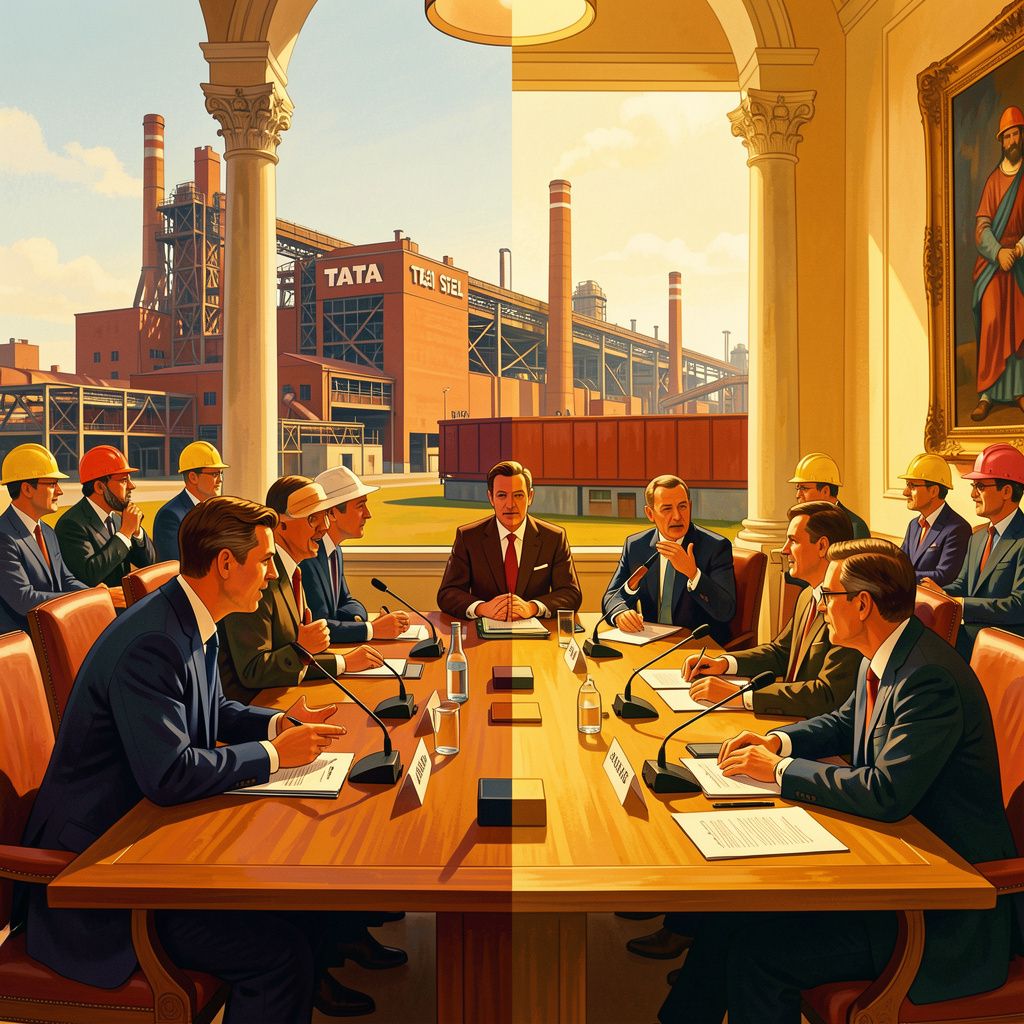
The Netherlands faces a pivotal decision as lawmakers debate whether to approve a massive €2 billion public subsidy for Tata Steel’s environmental transition. The steel giant has accelerated plans to close both coke gas plants while facing mounting pressure from record €85 million fines and criminal investigations into toxic emissions. Over 117 economists oppose the bailout, arguing taxpayer money would flow to Indian shareholders with limited environmental benefits. Meanwhile, thousands of jobs hang in the balance as the government aims to finalize the controversial agreement by September 2026, making this one of Europe’s largest industrial decarbonization gambles.
Parliamentary Battle Lines Draw as Debate Intensifies
The Dutch House of Representatives convened on Tuesday, April 7, 2026, for what many consider a defining moment in the country’s industrial and environmental policy [1][2]. The debate centers on whether Tata Steel Netherlands should receive the proposed €2 billion subsidy package to support its transition away from coal-based steel production. Climate Minister Stientje van Veldhoven defended the package, stating it would “lead to a reduction of negative health impacts for residents in the surrounding area and a significant CO2 reduction” [1]. The parliamentary discussion follows weeks of intense lobbying, with over 12,000 people signing Tata Steel’s petition supporting the “Green Steel Project” after the company ran a full-page advertisement on March 17, 2026 [1].
Economic Stakes and Opposition Voices
The financial implications extend far beyond the headline subsidy figure. In January 2026, the Omgevingsdienst Noordzeekanaalgebied imposed a record fine of €85 million on Tata Steel for excessive emissions [1][5]. This followed a criminal investigation that has been ongoing since April 16, 2022, with the Inspectie Leefomgeving en Transport seizing company records in March 2026 as part of the pollution probe [1][5]. Opposition to the subsidy has been fierce, with 117 economists publishing a letter in the ESB journal arguing against state aid, claiming that a viable green steel company would not remain viable even with government support [2][5]. Laurens Dassen of Volt echoed these concerns during the debate, arguing that “Dutch tax money will go to Indian shareholders” [2].
Accelerated Closure Plans and Health Concerns
Tata Steel CEO Hans van den Berg announced the possibility of accelerating the closure of both coke gas plants, a move that received positive cabinet response [2]. However, the timeline remains uncertain, with Minister Van Veldhoven-van der Meer clarifying that subsidies are not specifically for closing coke gas plants but for measures exceeding legal requirements [2]. The health debate intensifies as residents near the plant face exposure to toxic substances including arsenic, benzene, lead, mercury, nickel, and ultrafine particles [5]. The Expertgroep Gezondheid IJmond concluded that health improvements based on the Joint Letter of Intent would be limited, with chairman Marcel Levi noting that “internationally, the WHO standard 2021 is currently being used. The Netherlands falls far short of that. And certainly not in the IJmond” [5].
September Deadline and Strategic Implications
The Dutch cabinet aims to finalize the subsidy agreement with Tata Steel by the end of September 2026, creating pressure for parliamentary approval [1][2]. Tata Steel’s transformation plan targets having a new green steel plant operational by 2030, transitioning to 50% natural gas from coal [1]. The strategic importance of maintaining steel production capability has drawn support from various quarters, with VVD’s Alisha Müller describing Tata Steel as “the economic heartbeat of the IJmond” and advocating for an “ASML-model” approach to the company [2]. However, current plans would still allow one coking plant and blast furnace to remain operational until 2045 [5]. The debate reflects broader European challenges in balancing industrial competitiveness with environmental goals, as evidenced by a Milan court’s decision to shut down coking plants and blast furnaces at a comparable Italian steel facility from summer 2026 [5].