

Coordinated Cyberattack Heats European Supermarket Freezers to 50 Degrees Celsius
Amsterdam, Tuesday, 3 November 2026.
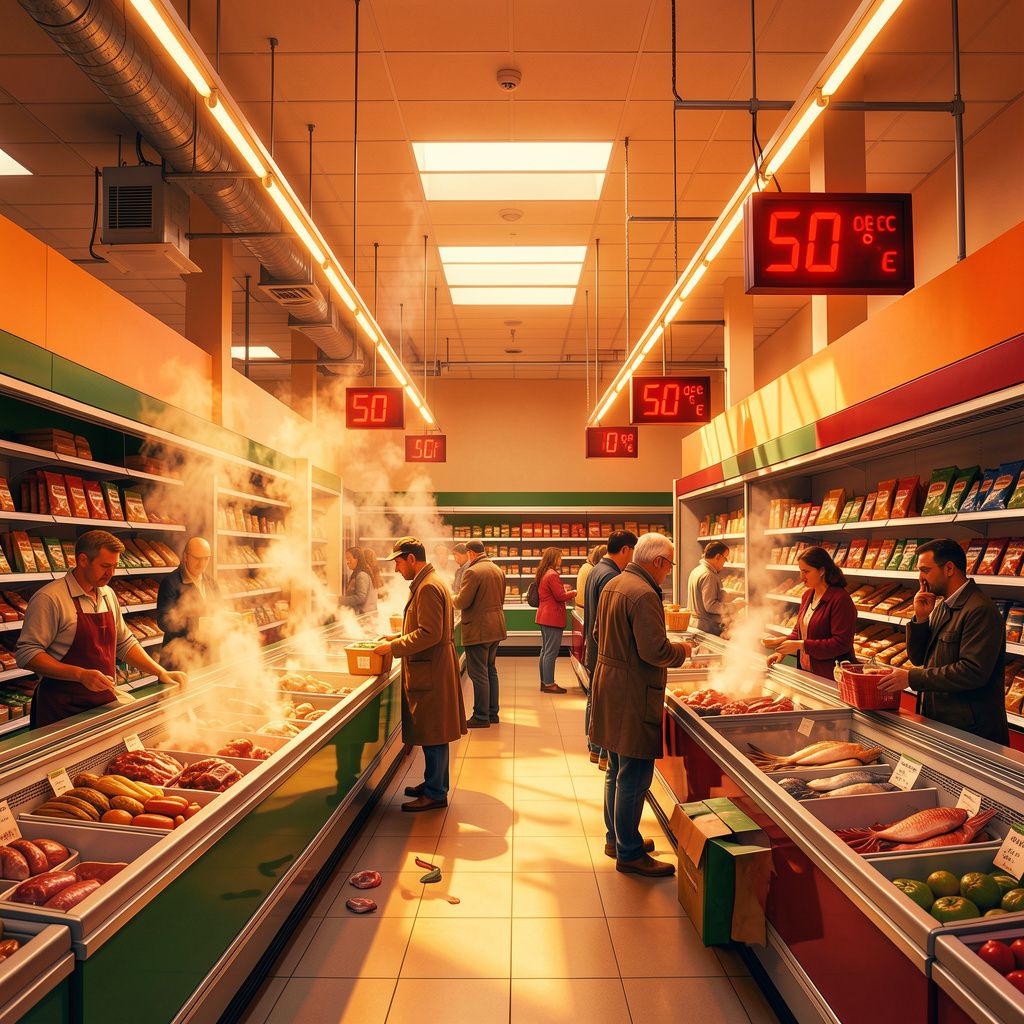
Hackers targeted cooling infrastructure across seven European nations this week, deliberately raising freezer temperatures to 50 °C and spoiling millions of euros worth of inventory across major grocery chains.
Overnight Network Sabotage Across Seven Nations
Supermarket chains throughout Europe faced widespread supply chain disruption following an overnight cyberattack on automated refrigeration infrastructure on Sunday, November 1, and Monday, November 2, 2026 [1][5][6]. The intrusion manipulated commercial temperature controls across at least seven countries: Belgium, Luxembourg, Sweden, the Netherlands, Ireland, Estonia, and Finland [1][6][7]. Perpetrators accessed networked cooling systems and remotely switched cooling evaporators directly into defrost cycles [1][5][7]. This operational override surged internal temperatures of refrigerators and walk-in freezers to as high as 50 °C (122 °F) [1][5][6], ruining perishable inventories of dairy, fresh meat, and frozen products before morning shifts began [6].
Mounting Inventory Losses and Retail Disruption
The physical sabotage left grocers facing severe commercial fallout as store personnel were forced to discard vast amounts of inventory [1][6]. In Belgium and Luxembourg, Dutch-headquartered retail giant Ahold Delhaize reported disruptions across roughly 40 Delhaize branches [1][5][7]. Individual stores experienced localized shocks; a single Delhaize supermarket in Hoeilaart, Flanders, recorded an estimated inventory loss of €100,000 [1][7]. In addition, Belgian retailer Colruyt saw 5 stores compromised, Carrefour suffered outages in 15 of its 700 Belgian branches, representing 2.143% of its national network, and IKEA reported disruptions at its Mons location [1][6]. In the Netherlands, cooling and freezing systems belonging to at least 17 enterprises were breached overnight, according to figures tracked by Danish equipment manufacturer Danfoss [1].
Widespread Nordic and Baltic Repercussions
The breach quickly propagated across international retail operations over the same operating cycle [1][6]. Swedish retail group Coop confirmed that 6 to 7 of its roughly 800 retail stores experienced partial or total freezer shutdowns, representing 0.75% of its national footprint [1][5][6]. Independent grocers operating under the ICA banner in Sweden also suffered disruptions, including an outlet in Sjöbo where freezers were discovered compromised and forced to 50 °C at 2:00 AM [1][5][6]. Across the Baltic Sea and western borders, SuperValu reported that 13 of its 223 supermarkets in Ireland—or 5.83%—sustained operational tampering, while Estonian grocer Selver suffered malfunctions via systems linked to commercial vendor Kitman Coldtech, alongside parallel breaches reported by Kesko grocery stores across Finland [6][7].
Digital Innovation in Cooling Infrastructure and Industrial IoT Vulnerabilities
Commercial refrigeration in modern food retail relies heavily on industrial Internet of Things (IoT) innovation and cloud-managed building management systems [6]. Developed by industrial equipment providers such as Danish manufacturer Danfoss, based in Denmark, and configured by engineering contractors such as Sabcobel, based in Belgium, these connected control systems replace mechanical switches with smart automation [1][5][6]. The primary technical and economic benefit of this innovation is intelligent efficiency: centralized controllers run optimization algorithms to minimize compressor electricity consumption, continuously regulate defrost intervals, track food-safety metrics, and enable remote diagnostic support without on-site personnel [1][6][GPT]. Evaporators—the operational components that remove heat from freezer air—can be defrosted automatically via digital commands to prevent ice formation on the coils [1][5][7][GPT].
Operational Technology Exposures and Industry Safeguards
However, bridging industrial physical machinery to the cloud creates systemic operational technology (OT) vulnerabilities [6]. Tom Hegel, a threat analyst at cybersecurity firm SentinelOne, highlighted that the retail industry runs massive surfaces of exposed operational hardware, including building management systems, door controls, and refrigeration modules [6]. Following earlier cyberattacks in France on October 12, 2026, which hit hundreds of retail stores utilizing Danfoss control systems and sparked equipment overheating, Belgian refrigeration contractor Sabcobel mobilized engineers to isolate affected units [1][5]. Sabcobel Chief Executive Officer Stephan Moelans explained that his teams worked around the clock from 1:00 AM to manually sever networked connections [1][5][6]. Moelans emphasized that managing cooling systems via protected, secure internet architectures rather than publicly accessible connections is the simplest remediation, although comprehensive resilience requires direct hardware modifications and capital expenditure rather than routine remote software updates [1][5][7].
Geopolitical Concerns and Long-Term Food Supply Protection
The incident has triggered rapid regulatory oversight and strategic scrutiny across the European Union [6]. European Commissioner for Food and Agriculture Christophe Hansen described the sabotage as an intentional assault on food supply chains aimed at deteriorating consumer confidence [6][7]. The operational disruption follows a parallel investigation by United States defense officials into similar cooling equipment failures at American military bases in August 2026 [1]. Katrien Eggers, spokesperson for Belgium’s Centre for Cybersecurity, noted that artificial intelligence enables threat groups to rapidly find and exploit hardware weaknesses in operational systems [6]. As national cybersecurity bodies across Belgium, Sweden, and the United Kingdom coordinate inquiries, enterprise grocers face growing calls to enforce strict physical-digital network segmentation to shield basic food infrastructure against future digital interventions [1][6][7].
Bronnen
- www.bbc.com
- www.facebook.com
- www.reddit.com
- www.facebook.com
- www.cbsnews.com
- www.theguardian.com
- www.cnbc.com
- www.instagram.com