

Dutch Offshore Wind Faces Costly Decommissioning Hurdle as Turbines Age
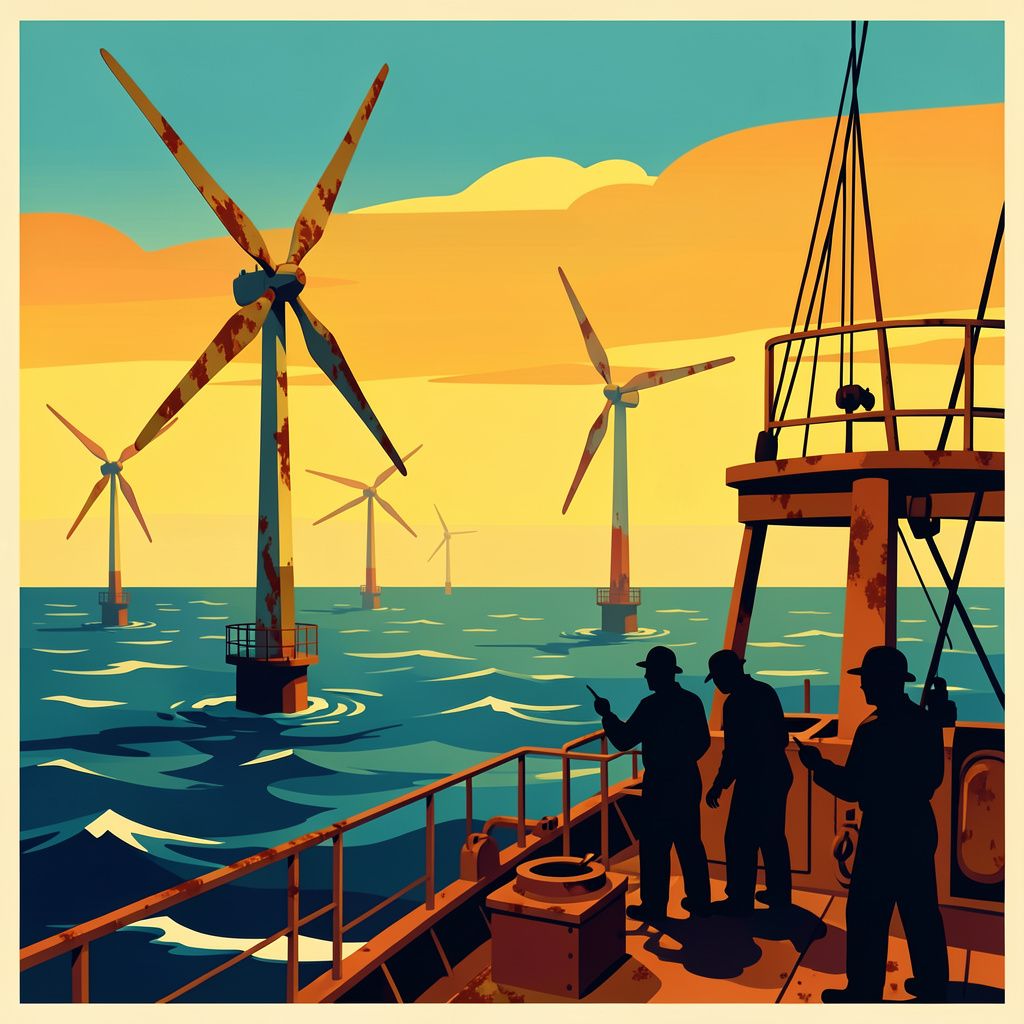
The Hague, Tuesday, 3 November 2026.
A new TNO study warns that existing Dutch bank guarantees are insufficient to dismantle aging offshore wind turbines, urging pilot projects to commercialize unproven recycling and removal technologies.
The Scale of the Approaching Decommissioning Wave
Offshore wind turbines have generated clean electricity off the Dutch coast since 2007 [3]. However, the looming retirement of early maritime wind assets is now exposing significant technical, financial, and environmental gaps [1][2]. According to a study published on November 2, 2026, by the Dutch research organization TNO—commissioned by the Netherlands Enterprise Agency (RVO) and TKI Offshore Energy (Energy Innovation NL | Offshore Energy)—the Netherlands faces major hurdles in retiring its North Sea offshore wind fleet at commercial scale [1][2][3]. While the country’s pioneering offshore installation, the Egmond aan Zee wind farm, is scheduled to continue operating until December 31, 2031, following a technical and ecological assessment, the timeline leaves a narrow window for infrastructure readiness [1][2][3].
Financial Realities and Outdated Guarantees
A central friction point identified in the TNO study is the mismatch between statutory financial securities and the actual cost of maritime site restoration [2]. Since 2016, Dutch regulations have maintained a mandatory decommissioning bank guarantee set at 120,000 euros per megawatt [2][3]. The investigation concludes that this historical reserve is insufficient to finance the complete removal of commercial turbines ranging from 3 megawatts to 5 megawatts in capacity [2]. Compounding this funding challenge, uncertainty surrounding future project pipelines and dismantling schedules has slowed down private investments in domestic port processing facilities and industrial recycling plants [1].
Technical Bottlenecks from Seabed to Surface
The technical operations required to clear sea concessions present distinct environmental and engineering dilemmas [1][2]. Under the Dutch Offshore Wind Energy Act (Wet windenergie op zee), operators face a baseline legal obligation for complete infrastructure removal, with only narrow exceptions granted for partial extraction [2]. Yet, international maritime frameworks such as UNCLOS, IMO, and OSPAR were historically designed around oil and gas platforms rather than arrays of offshore wind structures [2]. The engineering hurdles are especially visible in foundation extraction: cutting large monopiles deep beneath the seabed inflicts ecological disturbance and results in unrecovered steel, whereas alternative technologies such as water jetting and vibratory extraction have not yet achieved commercial-scale operational proof [1][2][3].
Logistical Pressure on Ports and Circular Supply Chains
Once components are severed and recovered, downstream recycling chains encounter limited specialized capacity [1][2]. Ports in the region face the logistical strain of managing incoming decommissioned elements at the same time they handle outbound components for new installations [3]. The study identifies acute processing constraints for composite turbine blades, industrial polymers, permanent magnets, and extensive rock dump (stortsteen) or riprap used as scour protection [1][2][3]. To address circularity beyond offshore operations, TNO has engaged in initiatives like the CIRCLE4WIN project launched in July 2026 and the European EoLO-HUBs framework, emphasizing that recycling chains must be established ashore before targets can be achieved [3].
A Roadmap for Shared Innovation and Risk
To prevent costly delays, TNO evaluated nearly 50 innovation areas through literature reviews and a dedicated workshop held on April 7, 2026, in Amsterdam with 32 experts across industry, science, civil society, and government [2][3]. The report advises Dutch authorities to utilize the nation’s earliest decommissioning sites as full-scale demonstration platforms for foundation extraction, cable retrieval, and scour protection handling [1][2][3]. Rather than bundling novel experimental methods into standard tenders, researchers recommend decoupling research-grade technological trials from regular commercial removal contracts [2][3]. By spreading capital expenditures and operational risks among wind farm owners, maritime contractors, developers, and public bodies—coordinated by an independent entity alongside industrial alliances such as GROW and drawing parallels with Germany’s Alpha Ventus farm initiative—the North Sea basin can systematically de-risk next-generation circular decommissioning [1][2][3].