

Turning Industrial Waste into Critical Battery Metals
IJmuiden, Sunday, 8 November 2026.
With Europe importing 95% of its vanadium, a new facility will process 500 tons of industrial waste to secure critical materials vital for large-scale energy storage.
Scaling Urban Mining in IJmuiden
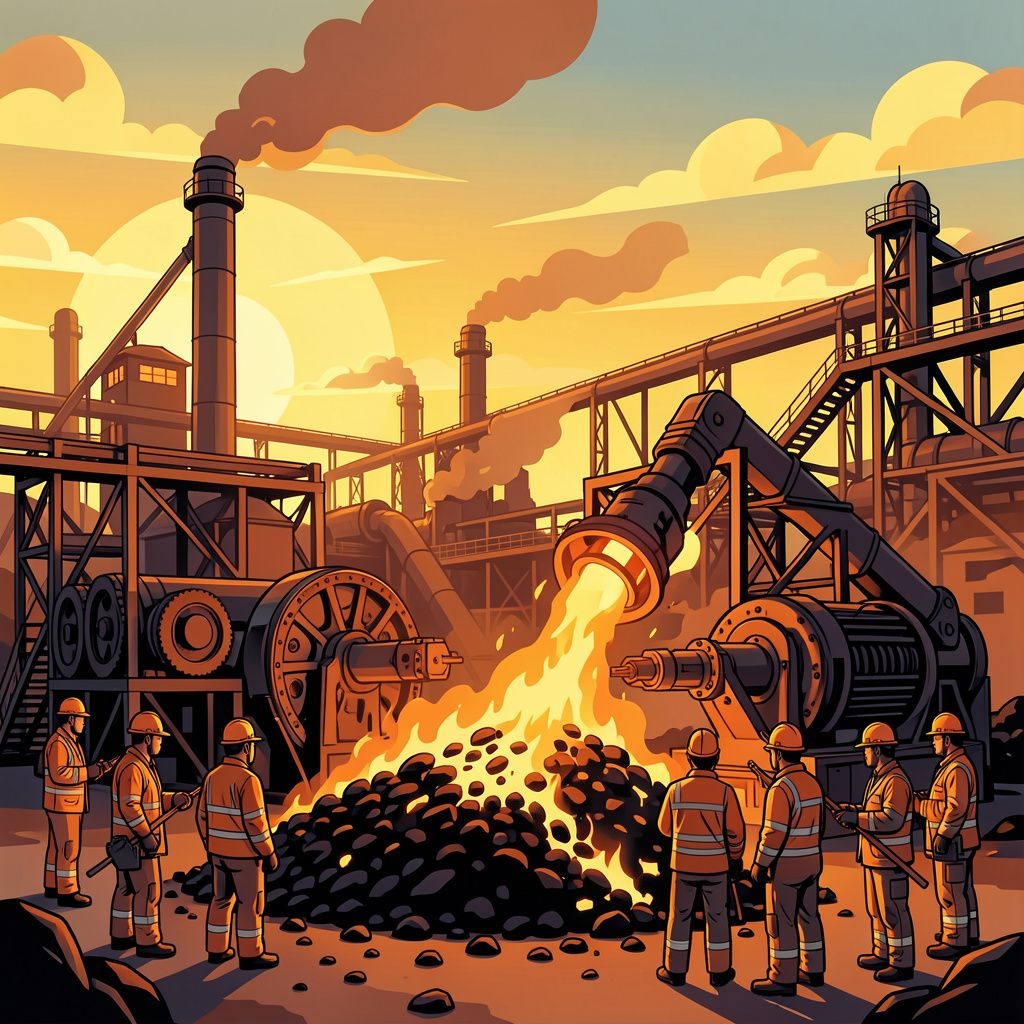
To tackle the continent’s heavy reliance on external supply chains, Dutch deep-tech and urban mining enterprise Phoenix Metals, based in IJmuiden [1][4], has closed a €4 million seed funding round to construct a pilot facility [1]. The plant is engineered to process 500 tons of industrial waste into valuable raw inputs [1]. Led entrepreneurially by Gijsbert Bakker and Stijn van Zelst [1], the venture uses low-temperature hydrometallurgical technologies designed to treat heavy residue streams such as steel slags, refinery residues, and maritime waste without generating emissions or utilizing nitrogen-bearing solvents [1][4].
Comprehensive Valorization Over Selective Extraction
Conventional metallurgical recovery techniques typically focus on isolating a single high-grade element, leaving behind substantial hazardous or inert bulk [1]. In contrast, Phoenix Metals focuses on valorizing the full material stream [1]. When processing steel slags, the facility is designed to recover vanadium as well as iron, magnesium, manganese, calcium-based products, and reusable mineral fractions [1]. By eliminating industrial landfilling and capturing residual compounds, this closed-loop process aims to curb carbon intensity compared to primary extraction methods [1][GPT].
Strengthening European Energy Autonomy
The push to secure critical domestic metals aligns directly with Europe’s strategic priorities. Currently, Europe imports 95% of its vanadium supply [1], exposing clean energy deployment to international geopolitical friction. Vanadium serves as an indispensable active element for vanadium redox flow batteries, an energy storage architecture increasingly deployed across grid networks, heavy industrial clusters, data centers, and utility-scale renewable power installations [1]. Extracting this element from existing domestic slags directly bolsters regional manufacturing stability under the broader framework of the European Critical Raw Materials Act [1][4].
Blended Financing and Industrial Synergies
Alongside its €4 million seed round, Phoenix Metals has mobilized over €5 million in non-dilutive public grants [1], bringing total combined financial backing across equity and subsidies to 9 million euros. This public backing encompasses contributions from the European Just Transition Fund, the provinces of Noord-Holland and Zuid-Holland, the Netherlands Enterprise Agency (RVO), and Kansen voor West [1]. Reynier de Monchy, Senior Investment Manager at regional development agency ROM InWest, highlighted that linking this technology to the IJmuiden facility creates circular, resilient industrial value chains while addressing a strategic European raw material requirement [1].
Integration into the North Sea Canal Corridor
The startup’s scaling occurs within an active industrial corridor. Just days ago, on Friday, November 6, 2026, Phoenix Metals hosted an industrial site tour alongside Cargill and Strohm across Zaandam and IJmuiden [2][3]. The visits showcased regional decarbonization initiatives in the North Sea Canal Area (Noordzeekanaalgebied) [2][3], where stakeholders continue to explore sustainable repurposing of steel slag streams [4]. As the region prepares for the upcoming 5th edition of the NZKG-Jaarcongres on November 12, 2026 [3], Phoenix Metals’ pilot deployment marks a practical pivot toward industrial circularity and secure energy storage raw materials [1][3].