

How Renkum Cut Household Waste Charges Through Effective Recycling
Renkum, Thursday, 5 November 2026.
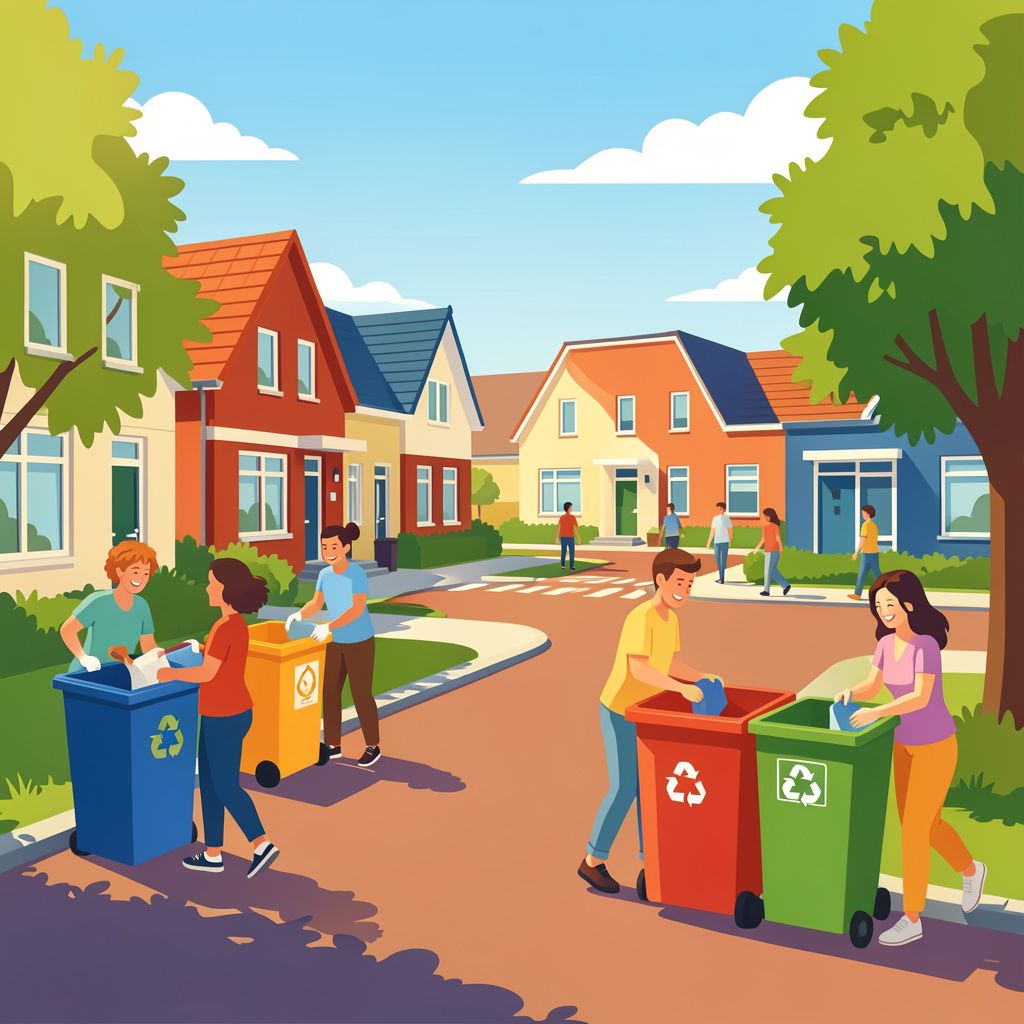
Renkum residents reduced residual trash to just 97 kilograms per person, lowering annual household waste taxes to 271 euros—far below costs in neighboring Dutch towns.
Benchmarking Waste Efficiency in Renkum
Comparative municipal benchmark data published on November 3, 2026, positions the municipality of Renkum, located near Oosterbeek in the Netherlands, as one of the top performers among jurisdictions where high-rise housing accounts for 20% to 29% of residences [1][5]. While comparable Dutch municipalities collect an average of 141 kg of residual non-recyclable waste per resident—reflecting an average sorting rate of 64%—Renkum’s residual waste generation reached a mere 97 kg per inhabitant [1]. This marks an absolute difference of 44 kg per resident compared to peer municipalities [1].
Household Savings and Quality Premium Structures
In total, Renkum collects 399 kg of domestic waste per resident, with more than three-quarters of that volume channeled into dedicated sorting streams: paper, organic waste, textiles, glass, and packaging bags designated for plastic, metal, and drink cartons (PMD) [1]. This discipline generates significant financial dividends for local taxpayers [1]. The average household waste levy in Renkum stands at 271 euros, undercutting Epe’s 332 euros by 61 euros and Wassenaar’s 526 euros by 255 euros [1].
Targeted Sorting Rates and Purity Thresholds
The municipality’s sorting performance is anchored by organic stream diversion, where 87% of vegetable, fruit, and garden waste is deposited into green collection bins, leaving minimal food remnants in gray bins [1]. Similarly, Renkum captures 85% of packaging waste (PMD) through separate collection bags [1]. Under regulatory payment frameworks taking effect in 2026, local compensation depends directly on sorting purity [1]. Renkum achieved an 80% purity score in its collected PMD stream, securing placement in the second-highest tier of a five-tier incentive scheme [1].
Unlocking Further Circular Economy Margins
Despite these municipal milestones, operational reviews indicate tangible scope for further recovery gains [1]. Half of the municipality’s remaining residual waste consists of items that should have been separated at the source [1]. Most notably, 48% of discarded textiles continue to be dumped into regular residual trash bins, alongside recurring instances of bulky refuse [1]. Correcting these residual flows will be essential for Renkum to optimize subsequent waste management budgets and capture top-tier recycling compensation [1][5].
Bronnen
- www.gelderlander.nl
- www.facebook.com
- www.linkedin.com
- www.arnhemnu.nl
- www.gelderlander.nl
- www.gelderlander.nl
- www.gelderlander.nl