

Transforming Cocoa Waste Into Valuable Food Ingredients
Haarlem, Wednesday, 28 October 2026.
Dutch startup Greencovery raised €1 million to turn discarded cocoa shells—often representing up to 80% of the fruit—into valuable ingredients, offering manufacturers vital relief from volatile global commodity prices.
Unlocking Value in Foodtech and Circular Agrifood
This innovation clearly belongs to the foodtech and circular agrifood sector, operating at the intersection of agricultural commodity processing and sustainable industrial ingredient manufacturing [1][2]. Founded in 2018, Dutch startup Greencovery has tackled a persistent market inefficiency in traditional chocolate supply chains [2]. Historically, approximately 70% to 80% of a cocoa fruit is underutilized or completely discarded during commercial chocolate production [2]. In processing hubs where cocoa beans are processed in massive volumes, remaining cocoa shells are often incinerated, turning what could be productive biomass into an operational cost and an environmental burden [1].
Local Separation Technology and Regional Impact
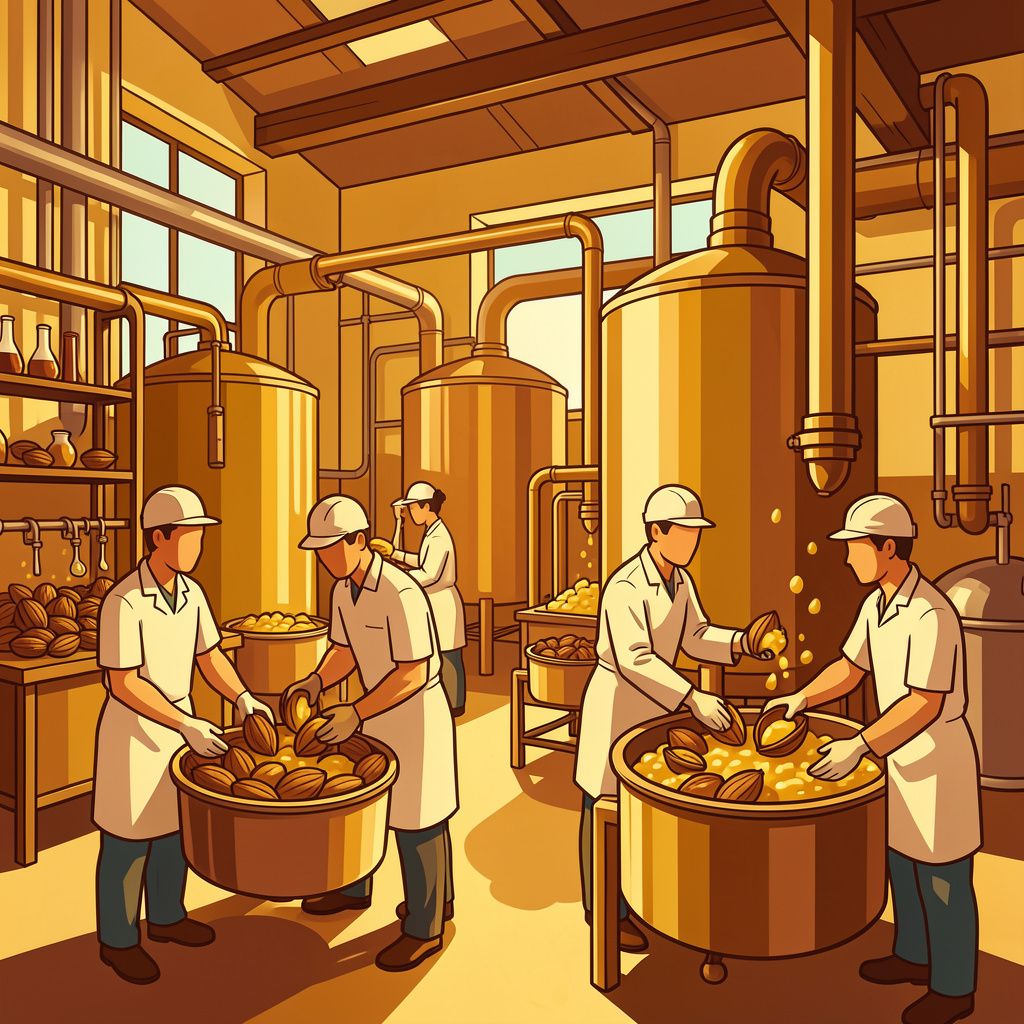
To capture this untapped value, Greencovery utilizes proprietary physical-chemical separation technology that recovers valuable compounds directly from food processing side-streams [1][2]. The proprietary process allows the company to extract proteins, amino acids, fibers, organic fats, acids, and flavor compounds without exporting raw waste for low-grade applications or disposal [1][2]. Specifically applied to cocoa, Greencovery converts residual shells on-site into three distinct functional ingredients: hard cocoa fibers, cocoa extract, and soluble cocoa fibers [1]. This on-premise recovery transforms an existing waste disposal expense into a resilient secondary revenue stream for industrial processors [1].
Economic Relief Amid Volatile Cocoa Markets
The commercial demand for these recovered functional components comes at a crucial moment for global food manufacturers facing elevated market volatility [1]. Amid historic cocoa price surges and recurring climate vulnerabilities across equatorial producer nations [2], upcycled cocoa extracts and fibers serve as dependable, cost-efficient, and sustainable alternatives to virgin cocoa inputs [1]. By integrating upcycled functional ingredients, food companies can secure steady supplies, protect operating margins, and insulate product formulations against global price shocks [1].
North Holland Hub and Strategic Scaling Plans
The geographic focal point for this deployment is the province of North Holland, Netherlands, specifically centered around Zaandam [1][2]. As a major European crossroads for food processing, North Holland generates over 350,000 t of food-grade side-streams annually [1][2]. In September 2026, Greencovery closed its €1 million funding injection from regional development agency ROM InWest, Brightlands Venture Partners, and a private investor [2]. ROM InWest investment manager Lotte Nolten-van Hoek highlighted that backing this partnership with a regional industrial food processor will reinforce the local agrifood innovation ecosystem while demonstrating tangible circular impact [1].
Commercial Pathway Toward 1,000 Tonnes Capacity
Looking forward from October 2026, Greencovery is deploying the initial €1 million in partnership with a Dutch industrial processing partner to scale operating capacity to an industrial milestone of 1,000 t per year [1][2]. Simultaneously, the foodtech firm is advancing an additional investment round aiming for up to €3 million [1][2]. With parts of this capital already committed by existing and new backers, the follow-on funding will finance large-scale commercial manufacturing and broad market distribution of its upcycled functional ingredients across Europe [1][2].
Bronnen
- rominwest.nl
- tw.news.yahoo.com
- rominwest.nl
- www.instagram.com
- www.instagram.com
- www.instagram.com
- www.instagram.com