

New Dutch Research Facility Launches to Fast-Track Sustainable Food Innovations
Wageningen, Thursday, 8 October 2026.
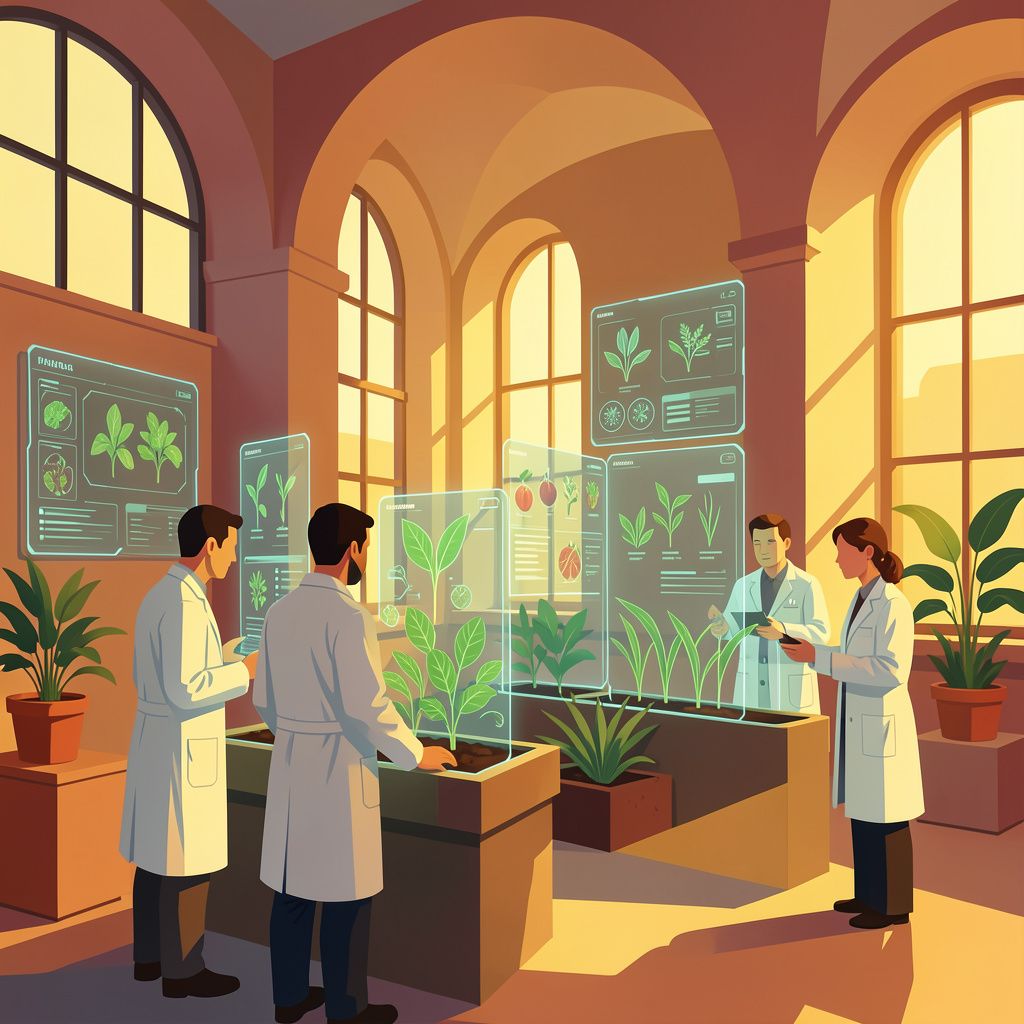
Wageningen University’s newly opened facility uses artificial intelligence and digital twins to accelerate sustainable food development, streamlining the journey from laboratory concepts to consumer plates.
A Milestone for Agritech and Food Technology
Operating at the intersection of agritech and advanced food technology, the newly launched Centre for Innovative Bio-based Ingredients and Applications (CIBIA) represents a major leap forward in how sustainable food systems are developed [2][6]. Officially opened on September 29, 2026, the facility is located on the Wageningen Campus in the Netherlands, serving as a physical and digital hub to translate scientific findings into practical market applications [2][7]. The opening ceremony was led by Sjoukje Heimovaara, the President of the Executive Board of Wageningen University & Research (WUR), alongside Ino Ostendorf, marking a significant expansion of the region’s shared research infrastructure [2][7].
How the AI-Driven Innovation Pipeline Works
CIBIA accelerates the research and development pipeline by integrating advanced engineering with artificial intelligence (AI) [4][6]. The facility is equipped to handle pilot-scale processing, mild preservation, food structuring, mixing, and 3D food printing [4]. By utilizing AI-enabled digital models and digital twins, researchers can simulate and analyze how prototype products behave across physical, chemical, microbiological, sensory, nutritional, and health parameters [2][6]. This digital-first approach allows food developers to rapidly test and optimize different formulation scenarios, significantly shortening the traditional commercialization timeline [5].
Promoting Health, Sustainability, and Eco-Friendly Design
The primary benefits of this innovation lie in its capacity to address critical environmental and health challenges. CIBIA targets the development of novel protein sources, the reduction of food waste, the minimization of salt and sugar in everyday diets, and the creation of eco-friendly packaging [3][6]. Furthermore, the digital twin simulations help optimize resource efficiency by modeling scenarios to reduce water and energy consumption during processing [4][6]. Even the physical infrastructure reflects this commitment to sustainability; the facility’s load-bearing structure and façade are constructed mostly of timber to reduce carbon dioxide emissions, restricting concrete use only to essential flooring areas [2][3].
A Collaborative Model Funded by Public Support
To foster widespread industry impact, CIBIA operates as an open, shared research environment accessible to external partners, including startups, corporations, civil society organizations, and government entities [5][7]. This collaborative ecosystem is financed by the Dutch Ministry of Agriculture, Fisheries, Food Security and Nature (LVVN) and the Ministry of Economic Affairs and Climate Policy (EZK) through the Facilities for Applied Research (FTO) scheme [2][7]. According to Rianne Ruijschop, WUR’s Food Technology Research Manager, the facility succeeds by uniting the entire innovation chain—from raw materials to consumer acceptance—to ensure that sustainable concepts successfully transition from the lab to the consumer’s plate [2][6].
Bronnen
- www.wur.nl
- www.wur.nl
- www.linkedin.com
- www.wur.nl
- www.foodanddrinktechnology.com
- www.greenqueen.com.hk
- www.linkedin.com