

Wageningen University Opens New Center to Fast-Track Food Technology and Sustainable Product Scaling
Wageningen, Friday, 16 October 2026.
Wageningen University & Research launched CIBIA on September 29, 2026, combining AI-driven digital twins, processing tech, and sensory testing to rapidly develop and commercialize sustainable food products.
Bridging Research and Industry in Food Technology
Operating within the intersection of agritech and food technology, the newly inaugurated Centre for Innovation in Biobased & Ingredients Architecture/Applications (CIBIA) addresses a long-standing challenge in the sector: the delay between laboratory breakthrough and commercial production [1][2]. Situated at Bornse Weilanden 9 (Building 118, behind the Axis building) on the Wageningen Campus in Wageningen, Netherlands, the open research facility brings together raw material processing, product formulation, and consumer evaluation under one roof [1][4][5]. The initiative was spearheaded by Wageningen University & Research (WUR) to provide start-ups, industrial partners, societal organizations, and governmental bodies with shared infrastructure to rapidly test and industrialize next-generation food solutions [1][3][4].
End-to-End Processing and AI Integration
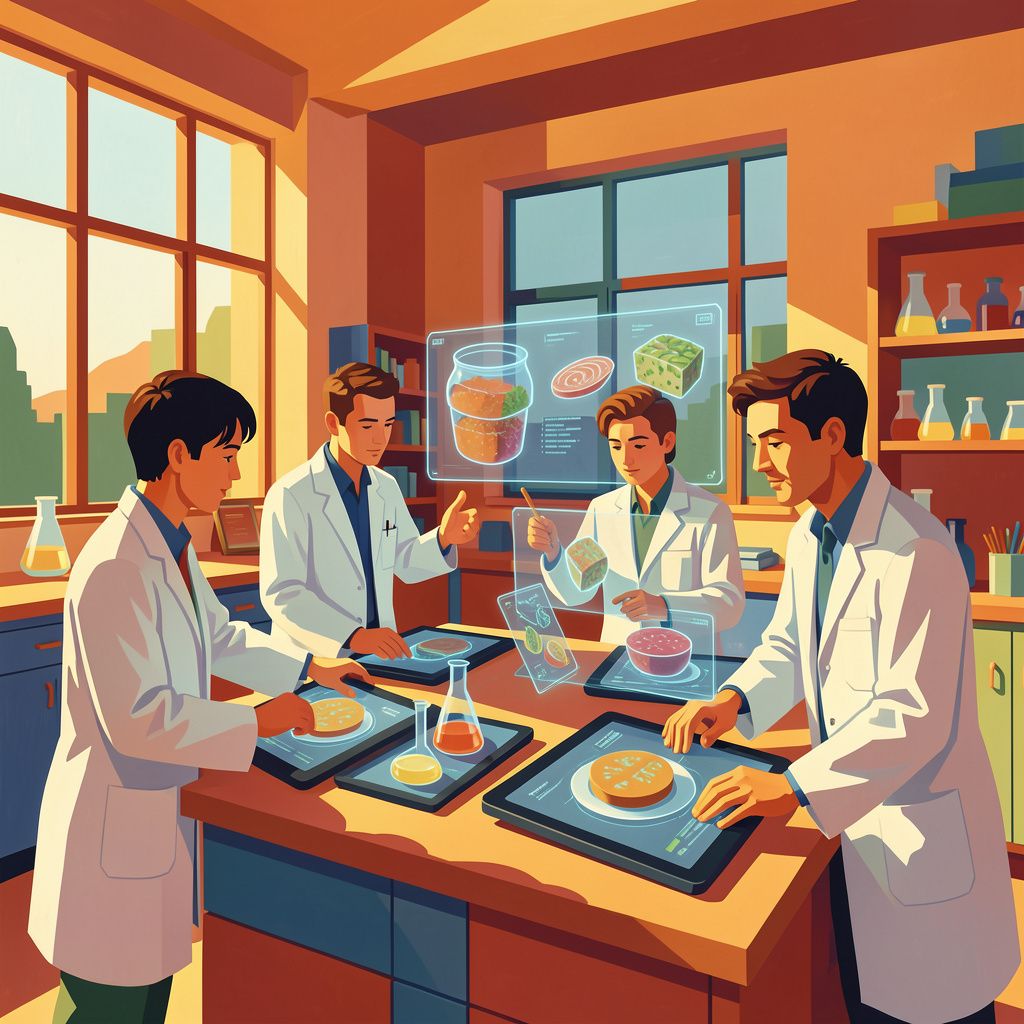
CIBIA functions as a comprehensive end-to-end research hub, equipped with a process engineering hall, pilot-scale production tools, professional application kitchens, and consumer testing laboratories [6][7][8]. The facility provides physical infrastructure for separation, downstream processing, mild preservation, food structuring, mixing, and 3D food printing [2][8]. Simultaneously, analytical laboratories evaluate physical, chemical, microbiological, sensory, and nutritional traits of prototype foods [1][2][7]. By capturing real-time data across these processing stages, CIBIA feeds experimental variables into artificial intelligence models and digital twins [1][2][8]. These AI-driven virtual simulations allow researchers to model scenarios, optimizing salt and sugar reduction, texture stability, water usage, and energy consumption before committing to large-scale commercial runs [1][2][7].
Integrated Infrastructure and AI-Driven Modeling
By consolidating technology development with consumer evaluation from the earliest stage of research, CIBIA aims to ensure that novel sustainable products suit market demands rather than failing at the retail level [1][3]. Primary research avenues focus on novel protein sources, raw material optimization, food waste reduction, and sustainable packaging solutions [1][2][7]. Rianne Ruijschop, Research Manager Food Technology at WUR, highlighted that translating scientific knowledge into functional applications requires unifying the full value chain—connecting raw ingredients directly with societal impact and consumer preference [1][2][6].
Collaborative Framework and Sustainable Construction
The realization of the facility was backed by financial funding from the Dutch Ministry of Agriculture, Fisheries, Food Security and Nature (LVVN) and the Ministry of Economic Affairs and Climate Policy (EZK) through the Facilities for Applied Research (FTO) scheme [1][2][4]. During the official opening event on September 29, 2026, WUR Executive Board President Sjoukje Heimovaara and LVVN Director of Strategy, Knowledge & Innovation Ino Ostendorf emphasized CIBIA’s role in bridging academic insights with pressing economic and societal needs [4][8]. Operating via shared-use agreements, collaborative research ventures, and direct partnerships, the center establishes a flexible environment where industry stakeholders can utilize state-of-the-art equipment without taking on prohibitive capital expenditures [4][7][8].
Environmental Alignment and Strategic Policy Context
Reflecting its mission of sustainability, CIBIA’s physical building was constructed to minimize carbon emissions [1][2][3]. The structure features a primary timber load-bearing frame and timber exterior facade elements, restricting concrete usage strictly to areas where required for technical or structural integrity [1][2][3]. This milestone coincides with broader policy directives in the Netherlands, where government initiatives support domestic ecosystems for alternative proteins and cellular agriculture, targeting a transition toward higher plant protein adoption [2].
Bronnen
- www.wur.nl
- www.greenqueen.com.hk
- www.linkedin.com
- www.linkedin.com
- weekendvandewetenschap.nl
- vegconomist.de
- actualfruveg.com
- evmi.nl