

Dutch Shoppers Open to Artificial Intelligence in Food Supply, Survey Shows
Wageningen, Tuesday, 13 October 2026.
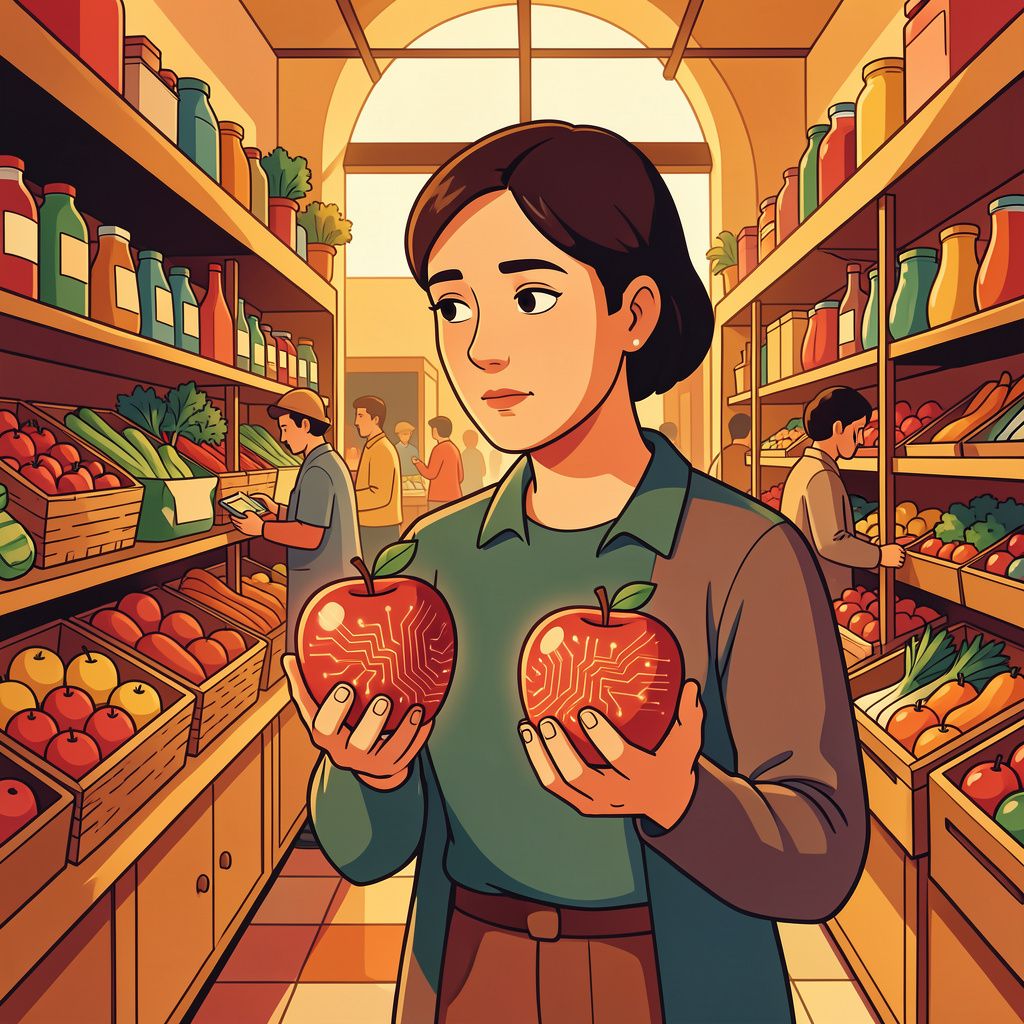
Dutch consumers cautiously support artificial intelligence in farming, yet intriguing findings reveal they perceive AI-assisted food as less natural, even when physical product traits remain completely identical.
Classifying the Agritech Breakthrough and Survey Scope
This research falls squarely within the agritech and foodtech domains, examining how advanced digital tools intersect with physical agricultural production and consumer psychology [1][2]. Commissioned by TKI Agri & Food and executed by Wageningen Social & Economic Research—based in Wageningen, Netherlands—the 11th edition of the annual Agrifoodmonitor was published in October 2026 [1][3][4]. Lead project researcher Mariët van Haaster-de Winter oversaw the study, which surveyed 3,500 Dutch consumers to gauge societal sentiment surrounding artificial intelligence in the supply chain [2][4]. The study marks 14 years of tracking consumer trust since its inception in 2012, having transitioned from a biennial to an annual release in 2020 to capture rapidly evolving technology trends [2][3].
How AI Works Across the Food Chain and Its Potential Benefits
In practice, agritech and foodtech innovations range from smart monitoring systems in farm production to automated processing machines and AI-driven home kitchen appliances [3]. For example, fruit processors can utilize algorithms to analyze data and determine precisely which stored apples are optimal for immediate processing or retail sale [6]. Consumers surveyed view companies adopting these technologies as modern and innovative, recognizing that AI can yield major environmental and operational benefits [2][6]. Key advantages identified include addressing long-term food security, improving animal welfare standards, optimizing water consumption, and reducing supply chain food waste [1][2].
The Naturalness Paradox and Human Control
Despite acknowledging these concrete operational advantages, Dutch consumers display clear boundaries regarding tech deployment [2][6]. Survey results indicate that while respondents weigh potential benefits higher than technical risks, they strongly insist that human entrepreneurs remain in direct control rather than being replaced by automated decision-making systems [4][6]. Concerns linger around systemic software errors, loss of human touch, and lack of supply chain transparency [2][3]. Crucially, the survey revealed a psychological barrier: products produced with AI assistance are frequently perceived as less natural or fundamentally ‘different’ by consumers, even when physical product characteristics are completely identical to conventionally produced items [2][3][5].
Sectoral Trust and Strategic Engagement
Overall societal appreciation for the Dutch agri-food sector remained stable in 2026 [1][7]. Arable farming, horticulture, and dairy farming earned the highest ratings among consumers, followed by fisheries, retail supermarkets, and food manufacturing [2][3]. While poultry and pig farming received the lowest relative scores, appreciation for both poultry and dairy farming climbed to all-time record highs since the study began in 2012 [1][2][7]. Project leader Mariët van Haaster-de Winter emphasized that perception often overrides objective reality, advising food businesses to communicate openly about their technology to bridge the gap between technical innovation and consumer sentiment [2][4].
Bronnen
- www.wur.nl
- www.wur.nl
- topsectoragrifood.nl
- agrimatie.nl
- nl.linkedin.com
- vakbladvoedingsindustrie.nl
- www.foodholland.nl