

Dutch Consumers Express Cautious Support for Artificial Intelligence in Food Production
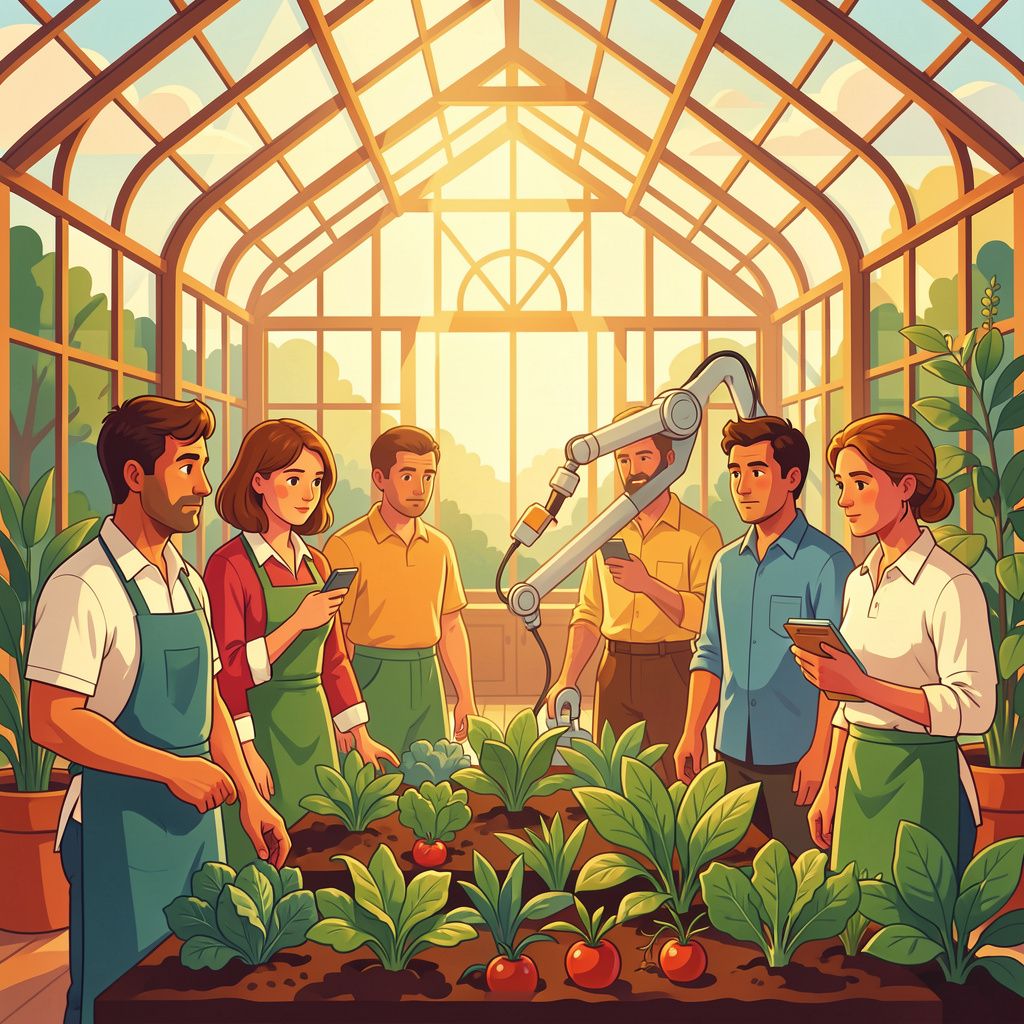
Wageningen, Wednesday, 21 October 2026.
A 2026 study reveals Dutch consumers support AI in food production for efficiency gains, yet fear it reduces naturalness, demanding transparency and human oversight to maintain trust.
Consumer Perception and AI Integration in Agritech
The intersection of artificial intelligence and agriculture represents a transformative shift in agritech and food technology, driving operational efficiency across global supply chains [GPT][1]. In October 2026, Wageningen Social & Economic Research, based at Wageningen University & Research in Wageningen, Netherlands, published the 11th edition of the Agrifoodmonitor [1][2]. Commissioned by TKI Agri & Food, the study surveyed 3,500 Dutch consumers to assess public sentiment regarding the integration of artificial intelligence within the agricultural and food production chain [1]. The findings demonstrate that Dutch consumers are cautiously optimistic, associating agrifood enterprises that deploy AI solutions with innovation and modernity [1].
How Agritech Automation Operates and Its Societal Benefits
AI applications in modern agritech function through machine vision systems, predictive algorithms, and automated robotics [GPT][1]. In practical terms, these tools assist in high-precision tasks such as automated tomato picking, real-time health monitoring of cows, and computer-vision apple sorting [1]. According to Mariët van Haaster-de Winter, project leader and researcher at Wageningen Social & Economic Research in Wageningen, consumers view AI not merely as an innovative novelty, but as a practical mechanism to tackle pressing societal challenges [1]. These automated innovations promise key benefits, including enhanced food security, elevated standards of animal welfare, optimized water consumption, and reductions in food waste across the supply chain [1].
Addressing Concerns Over Naturalness and Human Control
Despite acknowledging these operational benefits, consumers harbor underlying distrust regarding how AI alters the perceived ‘naturalness’ of food products [1]. Survey respondents raised notable concerns regarding potential technological errors and the erosion of human contact within farming practices [1]. Consequently, the public insists that agricultural entrepreneurs remain firmly in control of operations and maintain full transparency [1]. Van Haaster-de Winter emphasized that perception often outweighs factual technical reality, urging food companies to proactively communicate about technological processes while addressing consumer sentiment regarding the final consumable product [1].
Sector Appreciation and Economic Context in 2026
The report highlights that overall societal appreciation for the Dutch agrifood sector remained stable in 2026, providing sufficient social license for ongoing dialogue regarding industry transformations [1]. Arable farming, horticulture, and dairy farming received the highest approval ratings among consumers, whereas poultry and pig farming recorded the lowest scores [1]. Notably, consumer appreciation for dairy farming and poultry reached its highest level in 2026 since the monitoring survey was initiated in 2012 [1]. This sentiment unfolds within a substantial national industry; research from Wageningen Social & Economic Research indicates that the Dutch agricultural sector comprised 49,080 businesses generating an estimated total output value of €27 billion in 2025 [2].