

A New Innovation Hub Aims to Bring Sustainable Food to Supermarkets Faster
Wageningen, Friday, 30 October 2026.
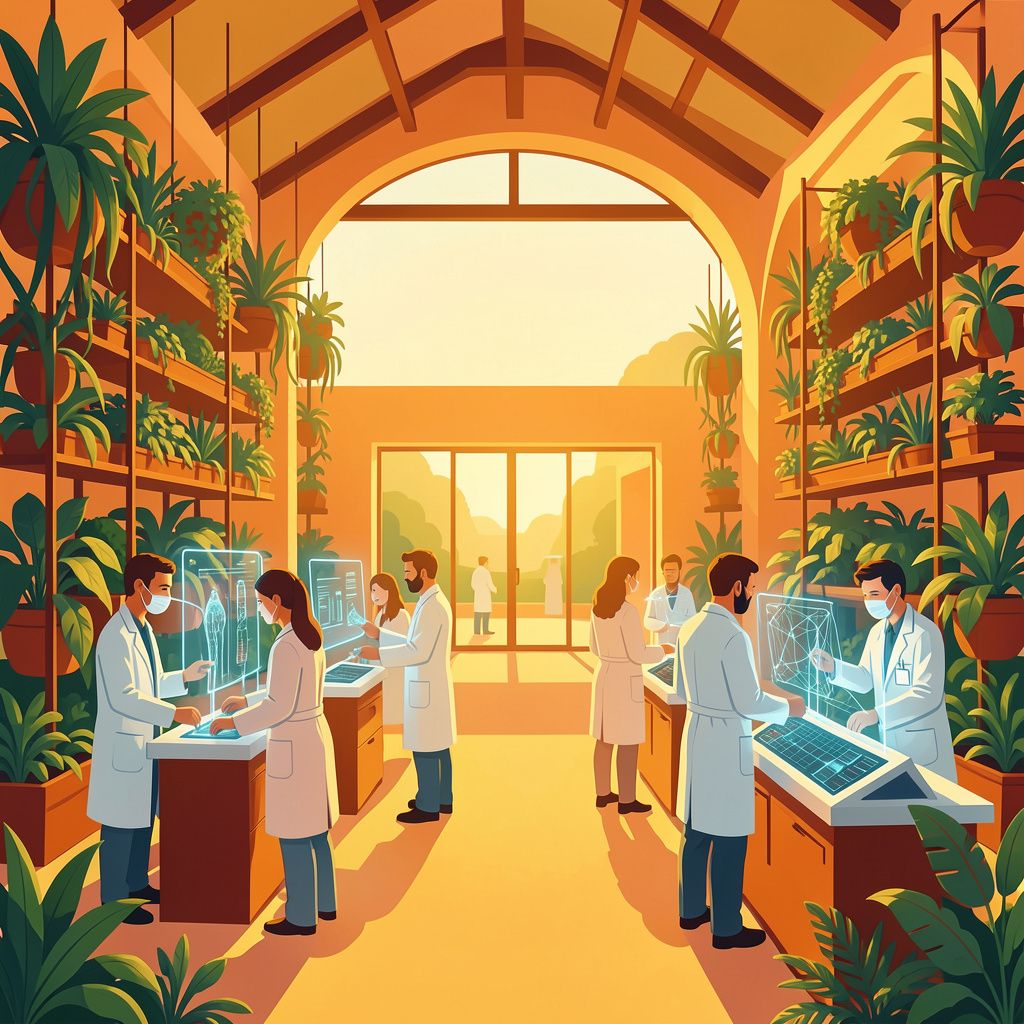
Opened in late October 2026, Wageningen’s CIBIA facility unites artificial intelligence, digital twins, and sensory testing under one roof to rapidly move lab-grown concepts into commercial markets.
Bridging the Gap from Agritech Research to Commercial Reality
This major development belongs firmly to the agritech and food technology sectors, focusing on transitioning experimental food innovations into scalable commercial applications [1][3]. Wageningen University & Research (WUR), an institution located in Wageningen, Netherlands, introduced the initiative on 26 October 2026 and officially opened the multidisciplinary CIBIA research and innovation facility on 29 October 2026 [1][3][alert! ‘The primary source notes both an opening date of 29 October 2026 and mentions an official opening date of 29 September 2026, while introductory coverage references 26 October 2026’]. Sjoukje Heimovaara, President of the Executive Board of Wageningen University & Research, characterized the hub as a valuable addition to the research infrastructure of the Netherlands, emphasizing that the facility strengthens ties between science, industry, and society to translate scientific knowledge into innovations addressing societal challenges [1].
Integrated Infrastructure and High-Tech Methodology
CIBIA operates by uniting the entire food innovation chain under a single roof, connecting raw material processing and technological development directly to consumer acceptance [1][3]. To evaluate prototype products, the center provides end-to-end capabilities covering physical, chemical, microbiological, sensory, nutritional, and health-related properties [1][3]. Rianne Ruijschop, Research Manager Food Technology at WUR, underscored that transitioning future food systems requires more than scientific concepts alone, noting that CIBIA guides prototypes from ingredient conception to consumer validation so that innovations make an actual market impact [1].
Harnessing Digital Twins and AI for Resource Efficiency
A core operational mechanism of the facility is its deployment of digital models, artificial intelligence, and digital twins [1][3]. These advanced digital tools simulate and evaluate prototype behavior to optimize production processes prior to physical scaling [1][3]. By applying predictive modeling, researchers and commercial partners can directly target critical resource constraints, focusing specifically on lowering energy consumption, curbing water usage, improving the utilization of raw materials, minimizing food waste, exploring novel protein sources, and engineering sustainable packaging solutions [1][3].
Open Innovation Architecture and Sustainable Construction
Funding for CIBIA was co-financed by the Dutch national government via the Applied Research Facilities (FTO) scheme, supported by both the Ministry of Agriculture, Fisheries, Food Security and Nature (LVVN) and the Ministry of Economic Affairs and Climate Policy (EZK) [1]. Designed as an open innovation platform, external partners—including emerging startups, established corporate food enterprises, and societal organizations—can access the site through collaborative research agreements, specialized projects, and shared-use arrangements [1][3]. Complementing its operational sustainability goals, the facility’s physical building incorporates a low-emission structural framework made of timber load-bearing components and wooden facade elements, strictly limiting concrete usage to areas where it is technically or economically essential, such as floor sections [1].