

Engineered Bacteria Offer New Solution to Break Down Forever Chemicals
Wageningen, Wednesday, 18 November 2026.
Wageningen researchers engineered bacteria capable of actively destroying persistent TFA chemicals rather than just filtering them, securing second place out of 463 teams at the global 2026 iGEM competition.
A Breakthrough Biological Answer to Persistent TFA Pollution
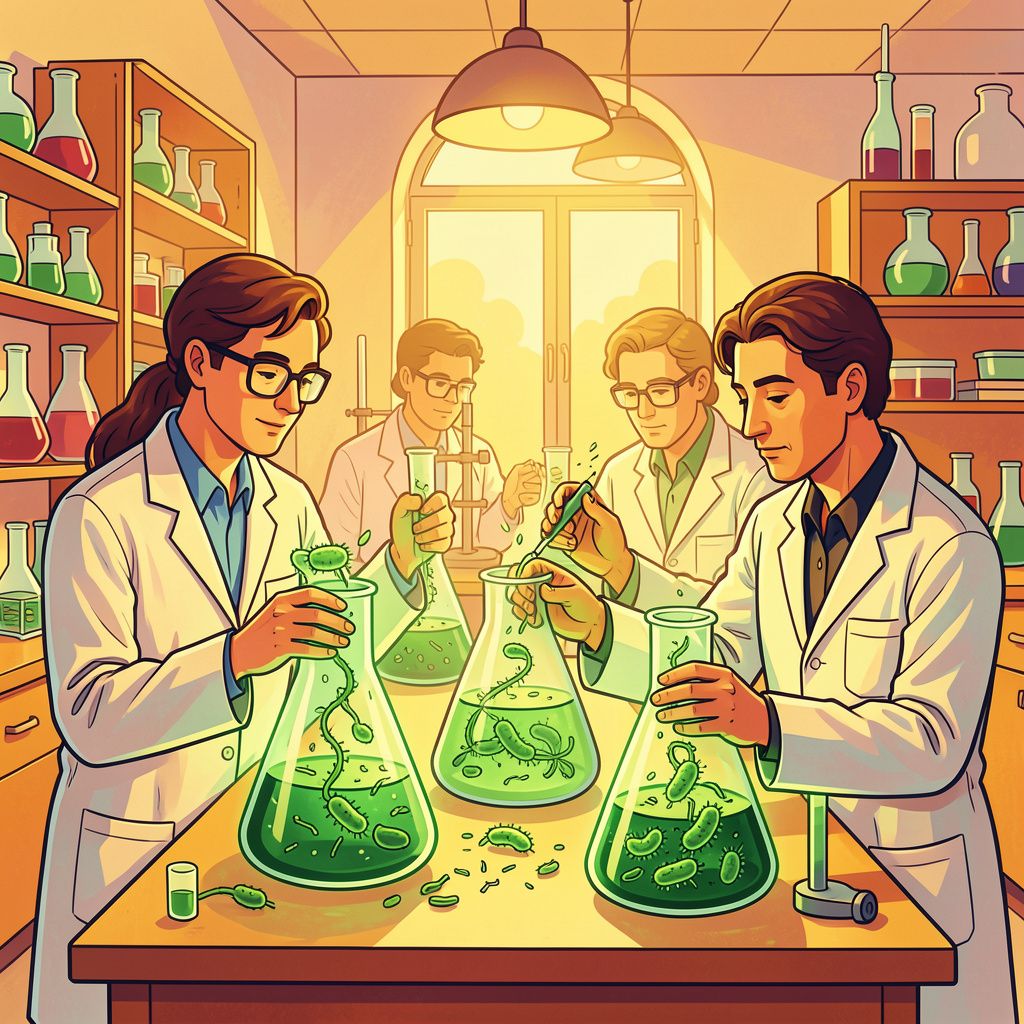
Industrial remediation has long grappled with the prohibitive costs and technical bottlenecks of managing per- and polyfluoroalkyl substances (PFAS), known as ‘forever chemicals’ due to their extreme resistance to natural degradation [1][4]. The Wageningen University & Research (WUR) student research group, competing under the project banner Triton, tackled this specific challenge by developing an engineered biological system using Escherichia coli (E. coli) bacteria to target trifluoroacetic acid (TFA), an ultra-short-chain PFAS compound [1][4]. Rather than simply capturing pollutants through conventional physical filtration—which creates secondary toxic waste streams requiring costly disposal—the Wageningen team’s approach combines biosensors, engineered proteins, and catalytic enzymes to actively filter and break down TFA molecules into safer byproducts [1][4].
Competitive Success at the Global Synthetic Biology Summit
The innovation took center stage at the annual iGEM synthetic biology Grand Jamboree, held in Paris, France, where activities began on November 10, 2026, at the Paris Convention Centre [1][2]. In the culminating showcase over the weekend preceding November 18, 2026, the Triton team earned first runner-up honors in the Overgraduate category, finishing behind Grand Prize Winner TU Delft, which designed a modular biomanufacturing platform for medical implant coatings named MOSAIC [1][4]. The 2026 contest drew a record total of 463 teams worldwide [1]. Alongside their overall second-place finish, the Wageningen cohort received specialized accolades for best presentation, best bioremediation project, and best measurement method [1].
Academic Pedigree and Strategic Industrial Implications
The runner-up finish marks the fourth time that student teams from Wageningen University & Research have secured second place at the prestigious international competition [1]. Team supervisor Stefan Hoffmann noted that existing remediation methods for short-chain persistent chemicals have historically suffered from suboptimal performance and limited reliability [1]. Hoffmann emphasized that the achievement reinforces the university’s standing as an essential player in synthetic biology, with Triton’s experimental results demonstrating high potential to advance biological chemical processing [1]. Earlier during the summit on November 10, 2026, the Wageningen delegation underscored the collaborative nature of ecological biotechnology by joining the Lyon and Berlin teams for an expert panel discussion on PFAS remediation [2].
Commercial and Operational Potential for Water Authorities
For environmental technology startups, public water authorities, and industrial facility operators, biological degradation systems represent a transformative economic model for pollution control [1][4]. Traditional water treatment systems such as granular activated carbon or reverse osmosis demand significant energy inputs and ongoing filter replacements, yet frequently fail to capture highly mobile, short-chain PFAS like TFA [1][4]. By engineering microbial pathways capable of enzymatic degradation, the Triton research platform provides a nature-based framework that could reduce long-term operational expenditures for municipal utilities and chemical manufacturers seeking scalable compliance solutions [1][4].
Bronnen
- www.wur.nl
- www.instagram.com
- 2026.igem.wiki
- www.linkedin.com
- www.instagram.com
- www.linkedin.com
- www.instagram.com
- www.instagram.com