

Dutch Startup Raises Capital to Eliminate Mortar From Brick Construction
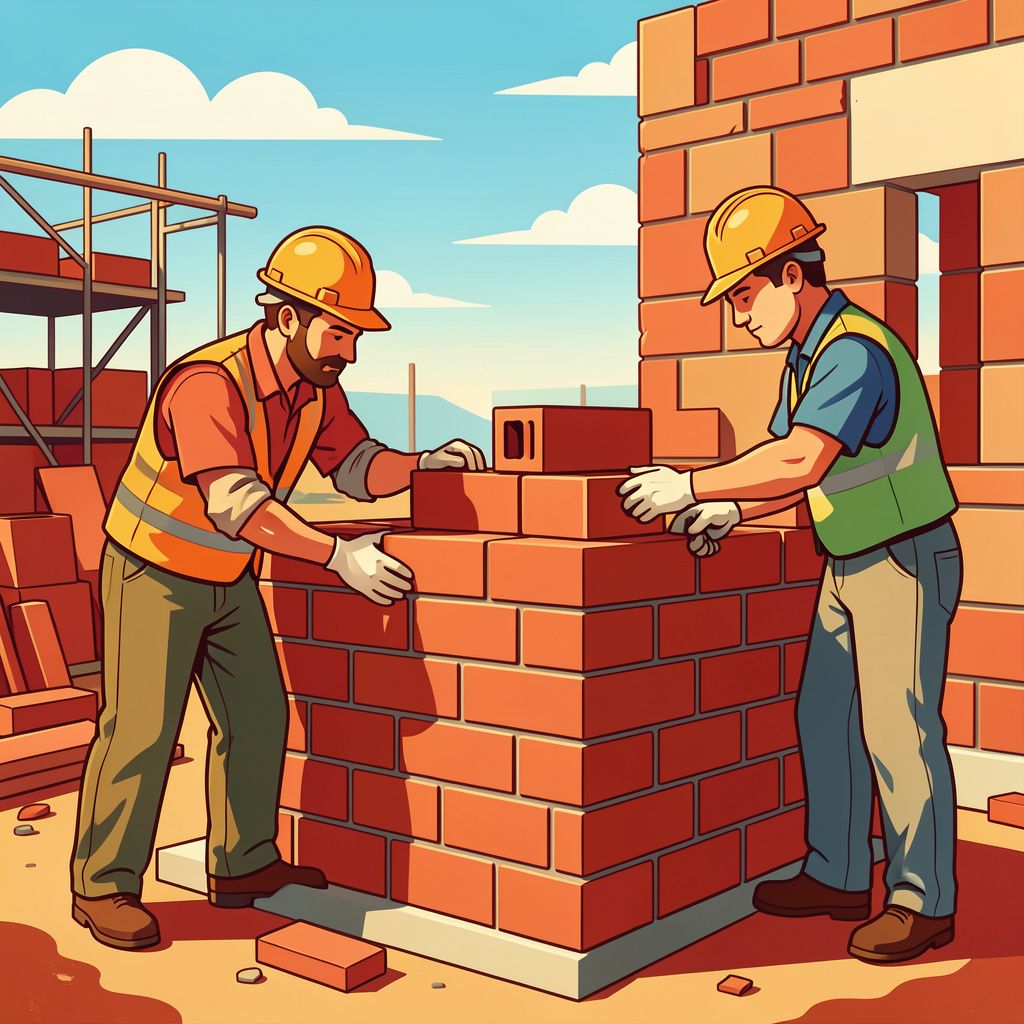
Haarlem, Wednesday, 18 November 2026.
Drystack secured €2 million in November 2026 to scale a mortar-free brick system that cuts environmental impact by roughly 30% and enables complete reuse of building materials.
Scaling Circular Architecture in North Holland
In early November 2026, Dutch circular construction innovator Drystack finalized a €2 million capital injection led by North Holland regional development agency ROM InWest and TBI Zebra, the impact venture arm of construction group TBI [1][2][3]. Existing shareholders also took part in the round to help scale the venture’s patented circular brick-facade technology [1][2]. The operational base of the startup has seen varied reporting in industry databases, with initial investment tracking citing Rotterdam, whereas regional development records explicitly place Drystack’s manufacturing and ecosystem development in Heerhugowaard, North Holland [1][2][3][alert! ‘Source conflict: Dealroom designates Drystack as Rotterdam-based, while ROM InWest and Bricks & Bytes identify the company in Heerhugowaard, North Holland’]. Drystack had previously graduated through ROM InWest’s Future-Proof Building Acceleration Program (Acceleratieprogramma Toekomstbestendig Bouwen) before securing this direct equity backing [1].
Addressing Construction Emissions and Waste
The traditional masonry sector faces severe environmental bottlenecks that Drystack aims to disrupt [1][2]. In the Netherlands alone, builders lay approximately 450 million facade bricks annually, with almost the entire volume permanently bound using wet mortar [1]. This conventional adhesive method makes high-grade post-demolition salvage virtually impossible, relegating spent masonry to low-value rubble or landfill streams [1][2]. Drystack circumvents this dynamic by substituting mortar with a proprietary mechanical click mechanism [1][2]. The dry-stacking method preserves structural integrity during a building’s lifecycle while ensuring bricks can be cleanly harvested without damage once the structure is decommissioned, safeguarding material residual value [1][2].
Environmental and Operational Performance
Independent benchmarks demonstrate that Drystack’s mechanical system significantly curbs the environmental footprint of exterior envelope construction [1][2]. Data from the Dutch National Environmental Database (Nationale Milieudatabase) reveals that a Drystack facade reduces environmental impact by roughly 30% [2], functioning at approximately one-third the environmental burden of traditional mortar masonry [1]. Beyond carbon and lifecycle savings, the technique speeds up construction delivery schedules by up to 25% [1][2]. Because the click system avoids wet bonding agents, facade installation is largely unaffected by inclement weather conditions, resolving seasonal delays typical of wet-laid construction [1][2].
Industrial Partnerships and Market Deployment
The €2 million capital round is directed toward refining Drystack’s specialized factory machines, scaling facility floor capacity, and reinforcing internal technical staffing to transition from custom pilots to repeatable industrial volumes [1][2]. The innovation also alleviates structural labor shortages across the building trades: traditional bricklaying demands years of specialized craft training, whereas workers can assemble Drystack walls efficiently after brief instruction [1]. Supply agreements are already established with brick manufacturers Engels and De Rijswaard, though the proprietary dry-stack mechanism remains universally compatible with bricks from nearly all major producers and adaptable to diverse building sub-structures [1][2].
Venture Ecosystem and Commercial Pipeline
The transaction forms a strategic bridge between clean technology capital and active construction deployment [1][2]. Through TBI Zebra’s participation, multiple operational operating subsidiaries under the TBI umbrella—including ERA Contour, Koopmans, Hazenberg, Synchroon, and J.P. van Eesteren—intend to integrate the demountable facade framework into forthcoming development pipelines [2]. As Erwin van den Hove of J.P. van Eesteren and Max Terheggen of ROM InWest pointed out, the core appeal of the business rests on marrying rigorous circularity standards with a competitive commercial revenue model [1][2]. The broader scale-up challenge now turns on proving operational margins and uniform delivery as Drystack attempts to make demountable facade walls the standard across Dutch architecture [1][2].