

How Hands-On Student Engineering Built a Global Battery Powerhouse
Eindhoven, Tuesday, 17 November 2026.
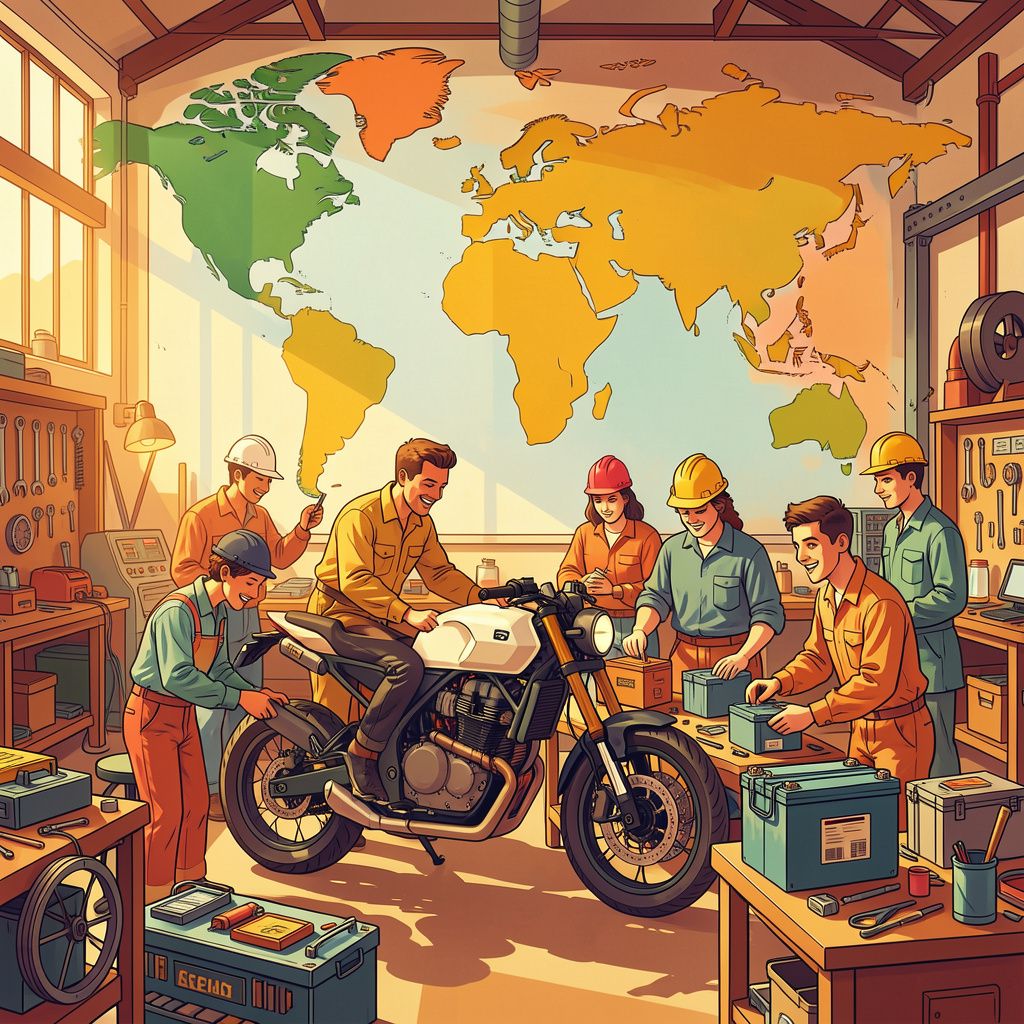
After riding a custom electric motorcycle around the world, Dutch student innovators scaled their university project into a major battery manufacturer now expanding across four continents.
From Eindhoven Lecture Halls to an 80-Day Global Odyssey
The roots of modern battery technology manufacturer ELEO Technologies trace back to 2012 at the Eindhoven University of Technology (TU/e) in the Netherlands [1]. Bas Verkaik began pursuing a bachelor’s degree in Sustainable Energy Technology during an era when academic study at the institution centered on sitting in lectures, earning credits, and passing standardized examinations [1]. Seeking deeper engagement beyond classroom theory, Verkaik committed to a two-year project with the university’s student team STORM [1]. The team focused on a singular engineering objective: building an electric touring motorcycle capable of traveling around the world [1].
The Transition from Prototype Testing to Commercial Reality
In 2016, team STORM completed an 80-day journey around the globe on their custom-built electric motorcycle [1]. Returning to traditional academic benches presented a jarring contrast for the student engineers, cementing the value of practical, high-stakes problem solving [1]. By 2017, Verkaik and peer Tom Selten were active at TU/e innovation Space, helping shape challenge-based learning (CBL) frameworks that encourage multidisciplinary engineering teams to solve real-world problems [1]. Building on their electric powertrain expertise, Verkaik joined co-founders Bram van Diggelen and Jeroen Bleker in 2019 to launch SPIKE Mobility, an enterprise that was subsequently rebranded as ELEO Technologies [1].
Industrial Scaling on Helmond’s Automotive Campus
Headquartered on the Automotive Campus in Helmond, ELEO Technologies established itself by engineering and manufacturing modular lithium-ion battery packs tailored for electric vehicles and heavy-duty off-highway equipment, including industrial, construction, and agricultural machinery [1]. The venture’s physical expansion was highlighted when Dutch monarch King Willem-Alexander officially opened the company’s new manufacturing building in Helmond [1]. To meet escalating commercial demand across European and international machinery sectors, ELEO scheduled an expansion by the end of 2024 to multiply its Helmond facility footprint to 4 times its existing size, planning to scale its workforce from 120 employees to 200 workers, representing an employment growth of 66.667% [1].
Global Manufacturing Goals and Challenge-Based Innovation
ELEO Technologies has set strategic targets to become a premier battery supplier for the global off-highway machinery market by 2030, planning a production footprint spanning factories across Europe, the Netherlands, America, and Asia [1]. Concurrently, the academic foundation that sparked ELEO continues to evolve; TU/e officially introduced Bachelor College 2.0 in September 2023, embedding Challenge-Based Learning directly into its core educational vision under the Talent theme of the university’s Strategy 2030 [1]. Verkaik credits this methodology of confronting open-ended problems without predetermined outcomes as essential preparation for scaling high-tech industrial hardware enterprises in competitive global markets [1].