

Why Agricultural Technology Fails to Reach the Farm
Wageningen, Monday, 2 November 2026.
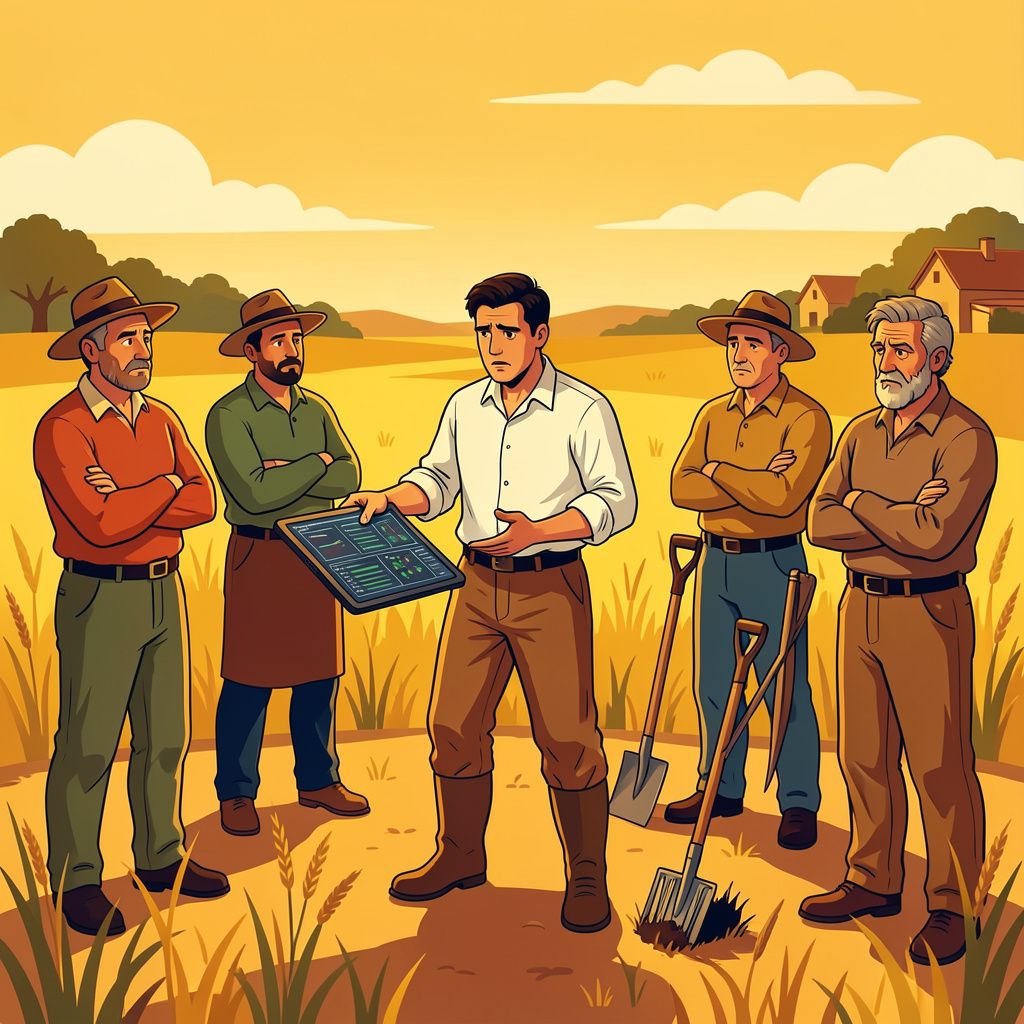
Wageningen University appointed Sjaak Wolfert to solve agritech’s scaling dilemma, revealing that successful digital farming depends more on trust and governance than technology itself.
Agritech’s Practical Bottleneck and Wolfert’s Mandate
This strategic initiative firmly belongs to the agritech sector, addressing the structural frictions that prevent agricultural data platforms and digital systems from deploying at scale across food value chains [1]. While farm tech investments have flooded the sector with standalone innovations, isolated pilot schemes consistently fail to achieve long-term commercial integration [1]. Wageningen University & Research (WUR), an institution based in Wageningen in the Netherlands [1][2], has appointed Dr. Sjaak Wolfert as special professor of Digital Innovation Ecosystems for Sustainable Agri-Food Systems within its Information Technology group [1]. Wolfert, who has served at WUR since 2001 and acts as a strategic senior researcher and digital innovation theme lead at Wageningen Social & Economic Research [1], is tasked with designing foundational governance and technical environments that elevate small-scale farm experiments into enterprise-level deployments [1].
Designing Interoperable Frameworks Across European Ecosystems
The innovation operates not as an individual device or software application, but as a socio-technical framework uniting organizational agreements, shared standards, and institutional trust [1]. Wolfert’s model bridges information technology with organizational, managerial, and social science principles, ensuring that systems solve real-world problems rather than introducing uncoordinated digital complexity [1]. The underlying architecture relies on data interoperability and structured collaboration, drawing directly on lessons learned from long-running European projects in which Wolfert has played key roles, including IoF2020, SmartAgriHubs, Data4Food2030, and the Agriculture of Data partnership [1]. By aligning business models with responsible data-sharing protocols, these ecosystems establish transparent parameters under which multiple agricultural stakeholders can exchange information safely [1][3].
Translating Research to Practical Commercial Deployments
The benefits of this systemic framework center on mitigating investment risk, unlocking operational value across supply chains, and establishing practical data monetization models [1][3][4]. Agricultural market actors frequently struggle to capture return on investment due to fragmented data pools; however, standardized digital ecosystems allow tools like farm management information systems to connect directly with food processors, breeding programs, and logistics platforms [1][3][4]. Wolfert demonstrated this integration during the Synergy Days event held in Kilkenny, Ireland, which took place in late October 2026, speaking on panels addressing initiatives such as the Common European Agricultural Data Space (CEADS) and the Agriculture of Data partnership alongside European Commission and industry leaders [4][5]. Through these collaborative structures, agricultural firms can transition from localized, single-farm telemetry tests to multi-enterprise data spaces without sacrificing security or proprietary data ownership [1][4][5].
Global Alignment and Professional Education Initiatives
To operationalize these ecosystems across borders, WUR and Wolfert are actively translating architectural governance into professional practice and international technical partnerships [1][2][3]. In November 2026, Wolfert is scheduled to lead Wageningen Academy’s Data-Driven Agri-Food Business course on 19 and 20 November 2026 in Wageningen, guiding agritech executives and corporate innovators through responsible data sharing and real-world implementation challenges [3]. Soon after, on 25 November 2026, Wolfert will present on artificial intelligence architectures at the 5th NARO-WUR Conference, organized jointly by WUR in the Netherlands and the National Agriculture and Food Research Organization (NARO) based in Tsukuba, Japan [2]. By anchoring technological tools in cross-border coordination, standardized governance, and education, the initiative establishes an enduring institutional bridge to bring agritech off laboratory drawing boards and directly onto productive farmland [1][2][3].
Bronnen
- www.wur.nl
- www.naro.go.jp
- www.linkedin.com
- www.linkedin.com
- www.synergyportal.eu
- www.instagram.com
- www.facebook.com