

How Limburg Is Leading the Green Revamp of Dutch Commercial Hubs
Maastricht, Saturday, 24 October 2026.
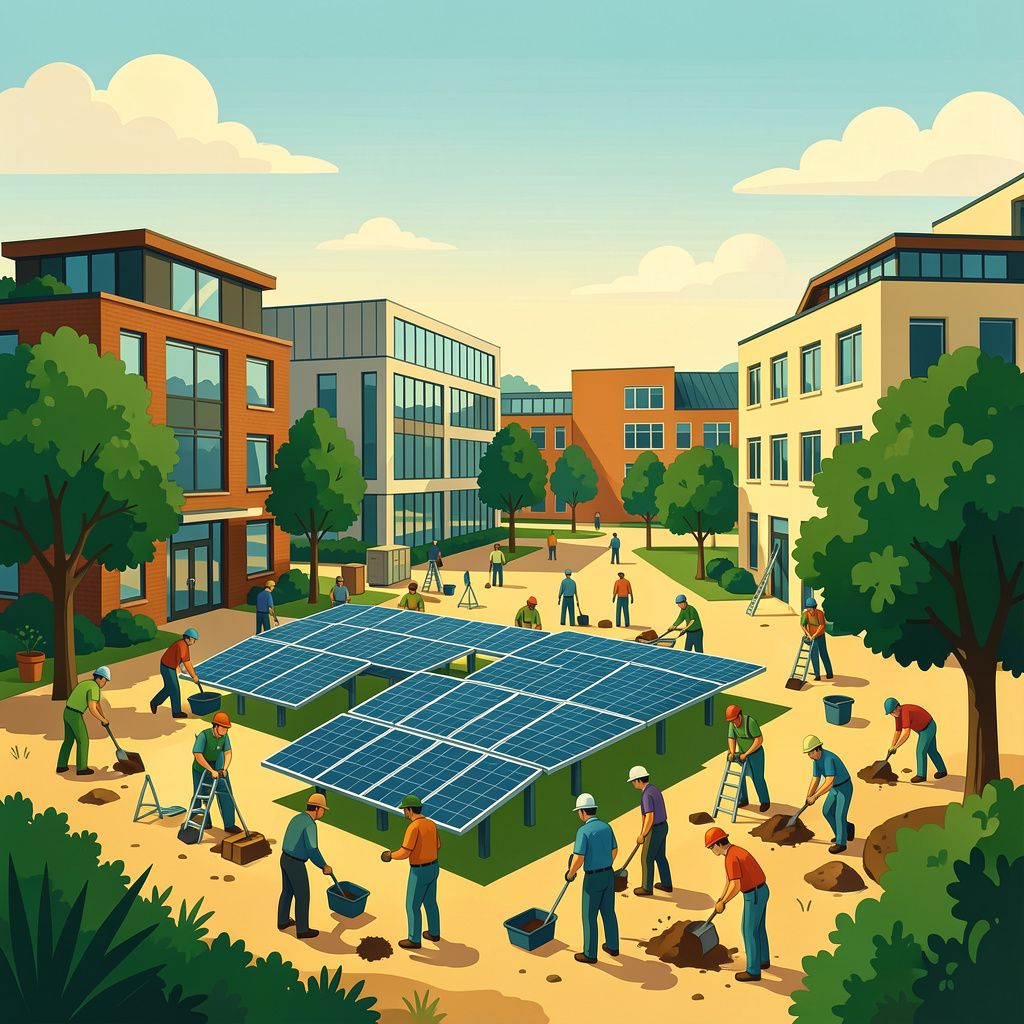
Collaborating across 27 municipalities, Limburg has launched 41 sustainability projects across 67 business parks, turning shared local governance into a national benchmark for collective energy transition and climate adaptation.
Institutional Governance and Scaled Participation Across Municipalities
The Programma Verduurzaming Bedrijventerreinen (PVB) Limburg—delivered through a strategic regional alliance including Ontwikkelingsmaatschappij Midden-Limburg (OML), the regional development agency LIOF, and Limburgse Werkgeversvereniging (LWV) [2][3]—has established a benchmark in commercial hub decarbonization [1]. Since initiating consultations across all 31 municipalities within the province of Limburg, the initiative secured the active participation of 27 local authorities [1], representing an municipal engagement rate of 87.097 percent. This regional consensus has enabled the coordination of 41 green innovation and sustainability projects deployed across 67 business sites situated throughout North, Central, and South Limburg [1].
Overcoming Organizational Inertia to Tackle Commercial Carbon Footprints
A persistent impediment to retrofitting multi-tenant commercial parks has historically been fragmented ownership, where individual enterprises lack the collective legal frameworks needed to invest in district-level environmental solutions [GPT]. PVB Limburg addressed this operational bottleneck by measurably structuring or upgrading the formal organizational governance across 22 individual business parks [1], which equates to 32.836 percent of the participating commercial hubs. Following the formal review presented at the ‘Samen Vooruit’ annual conference held on September 16, 2026, at Villa Flora in Venlo [1], regional administrators confirmed that administrative alignment has transitioned directly into on-the-ground technical execution [1].
Grid Congestion Realities and Shared Infrastructure Economics
Decarbonizing industrial operations across the Netherlands has collided with severe electrical distribution limits, placing grid capacity constraints at the center of commercial park strategic planning [1][GPT]. PVB Limburg is actively developing nine priority energy initiatives designed to offer viable technical, financial, and organizational frameworks [1]. The strongest economic opportunities identified to date center on collective electric vehicle and fleet charging infrastructure, which permits co-located enterprises to pool and optimize limited local grid access [1]. Conversely, localized energy hubs have proven viable solely under strict parameters requiring balanced technical parameters, clear financial underwriting, compliant legal frameworks, and airtight business cases [1].
Field Implementations and Forthcoming Infrastructure Inspections
To prevent project siloing, the PVB Limburg knowledge and expertise center distributes procedural methodologies, regulatory templates, and financial blueprints so municipalities and commercial tenants can replicate environmental successes [1]. To demonstrate these green innovations, PVB alongside PVB Limburg (comprising OML, LIOF, and LWV) will stage the ‘Beleid ontmoet Praktijk’ bus tour through Central Limburg on Thursday, October 29, 2026 [2][3]. Originating from the Weert railway station at 10:00 [3], the operational itinerary takes policymakers, park managers, and developers directly to Bedrijventerrein Pannenweg in Nederweert—a commercial site recognized for executing sustainable installations [3]—followed by an in-depth afternoon assessment of Bedrijventerrein Roerstreek in Roermond, which is managing severe water availability and climate adaptation demands [3].
Capital Allocation and the Horizon for Long-Term Decarbonization
While local organizational structures have been reinforced, systemic climate transition hinges upon sustained long-term capital allocation to fund expensive civil engineering works, water mitigation, and distributed clean power infrastructure [1]. At the national level, PVB Nederland signaled during the September 2026 Venlo conference that efforts are advancing to secure an extension of the broader program [1]. Such administrative continuity aims to safeguard inter-firm cooperation, ensuring that commercial hubs in Limburg maintain institutional capacity to execute resilient ecological upgrades well beyond 2026 [1].
Bronnen
- liof.nl
- duurzamebedrijvenroute.nl
- www.werklandschappen.nl
- duurzamebedrijvenroute.nl
- www.facebook.com