

Maria Barbosa to Lead Sustainable Biotechnology at Wageningen University
Wageningen, Tuesday, 17 November 2026.
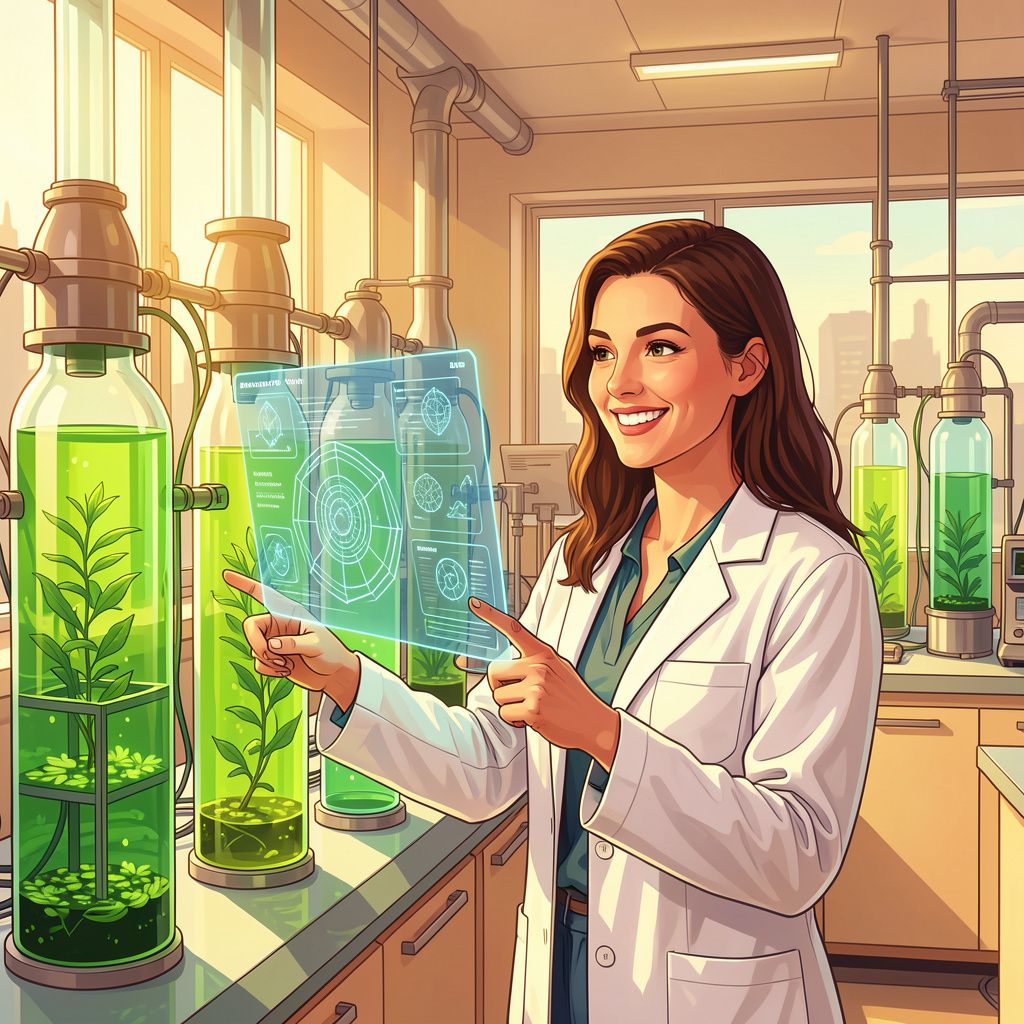
Appointed to lead Wageningen’s Bioprocess Engineering chair in February 2027, Maria Barbosa plans to deploy artificial intelligence and scalable bioprocesses, transforming local microalgae into critical food, cosmetic, and pharmaceutical resources.
Strategic Transition in Agri-Food and Biotechnology
This leadership transition falls squarely at the intersection of agritech, alternative food production, and biopharmaceuticals [1][2]. Microalgae biotechnology represents an agricultural technology sector capable of producing proteins directly for human and animal consumption, thereby reshaping supply chains [1][2]. In February 2027, Maria Barbosa will officially succeed René Wijffels as chairholder of the Bioprocess Engineering group at Wageningen University & Research (WUR), located in Wageningen, Netherlands [1][2]. Wijffels is scheduled to retire in January 2027 after decades of advancing the department’s foundational engineering platforms [1][2].
Bridging Fundamental Biology and Scalable Engineering
Barbosa, who obtained her Master of Science in Food Engineering from the Catholic University of Porto and earned her doctorate in bioprocess engineering from WUR in 2003, joined the university’s Bioprocess Engineering chair group in 2015 before being appointed Professor of Microalgal Biotechnology in 2019 [1][2]. The primary innovation she leads focuses on cultivating photosynthetic micro-organisms under precisely controlled systems [1][2]. These single-celled organisms harness sunlight and carbon dioxide to yield high-value biomass, including essential proteins, industrial-grade oils, and cosmetic compounds [1][2]. The strategic benefit of this technological platform is its ability to manufacture critical raw materials locally within the Netherlands, significantly diminishing external import dependencies and relieving pressure on fragile ecosystems [1].
Industrial Scalability, AlgaePARC, and Digital Integration
The operational mechanism behind microalgal cultivation hinges on resolving a key economic bottleneck: converting cellular biology into scalable production pipelines [1][2]. While microalgae can technically be cultivated in virtually any environment, optimizing metabolic pathways to synthesize specific compounds at cost-competitive yields requires sophisticated biological and process management [1][2]. Barbosa was instrumental in establishing AlgaePARC in Wageningen after returning to the university in 2008, an applied pilot facility that expanded into AlgaePARC 2.0 in 2024 to transition laboratory findings into pre-commercial scale [1][2].
Modernizing Bioprocesses Through AI and Cross-Disciplinary Synergies
Looking ahead to her tenure starting in February 2027, Barbosa plans to modernize bioprocess design through enhanced digitalization, machine learning, and artificial intelligence [1][2]. By establishing direct links between computer science, molecular biology, and process engineering, the chair group aims to deploy predictive algorithms that optimize bioreactor conditions in real time, accelerating biopharmaceutical biotechnology applications and alternative protein commercialization [1][2]. This data-driven approach seeks to ensure that scientific innovations reliably cross the threshold from laboratory scale to industrial deployment, reinforcing food security and long-term sustainability [1][2].
Bronnen
- www.wur.nl
- www.wur.nl
- www.myscience.co.nl
- www.myscience.co.nl
- www.agriholland.nl
- www.foodholland.nl
- www.agriholland.nl
- www.agriholland.nl