

Hyundai Unveils Modular System to Accelerate Local Clean Fuel Production
Amsterdam, Friday, 6 November 2026.
Hyundai has introduced a scalable five-megawatt system generating 700 tons of clean hydrogen annually, enabling industrial hubs to decentralize production and bypass costly pipeline infrastructure.
Decentralizing Green Hydrogen Infrastructure
South Korean automotive manufacturer Hyundai Motor Group, headquartered in South Korea, showcased its latest energy solutions at the World Hydrogen Expo 2026, held from November 4 to November 6, 2026, at KINTEX in Goyang, South Korea [1][2]. Operating under the theme ‘Hydrogen Moves to Market: Making Bankable Projects Work,’ the trade event gathered roughly 190 companies and organizations from 12 countries [2][5]. On November 4, 2026, Hyundai Motor Group Vice Chair Jaehoon Chang reviewed the company’s technical demonstrations, which center on creating local, bankable hydrogen ecosystems [2]. Through its dedicated hydrogen business platform, HTWO, Hyundai aims to ease the high logistical expenditures associated with pipeline networks by presenting modular production units that serve immediate manufacturing and mobility demands [1][2][6].
Technical Architecture of the Five-Megawatt Modular Electrolyzer
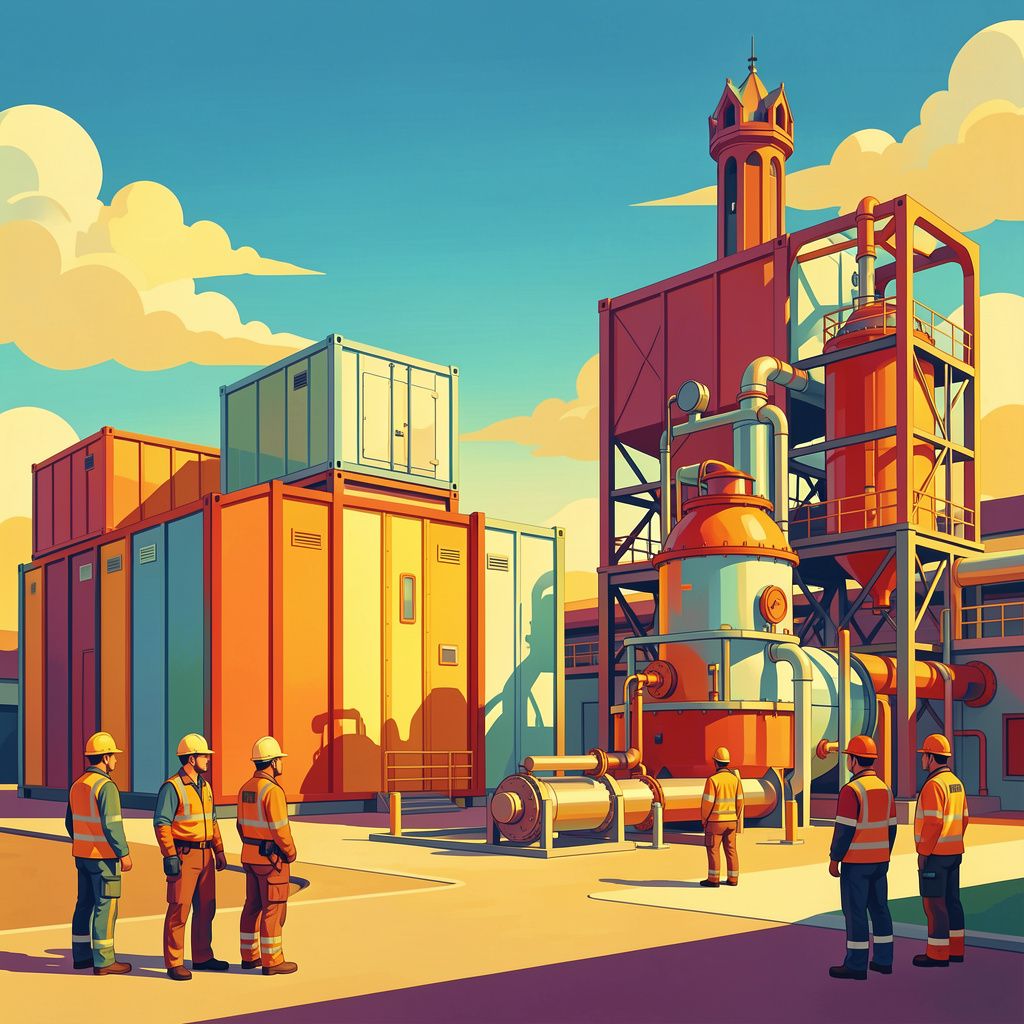
At the center of Hyundai’s production portfolio is a 5-megawatt polymer electrolyte membrane (PEM) electrolysis system, composed of 12 distinct electrolyzer stacks [1][4]. The modular installation generates approximately 700 metric tons of clean hydrogen each year, which translates to roughly 772 US tons annually or a daily output of about 1,900 kilograms [1][4]. Running the 5-megawatt unit at capacity demands an annual electricity input of 43.8 gigawatt-hours, resulting in an energy consumption intensity of approximately 63 kilowatt-hours per kilogram of hydrogen [1]. Featuring 90 percent domestic component localization, the production design is scheduled for a wider market launch in 2027 and can scale to aggregate industrial capacities reaching hundreds of megawatts [1][3].
Balancing Production Economics and Grid Efficiency
The operational viability and climate impact of decentralized water electrolysis depend directly on power input pricing and the efficiency of auxiliary equipment [1]. Hyundai’s 5-megawatt module targets point-of-use operations to reduce secondary expenses related to high-pressure compression, transport logistics, and long-term storage [1]. Operational experience builds on Hyundai’s active 1-megawatt containerized demonstration facility in Gwangju, South Korea, as well as upcoming demonstration sites planned for Boryeong, Buan, and Jeju [1][4][6]. In parallel, the group’s HTWO Energy division is diversifying production methodologies by converting organic municipal waste into fuel at HTWO Energy Cheongju, complemented by an upcoming biogas-based plant in Paju, South Korea, and emerging initiatives in Indonesia [4][6].
Connecting Clean Upstream Supply to Industrial Downstream Use
To secure domestic off-takers for decentralized fuel production, Hyundai linked its generation systems with end-use applications across commercial transport, heavy rail, and high-tech manufacturing [4][6]. During the exhibition, the group presented an enhanced-durability fuel cell system engineered for heavy-duty commercial transport alongside Bluelink Uptime Care, a real-time fleet diagnostic and preventive maintenance service [4][6]. Hyundai also conducted the first live demonstrations of its Automatic Charging Robot-Hydrogen (ACR-H), a robotic system that refuels hydrogen-powered vehicles such as fuel cell electric street-cleaning trucks without human intervention [4][6].
Strategic Deployment Across Mobility Fleets and Industrial Hubs
Downstream hardware shown alongside the production system included the 2027 NEXO SUV, a hydrogen locomotive development model, a flat-type rail fuel cell module, and passenger transport vehicles including the ELEC CITY Fuel Cell low-floor intercity bus, the UNIVERSE Fuel Cell coach, and the New XCIENT Fuel Cell tractor [2][4][6]. Beyond transit, Hyundai demonstrated its Saemangeum AI Valley concept, an integrated project combining on-site solar power arrays with water electrolysis, robotics production facilities, and artificial intelligence data centers [2][4][6]. By connecting modular generation to local commercial consumption, the manufacturer seeks to lower distribution hurdles, establishing an economically viable blueprint for industrial regions decarbonizing heavy transport and manufacturing [1][2][5].
Bronnen
- tw.nl
- www.hyundai.com
- fuelcellsworks.com
- interestingengineering.com
- www.prnewswire.com
- theevreport.com
- x.com
- www.chosun.com