

Global Partners Launch Fifty Million Dollar Initiative to Shield Crops from Extreme Weather
Wageningen, Friday, 6 November 2026.
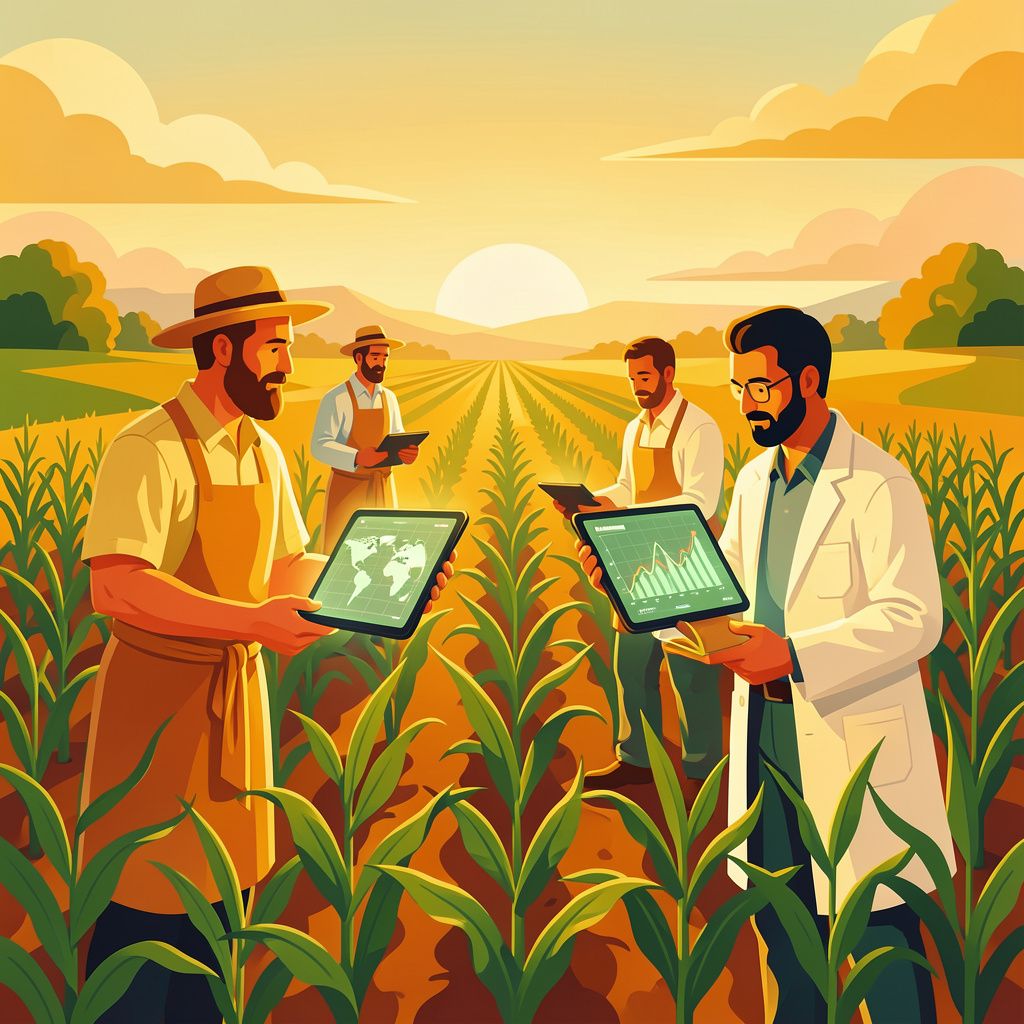
Backed by major global foundations, this international partnership provides open-access gene editing and artificial intelligence tools to help developing nations rapidly breed heat- and drought-resistant staple crops.
Harnessing Agritech to Confront Escalating Climate Stress
This major undertaking falls squarely under the sector of agritech, representing a strategic convergence of computational systems and modern biotechnology designed to safeguard worldwide food supplies [1][4]. The four-year program, titled TRITON (Traits for Resilience Initiative for Transformative Outcomes for Novel Crops), is backed by approximately 44 million euros, equivalent to 50 million U.S. dollars, provided jointly by the Gates Foundation and the Novo Nordisk Foundation [1][4]. Formalized on October 18, 2026, the initiative aims to combat harvest failures caused by extreme heat and prolonged water deficits, moving beyond conventional agricultural goals that have traditionally emphasized yield increases and basic pest resistance [4][5].
Computational Models and Precision Gene Editing in Action
The innovation operates by fusing artificial intelligence, predictive computer modeling, and targeted CRISPR gene-editing technology to accelerate the breeding timeline [1][2]. Developing abiotic stress tolerance—specifically against intense heat and drought—remains notoriously difficult because these traits are governed by vast and complex genetic networks [1][4]. Under the TRITON framework, machine learning algorithms and advanced modeling identify the most promising genes responsible for resilience, enabling researchers to introduce precise DNA modifications directly into high-performing crop varieties [1][4]. This computational-biological pipeline targets three foundational staple foods in its opening phase: maize, rice, and sorghum [1][4][5].
Institutional Leadership Across Continents
Coordination of the global venture is led by Wageningen University & Research (WUR), an institution based in Wageningen, Netherlands [1][4]. Within WUR, leadership stems from the Plant Sciences Group directed by Richard Harrison, alongside the Plant Breeding chair group led by Professor Agnieszka Golicz, with participation from the university’s Laboratory of Plant Physiology [1][2]. The operational ecosystem relies on an international network across multiple regions: Northwest Europe brings together WUR and Utrecht University in the Netherlands, the University of Copenhagen and Aarhus University in Denmark, and Justus Liebig University Giessen in Germany [1][4]. The United States contributes expertise from California through the University of California, Davis (UC Davis) and the Innovative Genomics Institute, while African agricultural execution is anchored by Kenyatta University in Kenya, accompanied by CGIAR research centers and regional breeding networks across continents [1][4].
Democratizing Tools for Global Food Security
A central economic and operational objective of TRITON is dismantling standard intellectual property barriers that historically restrict advanced agricultural tools [1][2]. The initiative builds upon WUR’s institutional commitment since 2021 to provide equitable technology access to trusted partners [1]. By distributing combinable computer models, open biological datasets, and accessible gene-editing techniques, the consortium lowers high capital entry costs for small-to-medium enterprises (SMEs), non-governmental organizations, and national research bodies across lower- and middle-income nations [1][2][4]. To align scientific work with real-world farming conditions, the platform is structured to consult tens of thousands of agricultural producers and supply-chain operators through large language model survey tools, followed by multi-continent field trials to validate crop performance under authentic climate stress [1][4].
Bronnen
- www.wur.nl
- www.linkedin.com
- www.facebook.com
- nl.linkedin.com
- nl.linkedin.com
- www.facebook.com
- www.facebook.com