

TU Delft and XINTC Deploy Virtual Twins to Make Clean Hydrogen Safer and Cheaper
Delft, Thursday, 19 November 2026.
TU Delft and startup XINTC built a virtual simulation model that predicts hazardous gas leaks in hydrogen systems, making renewable power storage safer and industrially viable as of November 2026.
Overcoming Intermittent Energy Barriers with Modular Systems
Green hydrogen is widely regarded as a pivotal energy vector for decarbonizing heavy industry and meeting strict European emissions targets [GPT]. However, the economic and technical viability of production depends heavily on managing the intermittent nature of clean electricity generation [GPT]. Clean-tech startup XINTC develops plug-and-play electrolysis systems designed specifically to integrate directly with fluctuating wind and solar power installations [1]. According to the company, legacy electrolyzer designs are not well suited to cope with the rapid output swings common to renewable assets, presenting operational bottlenecks that drive up capital expenditure and operational risks for industrial adopters [1].
Mitigating Gas Crossover and Outdoor Storage Risks
To build commercial confidence, modular electrolysis units must resolve complex engineering hazards, particularly involving gas crossover and outdoor containment [1]. Gas crossover occurs inside the electrolyzer stack—the core component where water is split into hydrogen and oxygen—requiring these two streams to remain strictly separated to prevent flammable mixtures and preserve efficiency [1]. XINTC recognized that mitigating these hazards under fluctuating operating conditions was critical [1]. As of November 2026, the company partnered with Delft University of Technology (TU Delft) to carry out rigorous risk assessments and deep technical analyses, tapping into existing connections between Ahmadreza Rahbari, Director of R&D at XINTC [alert! ‘Specific regional or city location for XINTC is not provided in source text’], and the Faculty of Mechanical Engineering at TU Delft [1].
From Dynamic Simulation to Digital Twin Validation
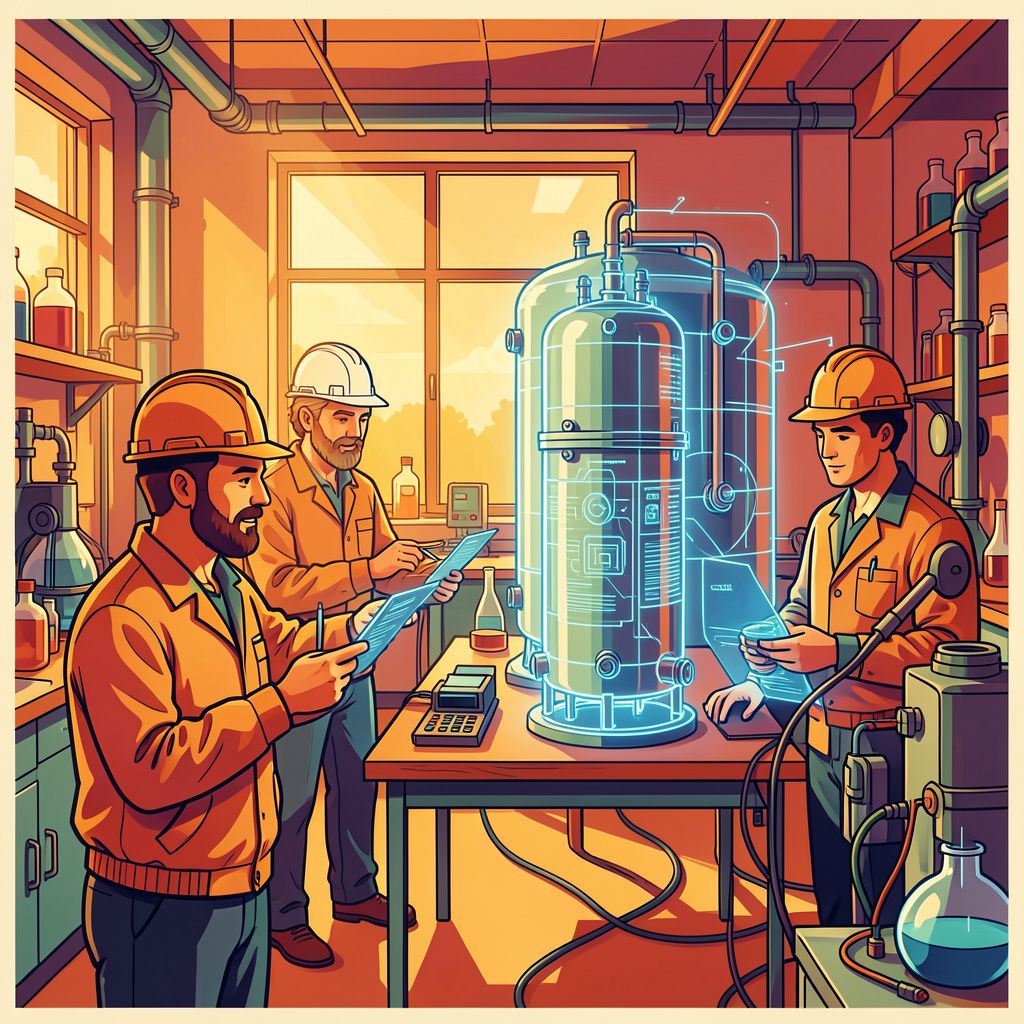
The collaborative research team addressed storage challenges by engineering predictive models for the atmospheric storage of hydrogen, assessing variables including ambient temperature, wind conditions, and location to determine their direct effects on gas retention and overall storage performance [1]. In parallel, investigators built a dynamic model focused on internal stack physics to forecast the exact operating envelopes where gas crossover risks escalate [1]. This dynamic architecture evolved into a fully realized digital twin that can simulate, predict, and analyze entire system workflows under real-world stress [1].
Scientific Rigor Delivering Commercial Certainty
The academic-industrial initiative successfully validated both the atmospheric storage and gas-crossover models, with the dynamic gas-crossover findings earning publication in the peer-reviewed International Journal of Hydrogen Energy [1][2]. The digital twin is actively deployed as of November 2026 to optimize operational efficiency, streamline stack performance, and backstop engineering design decisions with quantitative data [1]. Beyond providing a scientific foundation for XINTC’s development roadmap, the framework integrated student internships and graduation projects that delivered vital talent, demonstrating how public-private technical partnerships can reduce financial risk and accelerate clean hydrogen deployment [1].