

European Union Awards Over 22 Million Euros for Groundbreaking Environmental and Plant Research
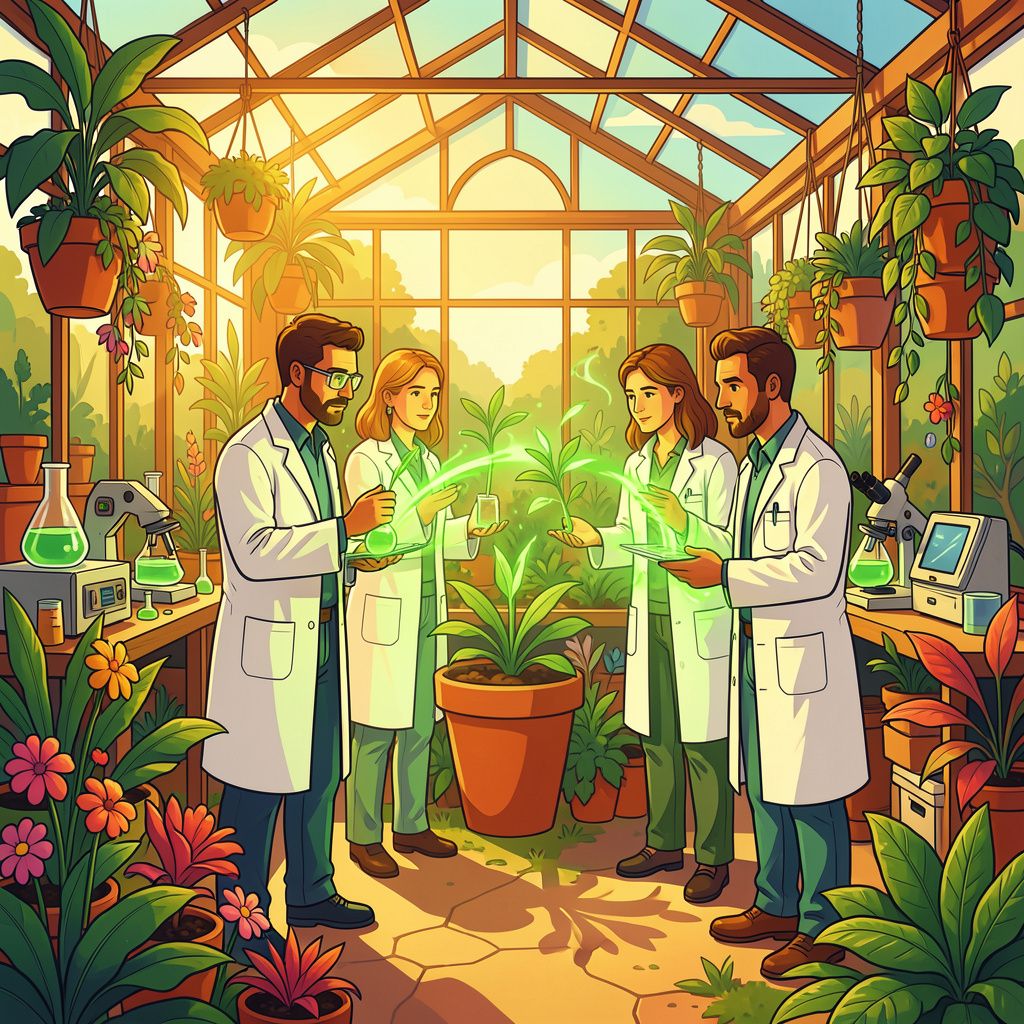
Wageningen, Thursday, 19 November 2026.
Wageningen University scientists secured major European funding to uncover how plants react to stress in mere seconds and explore positive tipping points that can accelerate global sustainability efforts.
Agritech and Climate Resilience Take Center Stage in Horizon Europe Allocation
This major public capital deployment marks an essential milestone within agritech and ecological systems research, channeling critical non-dilutive capital toward biological food security technologies and systemic climate policy models [1][5]. On 12 November 2026, the European Research Council (ERC) released the results of its 2026 Synergy Grant call, earmarking €500 million across 48 selected international consortia out of its broader multi-year Horizon Europe budget of more than €16 billion for the 2021–2027 cycle [1][5][8]. Within this funding cohort, Wageningen University & Research (WUR), based in Wageningen in the Netherlands, secured leadership in two collaborative initiatives totaling over €22 million across a six-year implementation roadmap running through 2032 [1][8].
The Fastfurious Breakthrough: Decoding Sub-Second Cellular Agritech
The agritech component of the funding focuses on ‘Fastfurious: Understanding the molecular basis of fast plant signaling,’ an enterprise awarded €12.1 million, of which approximately €4.5 million flows directly to WUR [1][3][4]. The innovation is spearheaded by project coordinator Dolf Weijers, Professor of Biochemistry at Wageningen University & Research in the Netherlands, alongside principal investigators Krzysztof Wabnik at the Technical University of Madrid (CBGP, UPM) in Spain, Jenny Russinova at Ghent University (VIB-UGent) in Belgium, and Cyril Zipfel at the University of Zurich in Switzerland [1][3][5][6]. This research represents a vital leap for agritech, aimed at unlocking the molecular design principles required to breed climate-resilient crops capable of withstanding environmental stresses, fluctuating temperatures, and pathogen pressures without suffering severe yield penalties [5].
Microfluidic Precision and High-Throughput Mass Spectrometry
The fundamental mechanics of the project examine cellular reactions within the first minute of environmental perception—a dynamic window previously unmeasured by standard agritech protocols [1][3][4]. Using a specialized microfluidic device measuring 0.05 m by 0.05 m [3], cultured plant cells from the model organism Thale cress (Arabidopsis thaliana) are combined with fluid stimulus solutions within milliseconds [3][4]. The cells are then frozen at precise intervals of 1, 10, or 60 seconds [3]. Utilizing advanced mass spectrometry—facilitated in part by an analytical mass spectrometer acquired for €1.6 million [4]—the team measures real-time phosphorylation cascades and protein structural adjustments across approximately 9,000 biological samples [3].
Bridging Receptors and Ligands to Safeguard Global Food Security
While standard biochemical sampling methods traditionally check cellular reactions at 15-minute intervals, initial tests using the bacterial protein flagellin demonstrated that critical signaling responses terminate within just 5 seconds, escaping traditional lab observation [3]. Over the first two years leading into late 2028, researchers will track at least 60 environmental inputs—such as nitrate, phosphate, acidity, salts, and pathogens—against roughly 400 candidate receptor proteins found in Arabidopsis thaliana [4]. By identifying undiscovered receptor-ligand pairings and subsequently deactivating targeted receptors in follow-up genetic trials, the project constructs computational predictive models to clarify cellular decision-making, providing commercial agricultural breeders with actionable targets for stress-tolerant crop engineering [3][4][5].
GROUNDSWELL: Modeling Socio-Ecological Tipping Points
Running parallel to the molecular agritech stream, the second ERC Synergy Grant awards nearly €10 million over six years to the ‘GROUNDSWELL: Societal tipping towards a safe future for humanity on Earth’ initiative [1][2][8]. Led by ecologist Marten Scheffer at Wageningen University & Research in the Netherlands, the cross-border consortium unites Tim Lenton from the University of Exeter in the United Kingdom, Johan Rockström from the Potsdam Institute for Climate Impact Research in Germany, and Elke Weber from Princeton University in the United States [1][2][8]. Expanding on the analytical foundation of Scheffer’s book De Kanteling (Tipping out of Trouble), the initiative partners with historians to isolate sudden developmental accelerations across historical shifts, delivering predictive decision frameworks that governments and public institutions can leverage to trigger positive systemic interventions against biodiversity collapse [1][2].
Bronnen
- www.wur.nl
- www.wur.nl
- www.wur.nl
- www.resource-online.nl
- www.upm.es
- www.linkedin.com
- www.myscience.org
- erc.europa.eu