

Why Dutch Farmers Struggle to Profit from Soil Carbon Removal
Wageningen, Saturday, 7 November 2026.
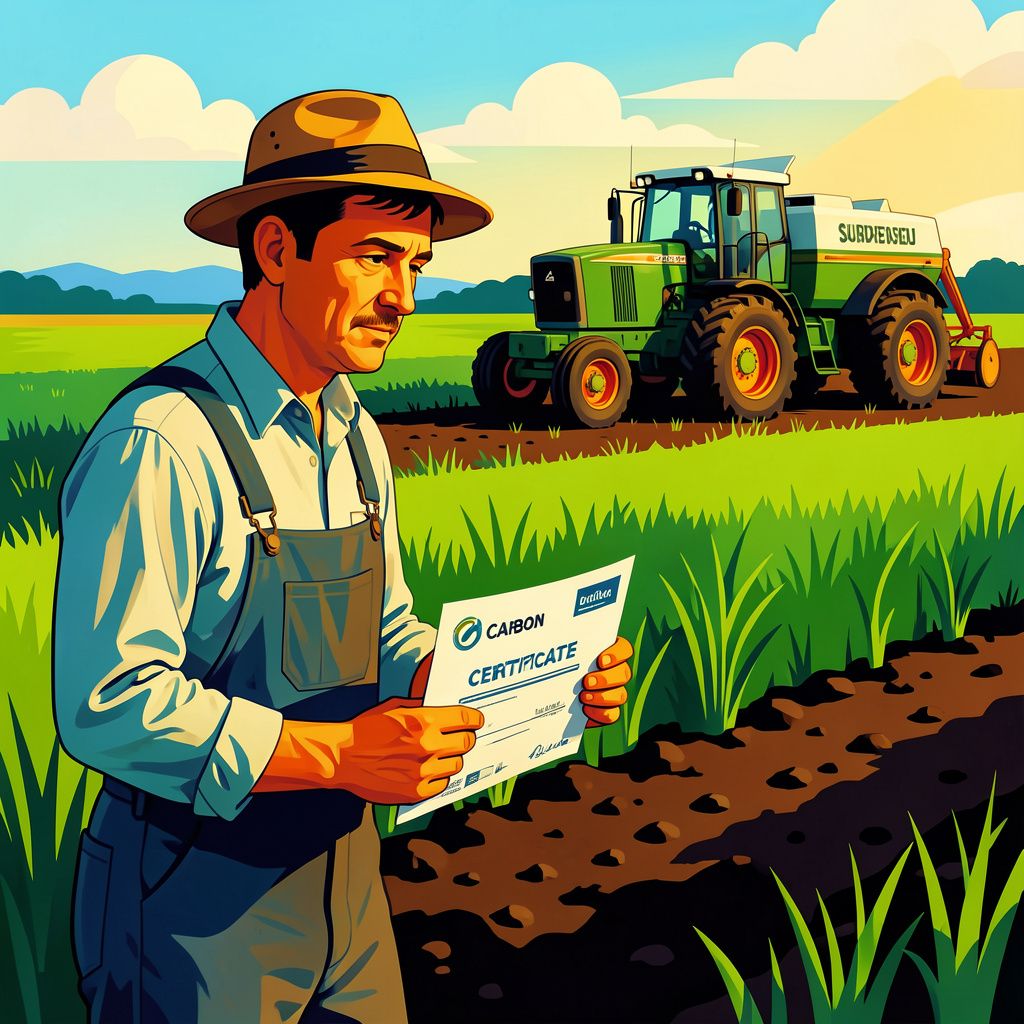
Despite Dutch carbon certificates fetching €90 per ton, high certification costs and low buyer demand leave only 20 percent sold, prompting new government subsidies to support pioneering agricultural markets.
The Disconnect Between Agritech Innovation and Commercial Realities
At the intersection of agritech and voluntary carbon markets, soil carbon sequestration has emerged as a critical technological and biological pathway [1][3]. Rather than treating agricultural soil simply as a medium for crop production, carbon farming leverages regenerative practices—such as minimal soil disturbance, cover cropping, and the cultivation of perennial fiber crops—to sequester atmospheric carbon dioxide directly into farmland biomass and topsoil [1][6]. Beyond greenhouse gas abatement, the agritech benefits include enhanced soil structure, improved hydrological management, and heightened systemic resilience against droughts and severe rainfall [1][6]. However, turning these ecological metrics into viable financial returns remains a complex challenge for the Dutch agricultural sector [1].
Complex Intermediaries and Severe Price Disparities
A central structural barrier to profitability lies in the high friction and overhead required to monitor, verify, and commercialize agricultural carbon [1]. Establishing a verified carbon farming project requires a chain of specialized third parties, including monitoring technology providers, external plan validators, carbon yield auditors, and specialized brokers [1]. According to Waas Thissen, a researcher at the Dutch-based Louis Bolk Instituut, these heavy layers make initial costs, risks, and ongoing commitments disproportionately high relative to farmer revenues [1]. This issue was underscored in an analytical factsheet published in 2025 by the institute, which determined that carbon farming remains insufficiently lucrative for producers [1].
Market Illiquidity in the Voluntary Registry Ecosystem
Market dynamics further illustrate this economic imbalance. Since the pioneer Dutch initiative was launched in 2012, 123 agricultural carbon projects have entered the market through certification bodies and platforms including the Stichting Nationale Koolstofmarkt (SNK), ONCRA, and Proba [1]. Within ONCRA’s registry alone, 99 projects span a cumulative 1,100 hectares, targeting peat pasturelands, regenerative arable farming, and fiber crops [1]. However, end-user demand has severely lagged supply: only 20 percent of all carbon certificates issued through SNK and Proba have successfully sold to end buyers [1]. This creates an unsold inventory surplus of 80 percent [1].
Cost Arbitrage and Public Interventions to Stabilize Demand
Domestic Dutch certificates face substantial pricing hurdles, commanding roughly 90 euros per ton compared to prevailing international voluntary carbon offsets that frequently trade around 10 euros per ton—representing an absolute price premium of 80 euros per ton, or 800 percent above international levels [1]. Because participation remains strictly voluntary, as emphasized by SNK’s Wytze van der Gaast, corporate buyers often opt for cheaper foreign alternatives [1]. To bridge this funding deficit and absorb domestic supply, the Dutch Ministry of Agriculture, Fisheries, Food Security and Nature (LVVN) allocated 2.5 million euros through the Nationaal Groenfonds on Monday, November 2, 2026, matching an identical financial intervention enacted in 2025 [1].
Automated Verification and Standardized European Frameworks
To overcome high verification overhead, cross-border agritech research is automating field testing. In late October 2026, the Flanders Research Institute for Agriculture, Fisheries and Food (ILVO), an agritech research entity based in Flanders, Belgium, demonstrated its Smart Carbon Farming (SCF) robotic unit at pilot farmer Stijn Carton’s holding during the Flemish Carbon Farming Day organized with Boerenbond [3]. While currently designed to gauge soil compaction, ILVO is expanding the robot’s onboard sensor suite to measure soil organic carbon, pH levels, and soil nitrogen directly in fields across test sites in Belgium, Germany, the Netherlands, and France, significantly lowering manual verification expenses over time [3].
Governance Standards and Institutional Horizons for 2027
Long-term scalability hinges on unified governance and procurement integrity [1][2]. A research framework published on October 26, 2026, by researchers from the University of Twente alongside Delft University of Technology and Deltares—commissioned by the Klimaatonderzoek Initiatief Nederland (KIN)—emphasized responsible carbon removal governance, procedural justice, and robust empirical validation [2]. Looking forward to 2027, registry leaders including ONCRA’s Gijs Tolmeijer anticipate that the European Union’s upcoming Carbon Removals and Carbon Farming standard will institutionalize sustainability reporting requirements, encouraging institutional buyers to build structured credit portfolios and providing Dutch growers with sustainable, de-risked returns [1].
Bronnen
- www.nieuweoogst.nl
- carbonherald.com
- www.linkedin.com
- x.com
- www.nieuwsgrazer.nl
- www.zlto.nl
- nlgroen.com