

Eindhoven University Prepares Students for Market Uncertainty Through Practical Learning
Eindhoven, Sunday, 18 October 2026.
Eindhoven University of Technology has scaled its innovative learning model to 4,400 students annually, embedding real-world uncertainty into engineering education to train future market leaders.
Scaling Innovation from Honors Teams to Core Curriculum
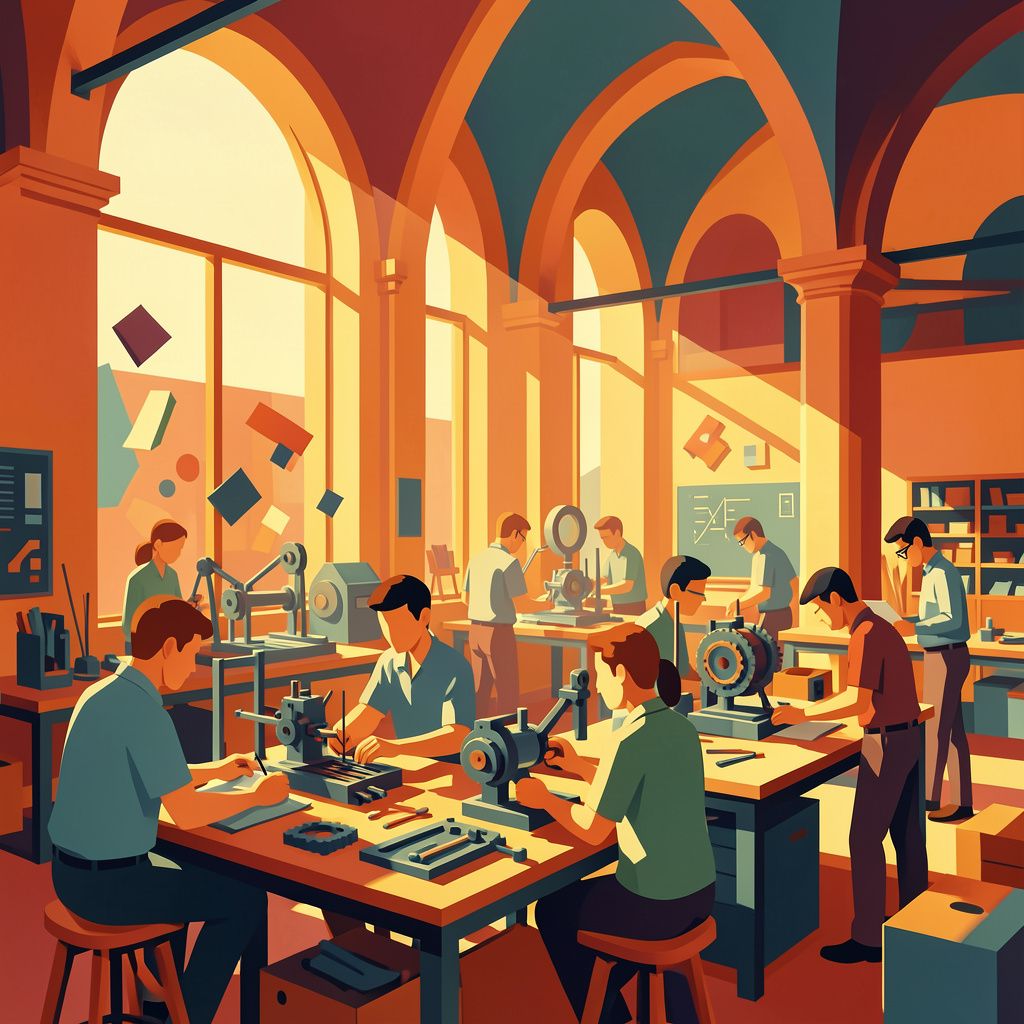
The roots of Challenge-Based Learning (CBL) at Eindhoven University of Technology (TU/e) trace back to extracurricular honors student teams working on self-chosen societal challenges [1]. In 2015, Isabelle Reymen was tasked with embedding this student-led framework into the university’s formal educational structure, leading to the creation of TU/e innovation Space [1]. Initially serving 1,600 students per year upon its launch in the Gaslab building, the facility expanded quickly to the Matrix building on the Eindhoven campus [1]. Today, the program facilitates 4,400 students annually across more than 40 CBL courses and 40 student teams, reflecting an increase in student throughput of 175% [1].
Institutional Integration and Ecosystem Impact
The methodology was further operationalized when the Executive Board approved a five-year business case in January 2020, securing necessary operational funding [1]. In September 2023, TU/e launched ‘Bachelor College 2.0,’ embedding CBL as a core component of its educational strategy under the ‘Strategy 2030’ Talent theme [1]. Currently, over 650 students actively collaborate with 700 external partners and sponsors on open-ended problems, including climate solutions and energy transition systems [1]. These efforts earned TU/e the Dutch Higher Education Award in 2021 following a Comenius grant in 2020 [1].
Global Recognition and Regional Integration
The institutional reach of TU/e’s ecosystem extends to international academia and industry [3]. During the week of October 5, 2026, Eindhoven hosted the inaugural 4GU Global Forum and ‘4GU Week’ conference, co-organized alongside Elsevier [3]. The event highlighted the university’s role in high-tech ecosystem orchestration and showcased student collaborations within TU/e innovation Space [3]. This coincided with the university’s 70th anniversary Lustrum Week, held from October 10 through October 18, 2026, celebrating seven decades since its founding in 1956 [6][7].
Future Trajectories and Evaluation Frameworks
As CBL expands globally, focus is shifting toward evaluation methodologies for non-traditional skill sets [5]. The EuroTeQ Engineering University expert team—including TU/e representatives Apoorva Sonawane, Adam Watkins, and Esther Ventura-Medina—is scheduled to host a collaborative workshop on November 2, 2026, to address assessing collaboration, reflection, and problem-solving processes [5]. Meanwhile, Professor Reymen is preparing for an upcoming sabbatical in fall 2026 to document the structural lessons learned from scaling innovation ecosystems [1].
Bronnen
- www.tue.nl
- www.linkedin.com
- www.linkedin.com
- www.linkedin.com
- www.linkedin.com
- www.tue.nl
- www.facebook.com
- www.instagram.com