

How Eindhoven University Uses Real-World Challenges to Train Future Entrepreneurs
Eindhoven, Sunday, 11 October 2026.
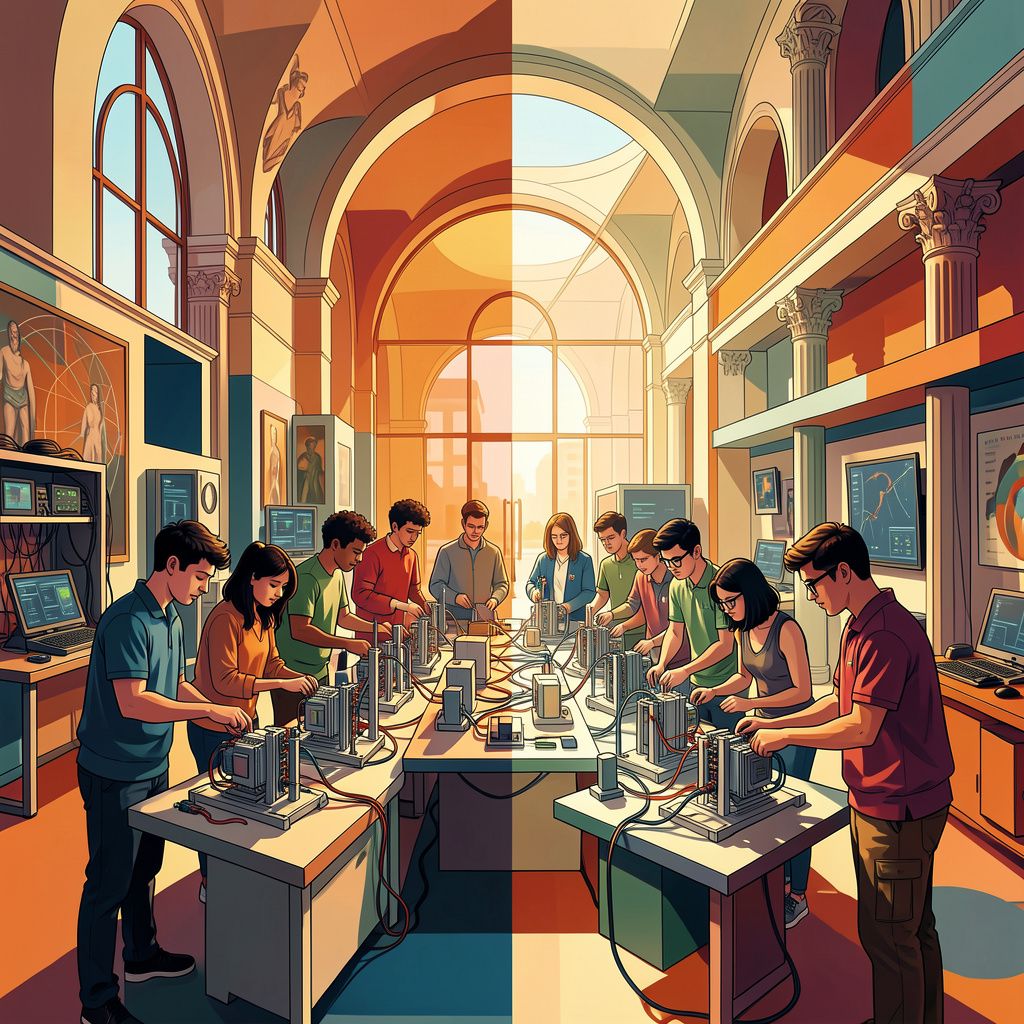
Eindhoven University of Technology is scaling its Challenge-Based Learning framework to equip future engineers and startup founders for market unpredictability. Managed through the university’s innovation hub led by Scientific Director Isabelle Reymen, the model connects over 4,400 students annually with 700 industry partners like Canon Production Printing. By replacing traditional lectures with hands-on, real-world problems—ranging from AI-driven solutions to accessible design—students direct their own learning while building crucial problem-solving skills. The initiative’s broader impact was highlighted during October 2026, as Eindhoven hosted the global 4th Generation University Forum in collaboration with Elsevier, showcasing how academic institutions can act as central innovation drivers in regional ecosystems.
Scaling Challenge-Based Education in Eindhoven
TU/e innovation Space, located in the Matrix building on the university campus, operates as the primary hub for Challenge-Based Learning (CBL) and student entrepreneurship [1]. Originally initiated in 2015 through early efforts to integrate student team learning into formal education, the center was officially launched around 2018 by Isabelle Reymen, Miguel Bruns, and Rick de Lange [1]. The facility secured long-term financial stability in January 2020 after the university’s Executive Board approved a five-year business plan [1]. Since its inception, annual student participation has scaled from approximately 1,600 students to 4,400 students across 40 CBL courses and more than 40 distinct student teams [1].
Integrating Industry Partners into the Curriculum
Under the direction of Scientific Director Isabelle Reymen—who balances her management role with duties as a professor of Design of Innovation Ecosystems—the program connects roughly 650 students with 700 corporate partners and sponsors [1]. In September 2023, the university embedded CBL into its core curriculum through the launch of “Bachelor College 2.0,” framing the approach under the “Talent” pillar of its Strategy 2030 [1]. According to Reymen, student-led teams represent the most direct application of CBL, giving undergraduates complete ownership over identifying societal challenges and designing technical solutions [1].
Ecosystem Co-Creation and Industry Collaboration
Practical collaboration with major industrial firms remains central to the engineering curriculum. During the past academic year, mechanical engineering students engaged in a specialized CBL course centered on an authentic engineering challenge supplied by Canon Production Printing [5]. Students worked in interdisciplinary teams to translate theoretical knowledge into functional prototypes alongside corporate engineers [5]. Such hands-on learning experiences frequently serve as an incubator for tech startups, allowing student founders to identify market gaps and launch university spin-offs [4].
Advanced Labs and Real-World Technical Testbeds
To support multidisciplinary problem-solving, the university relies on specialized facilities like the Nexus Lab, which serves the Mathematics and Computer Science department under the TU/e Educational Vision 2030 framework [7]. The lab offers adaptable infrastructure, including an airport baggage handling platform made of 18 programmable conveyor belts controlled by Raspberry Picos, autonomous TurtleBot3 robots, and medical neuronavigation setups [7]. Students utilize these testbeds in courses covering software debugging, distributed control systems, and cybersecurity, bridging classroom theory with complex hardware applications [7].
Global Recognition and the 4th Generation University Model
The global reach of Eindhoven’s educational model was highlighted during the week of October 7, 2026, when the city hosted the inaugural 4GU Global Forum and “4GU Week” [3]. Co-organized by TU/e and academic publisher Elsevier, the international conference focused on the concept of 4th Generation Universities (4GU)—institutions that actively orchestrate regional innovation ecosystems [2][3]. The initiative evolved from a joint research report published by TU/e and Elsevier in 2024 [3].
Institutional Orchestration in the Brainport Region
During the 4GU Week conference, TU/e Rector Silvia Lenaerts joined panel discussions detailing the university’s orchestrating role within the surrounding Brainport high-tech ecosystem [2]. International delegates visited TU/e innovation Space to inspect how students, academic researchers, and industry partners co-create solutions to societal challenges [2][3]. Event organizers confirmed that global development of the 4GU framework will continue into 2027, focusing on customizing ecosystem orchestration across different cultural and regional contexts [3].
Addressing Tech Disruption and Academic Horizons
As generative AI tools disrupt traditional coursework, the university is actively modifying its challenge-based instruction. On October 14, 2026, Associate Professor Dirk Fahland will lead a dedicated session on guided AI usage in first-year CBL courses [6]. Drawing from pilots conducted under the SAIL DRIVE project, the session addresses how educators can adjust project feedback and task design when students utilize AI for writing code, conducting literature reviews, and drafting technical reports [6].
Future Trajectory and Leadership Milestones
Looking forward, TU/e plans to continuously update facilities like the Nexus Lab with digital twinning capabilities while embedding CBL deeper into general engineering degree tracks [4][7]. For program director Isabelle Reymen—who previously earned a Comenius grant in 2020 and the Dutch Higher Education Award in 2021—the period marks a personal milestone [1]. Reymen plans to take a sabbatical in the fall of 2026, marking her first extended break in eight years as she celebrates her 50th birthday in November 2026 [1].
Bronnen
- www.tue.nl
- www.linkedin.com
- www.linkedin.com
- ioplus.nl
- www.linkedin.com
- www.tue.nl
- www.tue.nl
- www.instagram.com