

Teaching Computers to Think Like Surgeons to Boost Hospital Safety
Amsterdam, Sunday, 11 October 2026.
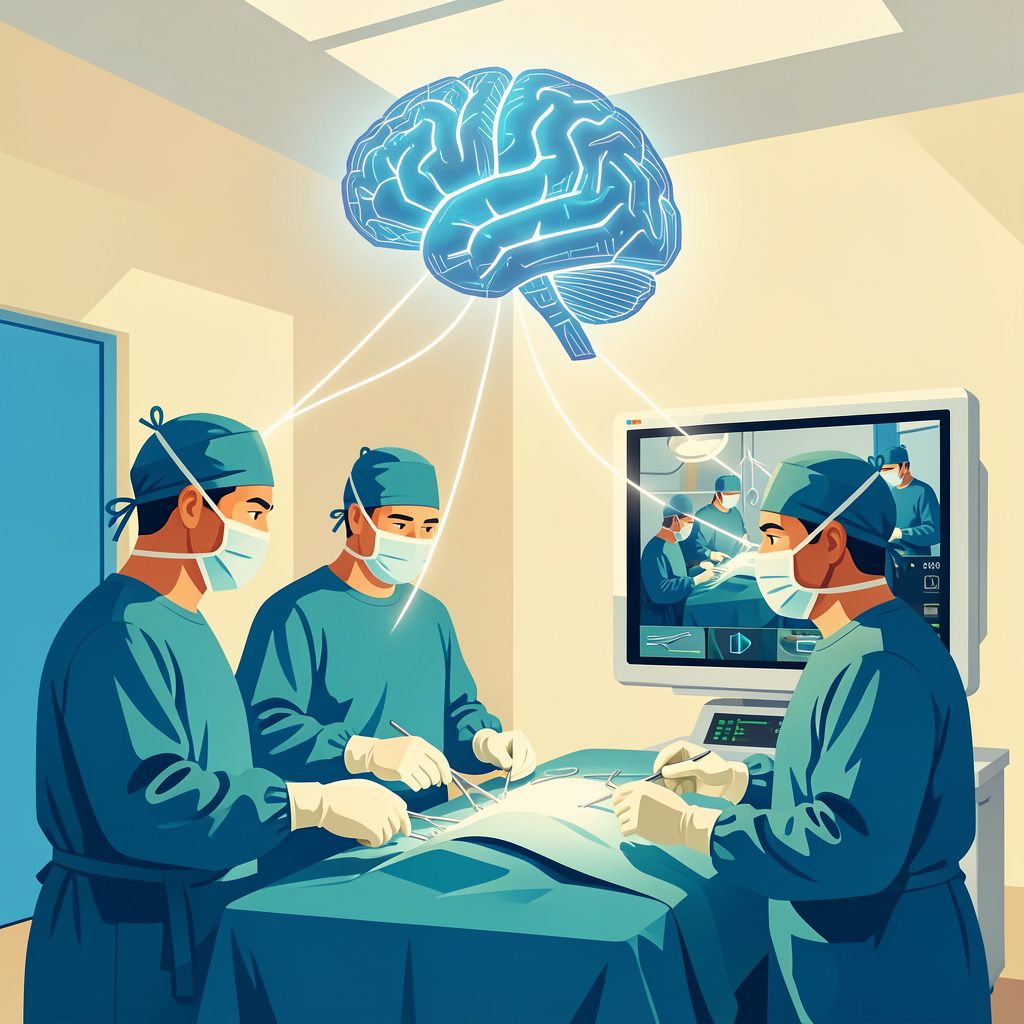
Dutch researchers are training artificial intelligence on surgical video footage to mirror surgeon intuition. This breakthrough aims to provide real-time decision support and significantly reduce operating room errors.
Transforming Surgical Precision in Healthtech
This innovation falls squarely under the banner of healthtech and medical science, representing a fundamental shift in how surgical procedures are monitored, analyzed, and evaluated [GPT]. Modern operating rooms produce enormous volumes of video data, yet manual human review remains a bottleneck [GPT]. By implementing machine learning models trained on surgical footage, clinical teams can systematically process this video data at scale to improve patient outcomes and minimize human error during procedures [1].
Emulating Intuition: How Surgical Video AI Works
As of October 2026, research led by surgeon Frans van Workum alongside Estefania Talavera Martinez, a researcher based at the University of Twente, focuses on training artificial intelligence models to replicate a surgeon’s clinical intuition and physical feel during operations [1]. The methodology relies on training machine learning algorithms on surgical video footage to recognize intricate physical movements, operational patterns, and complex decision-making processes [1]. These algorithms analyze spatial relationships and surgical steps to build digital tools capable of supplying real-time intraoperative feedback or highlighting potential procedural errors before complications arise [1].
National Support and Implementation Frameworks
The deployment of surgical AI across Dutch medical centers is part of a broader national initiative to systematically integrate advanced technology into healthcare [2]. The ‘Informatieberaad Zorg’ recently approved a national program plan anchored within the ‘Aanvullend Zorg- en Welzijnsakkoord’ (AZWA) and the ‘Hoofdlijnenakkoord Ouderenzorg’ [2]. Under the direction of the Ministry of Health, Welfare and Sport (VWS) and healthcare partners, the ‘Realisatie AI in de zorg’ initiative will offer structured support to healthcare institutions starting in early 2027, establishing an AI readiness foundation, validation guidelines, and legal-ethical standards across five action tracks [2].
Addressing Operational and Environmental Challenges
While AI integration targets surgical quality, industry experts like Bart Scheerder emphasize that scaling high-impact applications requires operational restructuring, standardized vision, and workforce support alongside technical development [2]. Concurrently, healthcare efficiency initiatives demonstrate broader operational impacts in Dutch operating rooms [3]. For instance, a sustainability study led by Shanna Honings at Maastricht UMC+ demonstrated that optimizing bilateral cataract surgery workflows reduced emissions from 39.89 kg CO2-equivalent down to 31.73 kg CO2-equivalent per patient—a carbon footprint reduction of 20.456% primarily driven by optimized patient transportation [3].