

How Algae Could Soon Replace Imported Proteins and Industrial Oils
Wageningen, Wednesday, 25 November 2026.
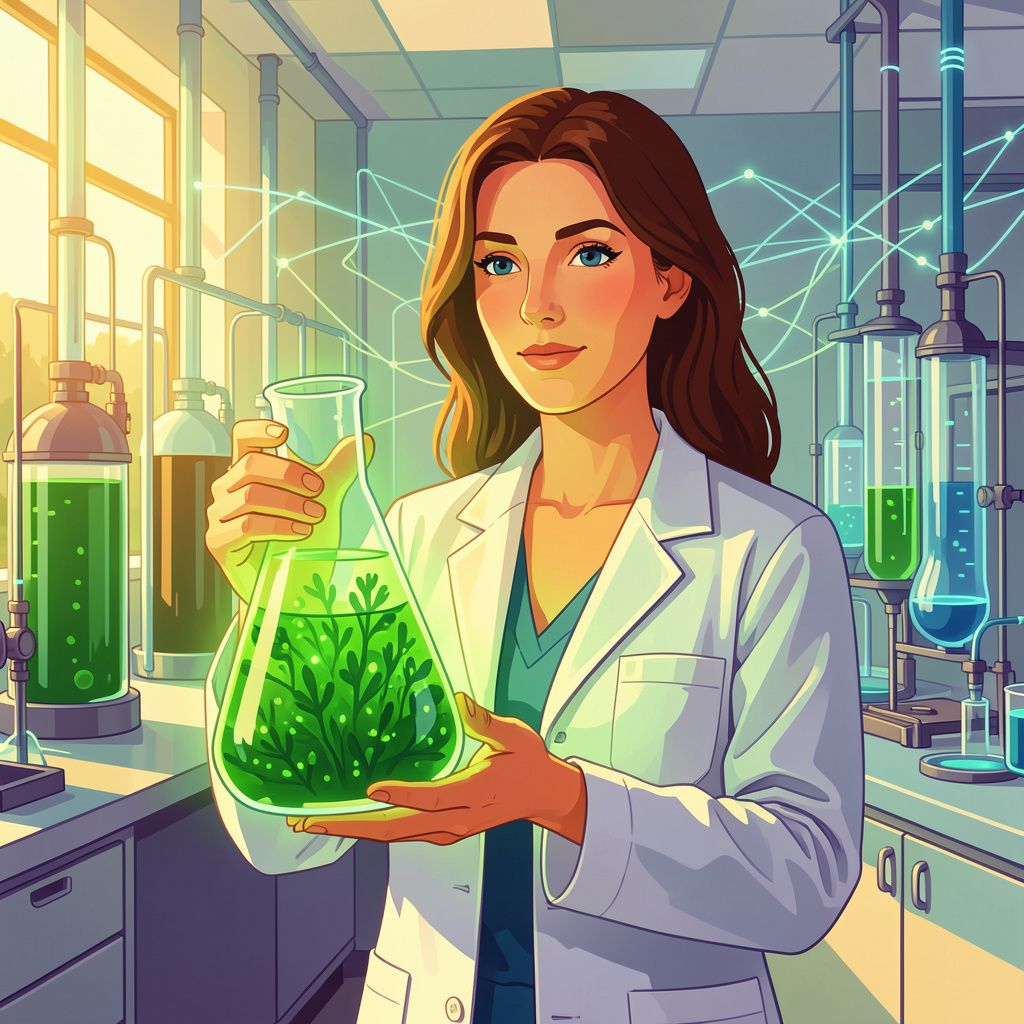
Maria Barbosa will head Wageningen’s bioprocess engineering group in 2027, harnessing microalgae and artificial intelligence to transform lab discoveries into commercial-scale alternatives for food, cosmetics, and industrial manufacturing.
Strategic Transition at Wageningen’s Biotechnology Hub
The global bioeconomy is witnessing an accelerated push toward sustainable production models, and academic institutions remain at the forefront of engineering these commercial solutions [GPT]. Wageningen University & Research (WUR), located in Wageningen in the Netherlands, has appointed Maria Barbosa as chair holder of the Bioprocess Engineering group [1]. This leadership transition is scheduled to take effect in February 2027, when Barbosa will succeed René Wijffels, who is slated to retire in January 2027 [1]. As an innovation rooted firmly in food biotechnology and industrial agritech, Barbosa’s agenda aims to translate microscopic biological discoveries into viable, high-volume commodities that reduce environmental footprints [1].
Scaling Microalgae for Domestic Food and Industrial Supply Chains
The central operational focus of Barbosa’s research program lies in microalgae biotechnology, which serves as a renewable production platform for human food proteins, industrial oils, and cosmetic compounds [1]. By cultivating these organisms locally in the Netherlands, the initiative directly targets reducing supply chain dependency on imported commodities while alleviating resource pressures on global ecosystems [1]. Algae can theoretically be cultivated anywhere, yet the core engineering bottleneck remains inducing them to synthesize target compounds at yields and efficiencies suitable for broader economic adoption [1].
Engineering Mechanisms and Digitalization Across Large Volumes
Addressing this efficiency hurdle requires a multidisciplinary integration of biology, process technology, and informatics [1]. Bioprocess engineering functions by converting fundamental cellular mechanisms into controlled production workflows, systematically scaling cultivation systems from small laboratory reactors up to commercial installations measuring hundreds of cubic meters [1]. To bridge this laboratory-to-industry gap, Barbosa plans to incorporate advanced data science, digitalization, and artificial intelligence into the engineering domain, driving process efficiency and continuous operational monitoring [1].
Institutional Groundwork and Future Commercial Trajectory
Barbosa’s appointment builds upon more than two decades of technical expertise and infrastructure development in Wageningen [1]. After completing a master’s degree in Food Engineering at the Catholic University of Porto, she received her PhD in bioprocess engineering from WUR in 2003 [1]. Returning to Wageningen in 2008 to establish a research line in microalgal biotechnology, she helped launch the pilot facility AlgaePARC, joined the Bioprocess Engineering chair group in 2015, and attained the title of professor of Microalgal Biotechnology in 2019 [1]. Following the 2024 expansion that doubled the installation’s footprint to AlgaePARC 2.0, the group is structurally positioned to expand industrial biotechnology and strengthen long-term food security ahead of Barbosa’s official start in February 2027 [1].