

European Union Launches Shared Digital Identity Network to Modernize Agriculture
Paris, Saturday, 10 October 2026.
Fourteen European countries launched a digital consortium backed by 15 million euros to introduce universal digital farm identities, streamlining administrative tasks and enhancing agricultural data security across the EU.
Defining the Agritech Infrastructure and Governance Model
This major EU initiative operates firmly within the agritech and food technology domain, providing cross-border digital public infrastructure to modernize agricultural supply chains [1][2][4]. Formally established by a European Commission Implementing Decision on 8 September 2026, the European Digital Infrastructure Consortium for Agri-Food (EDIC for Agri-Food) maintains its official seat in Paris, France [1]. The consortium was officially launched at a high-level event convened on 1 October 2026 by Annie Genevard, France’s Minister of Agriculture, Agri-Food and Food Sovereignty, whose ministry spearheaded the initiative’s multi-year preparation [1][4].
The Digital Farm ID and EU Interoperability
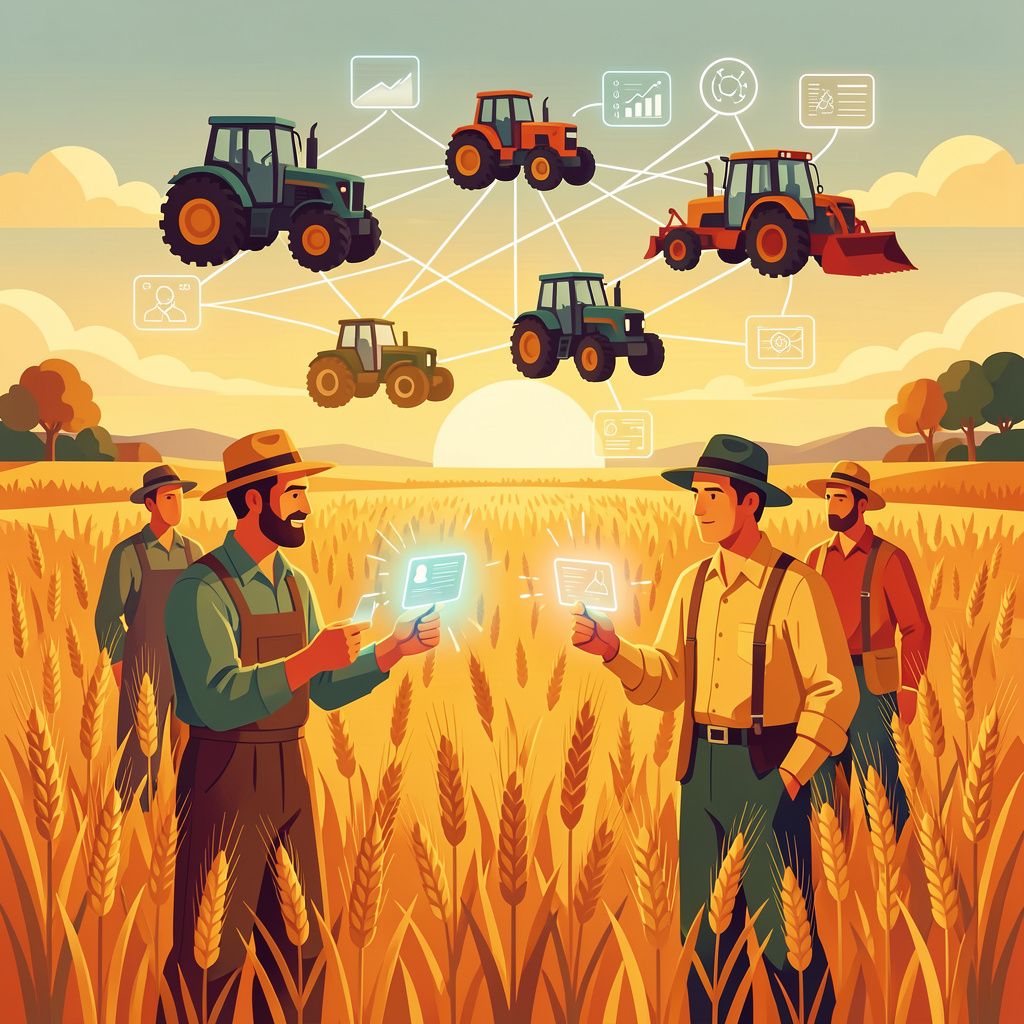
At the core of the EDIC for Agri-Food’s initial operational roadmap is the creation of a universal Digital Farm ID [1][3]. Functioning as a federated, interoperable digital identifier for agricultural holdings across the European Union, the tool is designed to connect seamlessly with existing national agricultural databases [1]. Technically, the Digital Farm ID aligns with the European Digital Identity (EUDI) Framework, integrating directly into the technical solutions developed under the EUDI Wallet ecosystem and European Business Wallets [1]. This architecture ensures that data remains securely accessible while respecting European sovereignty standards [1][4].
Strategic Imperatives for European Tech Sovereignty
The establishment of the EDIC reflects a strategic effort to safeguard technological sovereignty and economic competitiveness within a vital trade sector [4][5]. Agriculture and food production account for more than one-third of the European Union’s total trade surplus [5]. By establishing long-term, shared digital infrastructure managed directly by public authorities and member states, the EU aims to strengthen agricultural resilience against severe geopolitical tensions, cyber risks, and accelerating climate challenges [4].
Bronnen
- digital-strategy.ec.europa.eu
- www.linkedin.com
- www.lexisnexis.co.uk
- agriculture.gouv.fr
- www.linkedin.com
- www.linkedin.com