

Why Europe Must Overhaul Farming Subsidies to Power Green Industry
Wageningen, Tuesday, 17 November 2026.
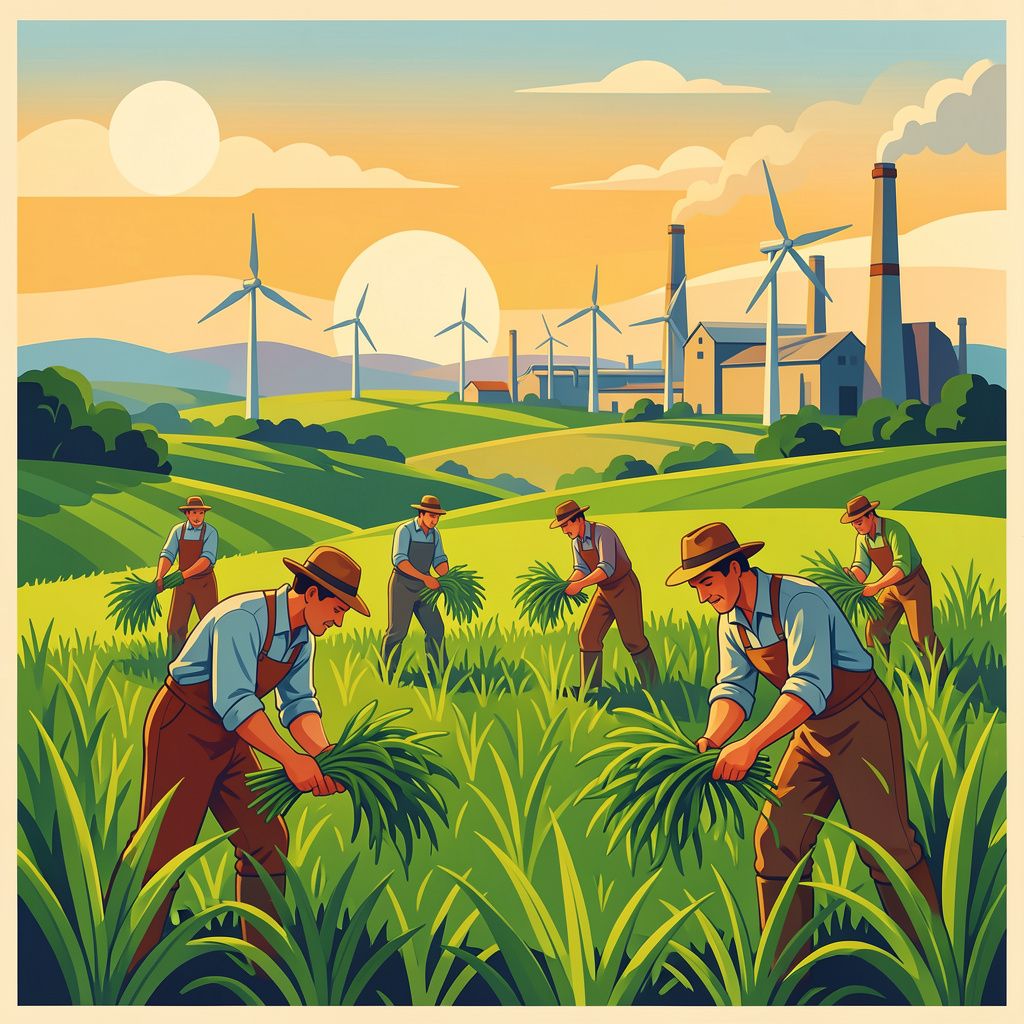
Researchers today urged the European Union to redirect its annual €50 billion farm subsidies away from livestock and toward raw biomass production, revitalizing industry and ending fossil fuel dependence.
Bridging Agriculture and Industrial Strategy in Brussels
This major policy intervention represents a decisive pivot in European agritech, moving farming directly into the realm of advanced industrial feedstock production [1][2]. During the Mansholt Lecture held on Tuesday, November 17, 2026, in Brussels, agricultural and food policy researcher Allard Jellema, supply chain specialist Harriëtte Bos, and professor of plant breeding Agnieszka Golicz—all from Wageningen University & Research (WUR)—presented a comprehensive strategy outlining how European farms must power the continent’s circular bioeconomy [1][2][3]. The researchers published their strategic blueprint under report DOI 10.18174/726375, warning that current European Union policies fail to specify where the raw bio-based material required for a fossil-free economy will originate [1][2]. As Jellema stated during the presentation, without guaranteed domestic biomass, the bioeconomy cannot function, requiring a deliberate legislative link between agricultural and industrial policies [1][2].
Overhauling the €50 Billion Farm Subsidy Framework
The mechanism underlying this agritech transition requires restructuring the European Union’s flagship Common Agricultural Policy (CAP/GLB), which currently disburses more than €50 billion annually to farmers across member states [1][2]. Historically and at present, these substantial funds are allocated primarily on the basis of farm size, heavily weighting financial support in favor of livestock farming rather than dedicated sustainable material cultivation [1][2]. The Wageningen researchers advise EU policymakers to re-engineer this fiscal structure by reducing its focus on livestock and instead explicitly rewarding farmers who cultivate dedicated crops for renewable materials and biofuels [1][2]. Under this operational model, public subsidies function as an incentive mechanism to guarantee that fields provide the essential inputs needed by green manufacturers rather than animal feed [1][2].
Economic Benefits for Industry and Resource Preservation
The benefits of restructuring these agricultural supply chains extend directly to Europe’s beleaguered manufacturing sectors [1][2]. A significant share of the continent’s chemical manufacturing industry is currently disappearing from Europe, but researchers argue that a well-supplied bioeconomy could revitalize these enterprises by offering stable, localized alternatives to fossil feedstocks [1][2]. Because the European Union has actively steered away from fossil resources toward a biomass base since 2025, and because the bio-based sector is still in its formative stages, policymakers retain an uncommon window of opportunity to determine the structural direction of the market before legacy systems lock in [1][2].
Synchronizing Supply Chains from Field to Consumer
However, the researchers caution that incentivizing farmers to produce industrial biomass addresses only one side of the economic equation [1][2]. Cultivation incentives must be matched with active downstream demand, requiring agricultural targets to align across industrial policy, material lifecycles, and consumer habits [1][2]. To prevent biological resources from facing unsustainable deficits, European policymakers must simultaneously enforce circular practices such as textile reuse, repairs, and moving consumers away from fast fashion, ensuring that cultivated biomass can realistically satisfy Europe’s long-term material demands [1][2].